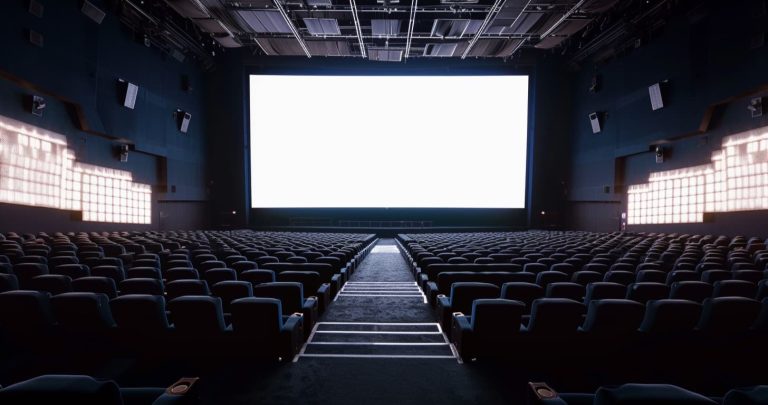

Let’s face it: standard movie screens can feel a little limiting. You’re staring straight ahead at a giant rectangle, and the second you glance to your left or right, you’re just looking at a dark exit sign or a blank, fabric-covered theater wall.
Enter ScreenX. Developed by the South Korean tech company CJ 4DPLEX this premium format claims to completely shatter that rectangular box by blowing the movie up onto the actual side walls of the auditorium, creating a massive 270-degree panoramic view.
But does wrapping a movie around your peripheral vision actually make you feel like you’re inside the film, or is it just a cheap parlor trick to get you to fork over extra cash? Let’s get ScreenX explained without the corporate marketing hype.
The Tech Breakdown: How Does ScreenX Even Work?
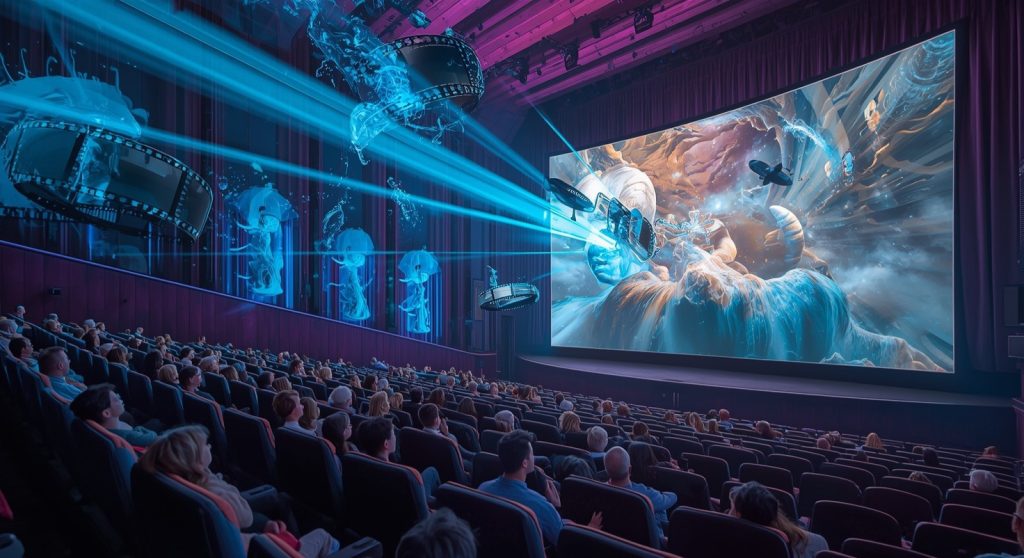
In a regular theater, you have one projector blasting an image onto the front screen. ScreenX basically looks at that setup and says, “What if we just added a fleet of extra lasers?”
To pull off that 270-degree wrap-around effect, the theater utilizes a complex trio of tech elements behind the scenes:
- Multiple Synchronized Projectors: There is the main projector for the front, plus additional ones aimed directly at the left and right walls of the theater, all running in perfect sync. In fact, depending on the venue, some movies utilize up to 7 projectors at the exact same time.
- Edge-Blending and Mapping Software: To keep the movie from looking like a glitchy mess where the walls meet, specialized software acts as “cinematic glue,” smoothly blending the images together so there are no awkward breaks or distortions.
- Theater-Specific Calibration: Because no two auditoriums are the same, every single seat, wall, and ceiling is meticulously mapped based on ceiling height, wall dimensions, and audience layout so that the perspective looks right from your seat.
- Advanced 3D Rendering: Some films even utilize 3D projections to add deep, tangible environmental depth to the side spaces.
The goal here is to hack your brain’s spatial awareness. By stimulating your peripheral vision, ScreenX tries to fool your mind into reacting as if you are physically standing inside the scene—whether that’s a massive superhero flying through a sprawling skyline or a hero navigating a dense forest.
The Catch: It’s Not Actually a 270-Degree Movie
Before you go buying tickets thinking you’re getting a three-sided IMAX movie, you need to know the massive catch with this format.
The side walls are not active the entire time.
Filmmakers don’t shoot entire movies in 270 degrees. Instead, the side walls only turn on during major action sequences, massive landscape shots, or chaotic chase scenes where the extra space adds value. During normal conversational scenes where two people are just talking in a room, the side walls go completely black, and you are back to looking at a standard front screen.
- Active Observation: Your eyes naturally scan the sides to catch hidden background details, turning passive watching into a bit of a physical eye workout.
- The Side-Eye Effect: You aren’t supposed to stare directly at the side walls the whole time. The extra projection is strictly there to fill your peripheral vision, making action sequences feel faster and more kinetic.
- Sneaky Surprises: Because directors know your eyes are scanning, they will occasionally hide clever side-wall jokes, easter eggs, or subtle visual cues on the sides that disappear in a flash.
How Filmmakers Actually Make a ScreenX Movie (And Why It’s Hard)?
You can’t just walk onto a movie set with a regular camera and expect it to magically project onto three walls later. For a director, ScreenX is a completely different logistical and creative beast.
When a movie is slated for a ScreenX release, the production and post-production teams have to completely change how they work:
- Panoramic Action Planning: Directors have to choreograph fight scenes, car chases, and camera pans knowing that the action has to stretch seamlessly across three screens simultaneously.
- The “Wide Shoulders” Problem: Backgrounds and set designs can no longer just stop at the edge of a traditional frame. They have to stretch gracefully onto the side walls so the fictional world looks believable from your peripheral vision.
- Lighting Headaches: The technical crew has to adjust shadows, contrast, and brightness on the fly so the side projections perfectly match the central screen without looking mismatched or washed out.
- Post-Production Nightmare: If a single pixel is misaligned or out of calibration during rendering, the entire 270-degree illusion breaks instantly, turning a cool action scene into an immersion-shattering glitch.
The Modern Reality: “Shot for ScreenX” vs. The Post-Production Fakeout
If you have been looking at premium tickets lately, you have probably noticed theaters heavily hyping up a new phrase: “Shot for ScreenX.”
Historically, the single biggest issue with this format was that the side wings felt completely fake. Because directors didn’t capture the side angles while filming, studio tech teams had to take left-over visual assets in post-production and use digital software to artificially stretch them out. It frequently resulted in a blurry, stretched-out mess that actually pulled you out of the movie.
However, studios are finally attempting to fix this by bringing specialized multi-camera rigs directly onto physical film sets to capture real, un-stretched panoramic footage live.
Look no further than Marvel and Sony’s Spider-Man: Brand New Day, directed by Destin Daniel Cretton. Because Christopher Nolan’s massive sci-fi epic The Odyssey has IMAX screens completely locked down for a month, Spider-Man is leaning heavily into ScreenX as its main premium platform. For the first time, a dedicated secondary crew filmed authentic, live-action panoramic footage right alongside the main camera. When you see Spidey swinging through Manhattan, the side walls feature real, natively shot angles of the city skyline instead of cheap digital filler.
Ultra 4DX
If three screens still aren’t enough to satisfy your craving for pure sensory overload, you will also start seeing hybrid rooms labeled Ultra 4DX (formerly known as 4DX Screen). This format marries the 270-degree side screens with a full-blown 4DX setup. Not only does the environment stretch around your eyeballs, but your seat will pitch and roll, wind will blast past your ears, and environmental scents will hit your nose all at once. It’s essentially a chaotic theme park ride hidden inside a cinema multiplex.
ScreenX vs. IMAX vs. Dolby Cinema: What’s the Real Difference?
When you are opening up your ticketing app, you need to understand that ScreenX is chasing a completely different goal than the other premium heavyweights:
- IMAX is all about raw scale, towering vertical real estate, and ridiculous visual clarity on a single, massive front screen. It’s the ultimate format for giant, world-ending blockbusters.
- Dolby Cinema sets the absolute bar for quality, giving you pitch-perfect dual-laser contrast for actual, ink-like blacks alongside a fully immersive, 3D audio experience.
- ScreenX completely abandons the focus on a single front screen. It trades raw contrast and vertical scale for spatial storytelling, intentionally targeting your brain’s peripheral vision to make you feel completely surrounded by the environment rather than just observing it.
Pro-Tip: Some premium theaters have started offering a hybrid format that combines ScreenX walls with a Dolby Atmos audio system. If you can find one of these, grab tickets immediately, because standard ScreenX theaters are notorious for completely neglecting high-end sound upgrades, and this hybrid ensures your eyes and ears both get a full-on cinematic hug.
The “God Tier” Seating Guide for ScreenX
If you sit in the wrong spot in a Dolby or IMAX theater, your neck might hurt. If you sit in the wrong spot in a ScreenX theater, the entire 270-degree effect is completely ruined, and you’ll leave with a massive headache. You absolutely must pick your seat strategically.
- The Prime Real Estate: You want to sit in the center rows, roughly two-thirds of the way back from the screen. This is the ultimate “sweet spot.” It places you far enough back that the left and right walls perfectly fill your peripheral vision without you having to manually whip.
- Avoid the Corners Like the Plague: Extreme side seats or rows too close to the front are an absolute disaster. The side walls will look heavily distorted, like looking into a funhouse mirror, which is a one-way ticket to motion sickness.
- The Squad Strategy: If you’re going with friends, secure an entire row together rather than splitting up vertically. Sharing the same horizontal plane ensures everyone gets the same uncompromised panoramic immersion.
Where to Find ScreenX in the Wild?
The first-ever ScreenX theater popped up in South Korea back in 2012. Fast forward to today, and the format has steadily expanded to over 30 countries globally:
- United States: Unlike Dolby (which is exclusive to AMC), you can find ScreenX screens scattered across major US cities via chains like Regal Cinemas, Marcus Theatres, and Showcase Cinemas.
- International Hubs: It’s gaining heavy traction across Europe (including Italy, Spain, and Turkey) and major metro areas in India (like Mumbai, Bengaluru, and Delhi via PVR/INOX), where it’s frequently paired with Dolby Atmos.
To get the absolute best experience, just filter showtimes on your local theater app or check ScreenX Locations Hub and lock down those prime middle-back seats early.
The Final Verdict: Is It Actually Worth It?
Look, ScreenX isn’t going to replace Dolby Cinema or IMAX when it comes to pure picture quality or sound design. It’s a completely different kind of theatrical adventure.
When the side walls kick in during a frantic battlefield scene or a sweeping nature documentary, it stretches the cinematic universe completely around you, making traditional, flat movie screens feel distant and restrictive by comparison.
If you pick the right blockbuster movie, grab a seat in the exact sweet spot, and pair it with a theater that features upgraded audio, ScreenX is absolutely worth experiencing at least once. Just skip it for the slow indie dramas, avoid the corner seats, and prepare your peripheral vision for a wild ride.
About the Author.
Hi, I’m Vansh, the founder of Vibe On Cue. I track the absolute best ways to experience cinema, from the biggest Hollywood Blockbusters and upcoming release dates to the finest details of PVOD & Streaming and pristine Blu-ray & 4K physical media. And when the credits roll, I break down the narrative with deep-dive Ending explained guides. If you live for the full life cycle of film, stick around and explore the site!!!