
Sony just dropped a brand-new trailer for Zach Cregger’s Resident Evil reboot, and for the first time, it actually says the words “Raccoon City” out loud. If you’ve been following this project since it was first announced, that single namedrop is a genuinely big deal, and it’s exactly why today felt like the right moment to break down everything currently confirmed about the movie, from its release date to what this new footage just revealed.
*Quick note before we dive in: if you searched for “Resident Evil 2026 release date” hoping to find info on the video game instead, you’re thinking of Resident Evil Requiem, Capcom’s ninth mainline game, which launched back on February 27. This article is specifically about the movie, a completely separate project with its own story and its own release window.
So When Is Resident Evil Actually Hitting Theaters?
The film is confirmed for a wide theatrical release on September 18, 2026, distributed by Columbia Pictures through Sony Pictures, with Constantin Film and PlayStation Productions producing. It’s heading to theaters in IMAX as well, based on recent marketing pushes, which tracks given how visually ambitious this new trailer looks.
This is the second attempt at rebooting the Resident Evil film franchise following 2021’s Welcome to Raccoon City, which didn’t land the way fans or the studio had hoped. Instead of bringing back the usual action directors, Sony passed the project to a filmmaker whose background looks completely different from anyone who’s handled the series in the past.
Who’s Actually Making This Movie?
Zach Cregger, the writer-director behind Barbarian and this year’s Weapons, is both writing and directing this version, working from a script he co-wrote with Shay Hatten. That’s a meaningfully different creative pairing than past Resident Evil films, which leaned much harder into action spectacle than genuine horror.
Cregger’s involvement is honestly the biggest reason this project has generated so much buzz. He’s built a reputation over the last few years for horror that lingers with audiences rather than just delivering jump scares, and a franchise as beloved as Resident Evil getting a filmmaker with that specific skill set feels like a real swing at finally doing the games justice on screen.
Who’s In It?
Austin Abrams as Bryan leads the film as a medical courier whose job transporting organs between hospitals puts him directly in the path of the outbreak. Abrams, known for his work in Euphoria and The Walking Dead, is an interesting pick specifically because of that last credit he’s already spent years playing characters navigating undead threats, just from the other side of the genre entirely. Bryan is explicitly written as an untrained civilian rather than a series regular like Leon or Chris, which puts a lot of weight on Abrams to sell genuine vulnerability rather than action-hero competence.
Zach Cherry rounds out the main cast in a role that hasn’t been fully detailed in marketing yet, though his presence suggests at least one other survivor sharing meaningful screen time with Bryan rather than this being a total solo showcase.
Kali Reis joins as well, continuing a run of high-profile genre work following her acclaimed performance in True Detective: Night Country. Given her track record in tense, atmosphere-heavy projects, her casting lines up with the slower, dread-focused tone Cregger has described wanting for this film.
Paul Walter Hauser completes the confirmed lineup, though like Cherry, specifics about his character remain under wraps heading into the fall release. Hauser’s presence adds a recognizable character-actor anchor to a cast that’s otherwise leaning on rising and mid-career talent rather than a big established headliner, which tracks with the grounded, character-first approach the marketing keeps emphasizing.
Notably absent from any of this casting is a single face from the franchise’s game canon: no Leon, no Chris, no Jill. That’s not an oversight. It’s a direct reflection of Cregger’s stated approach of building an original story that runs parallel to the games rather than recasting characters audiences already know intimately from decades of gameplay.
So What Did This New Trailer Actually Show Us?
This latest trailer expands significantly on the footage we’d seen previously, and the biggest addition is that closing stinger explicitly naming Raccoon City. Earlier looks at the film had deliberately avoided any direct connective tissue to the games, which understandably frustrated longtime fans who felt like this might end up being a Resident Evil movie in name only.
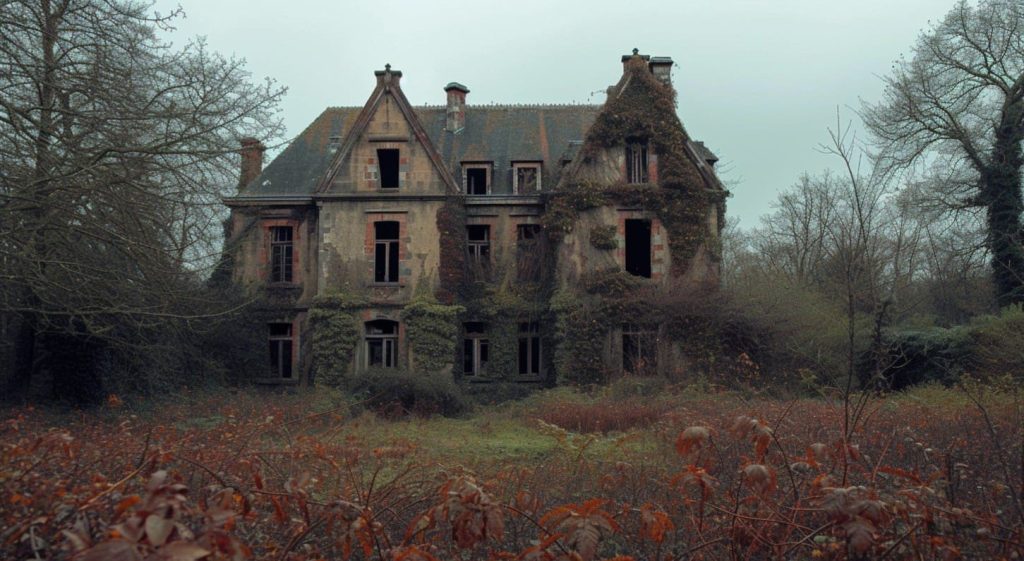
That’s no longer really a fair criticism after this trailer. Bryan’s assignment sends him to Raccoon City General Hospital, and the footage leans into recognizable franchise iconography without ever feeling like fan service for its own sake: an old typewriter, ammo boxes, the kind of small details longtime players will clock immediately even though the story itself is still an original one.
The tone throughout is noticeably restrained compared to earlier Resident Evil films. Rather than opening with wall-to-wall action, the trailer spends its first stretch building dread the slow way: Bryan trying and failing to call for help, then leaving what sounds like a goodbye message for someone close to him. It’s a smart choice that signals this movie is actually trying to earn its horror instead of just delivering spectacle from frame one.
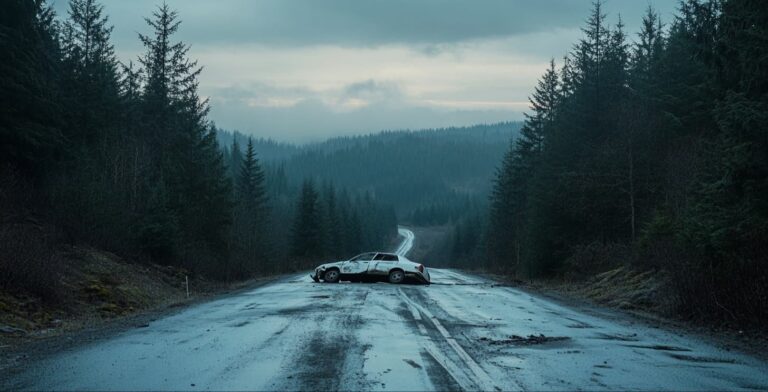
By the back half, things escalate fast, with bodies falling from what looks like rooftops onto cars below and Bryan sprinting through a city that’s rapidly falling apart. It’s a tonal whiplash that mirrors exactly how the earliest Resident Evil games structured their pacing, slow-building tension followed by sudden chaos, which feels like a very deliberate choice on Cregger’s part.
There’s also a noticeably different visual approach at play here compared to prior entries in the series. Where the Jovovich-led films leaned into slick, stylized action cinematography, this trailer favors handheld camerawork and naturalistic lighting, the kind of grounded visual language you’d expect more from an indie horror film than a studio franchise reboot. It’s a choice that reinforces the sense that Bryan is genuinely vulnerable rather than an action hero waiting to be revealed.
The sound design in this new footage deserves a mention too. Long stretches of near-silence get interrupted by distant, unidentifiable noises, footsteps that don’t quite match anything human, that kind of thing, and it’s a technique horror fans will recognize from Cregger’s prior work. Rather than relying on musical stingers to signal danger, the trailer trusts ambient sound to do the unsettling work, which is a subtler and frankly more effective approach than most franchise horror marketing tends to go for.
Why This Isn’t A Straight Retelling Of Any One Game?
One thing that’s remained consistent since this project was first revealed: this isn’t a direct retelling of any single Resident Evil game. Cregger has been upfront that his story exists in its own space, taking place alongside the events of Resident Evil 2 rather than recreating them scene for scene.
In a Q&A with PlayStation’s official blog, Cregger talked about what initially drew him to the franchise, describing the resource-management tension of the early games as something that stuck with him more than almost anything else he’d played growing up. That specific mechanic, the constant anxiety of not knowing whether you have enough bullets or healing items to make it to the next area, is clearly something he’s trying to translate into a purely cinematic experience rather than treating it as an afterthought.
He’s also talked about wanting Bryan to function as an audience surrogate rather than a trained specialist. Unlike series mainstays like Leon Kennedy or Chris Redfield, who show up already knowing how to handle a firearm and survive an outbreak, Bryan is explicitly designed as an average guy with no combat background, thrown into a situation he’s completely unequipped to handle. That’s a meaningful shift for the franchise, and it lines up with how survival horror games are actually meant to feel from a player’s perspective: constantly outmatched, always one bad decision away from disaster.
Cregger has been equally clear that this approach isn’t him disregarding the source material. In comments to press earlier this year, he described his take as staying loyal to the spirit and lore of the games even while telling an entirely new story, framing it less as a rejection of what came before and more as his own chapter placed carefully alongside it.
Does This Mean No Zombies?
One detail that’s generated some discussion since earlier trailers is how little the footage leans on traditional zombies compared to past entries in the franchise. Cregger has suggested his version puts more emphasis on other kinds of infected creatures rather than treating shambling zombies as the film’s primary threat, a choice that seems designed to keep things feeling fresh rather than retreading the exact same visual language as prior films and TV adaptations.
That’s not to say zombies are entirely absent today’s trailer does show them, just later into the runtime and in smaller doses than you might expect walking in. It’s a subtle rebalancing rather than a wholesale removal, and it fits with the film’s broader strategy of building dread gradually instead of front-loading every recognizable franchise element in the marketing.
How We Got Here: The Franchise’s Bumpy Movie History
It’s worth remembering why this reboot exists in the first place. The Milla Jovovich-led film series ran for six movies between 2002 and 2017, delivering solid box office but drifting further from survival horror with each installment in favor of full-blown action spectacle. Welcome to Raccoon City tried to course-correct back toward the games’ tone in 2021, but it didn’t connect with critics or audiences the way the studio had hoped, and a planned Netflix TV series was scrapped around the same time.
That history is exactly why handing this property to Cregger feels like such a deliberate swing. Rather than chasing another action-first blockbuster, Sony appears to be betting on a filmmaker whose entire reputation is built on tension and dread translating that sensibility directly onto a franchise that arguably invented modern survival horror in the first place.
It’s also worth noting how different the landing spot is this time around. The original Jovovich series and Welcome to Raccoon City were distributed under different studio banners entirely, while this version lands at Sony with PlayStation Productions directly attached as a producer. That puts the studio most associated with Resident Evil’s golden era of console gaming directly behind the adaptation, rather than a third party simply licensing the property with no particular stake in the games themselves.
That kind of direct involvement tends to produce a very different creative dynamic than a standard licensing deal. PlayStation Productions has been fairly selective about which adaptations it attaches itself to, and its involvement here suggests a level of confidence in Cregger’s vision that goes beyond just cashing a check for the rights.
Which Games Is This Actually Pulling From?
Even though this isn’t a direct adaptation of any single game, the marketing has made clear that Resident Evil 2 is doing most of the heavy lifting in terms of tone and setting. That’s a meaningful choice, since RE2 is widely considered one of the high points of the entire franchise, both in its original 1998 form and its acclaimed 2019 remake, thanks to its claustrophobic police station setting and unrelenting sense of being hunted.
Cregger has mentioned pulling smaller details from elsewhere in the series too, including nods to Resident Evil 3 and Resident Evil 4, particularly around itemization and the escalating weapon progression Bryan experiences over the course of the story. Starting with next to nothing and slowly building toward something resembling real firepower is a structural backbone of nearly every mainline game, and translating that sense of gradual empowerment into a two-hour film format is one of the trickier things to pull off convincingly.
What We Still Don’t Know
Plenty of details remain unconfirmed heading into the fall. We don’t yet have a full understanding of how deep the film’s connections to Resident Evil 2’s story actually run, beyond the shared setting and the closing Raccoon City reveal. It’s also unclear how much screen time Bryan’s supporting cast will actually get, given how tightly the marketing has centered on his character specifically.
There’s no word yet on a possible post-credits scene or franchise-building tease, which past Resident Evil films leaned on heavily to set up sequels. Given how carefully Cregger has talked about keeping this story self-contained and separate from the games’ existing characters, it wouldn’t be surprising if this one plays as more of a standalone horror experience rather than the first chapter in a new interconnected series.
Given how tightly the trailers have centered on Bryan specifically, it’s possible the studio is holding back reveals of additional characters, or a returning franchise face in some capacity, as a surprise closer to release. Until Sony confirms otherwise, the safest assumption is that what’s been shown so far is close to the full scope of who audiences will be following.
Resident Evil (2026) FAQ: Most Googled
Is this connected directly to the Resident Evil games?
Not as a direct adaptation of any single game, no. It’s an original story that Cregger has said takes place alongside the events of Resident Evil 2, rather than retelling that game’s plot beat for beat.
Will there be zombies in the movie?
Yes, but fewer than past franchise entries have relied on. Cregger has indicated the film puts more focus on other infected creature types, with traditional zombies appearing later and in smaller numbers than audiences might expect.
Is this part of the Milla Jovovich series?
No. This is a separate reboot with no connection to the 2002–2017 Jovovich-led films or 2021’s Welcome to Raccoon City.
Who plays the lead role?
Austin Abrams plays Bryan, a medical courier with no combat training who gets caught in the middle of the outbreak.
When and where can I watch the new trailer?
The full trailer was released today, July 23, 2026, and is available through Sony’s official channels and the studio’s YouTube page.
Is the movie based on a specific Resident Evil game like RE2 Remake?
Not directly, though Resident Evil 2 is clearly the biggest tonal and setting influence, with smaller nods to Resident Evil 3 and 4 woven into details like weapon progression.
So, Should You Be Excited?
Resident Evil hits theaters September 18, 2026, and based on today’s trailer, this reboot looks like it’s actually trying to capture what made the games unforgettable in the first place: dread, scarcity, and the sense that you’re always one wrong turn away from something horrific. Whether it can shake off the shadow of the franchise’s uneven film history remains to be seen, but between Cregger’s track record and this footage, it’s shaping up to be one of the more interesting horror releases of the back half of 2026.
About the Author.
Hi, I’m Vansh, the founder of Vibe On Cue. I track the absolute best ways to experience cinema, from the biggest Hollywood Blockbusters and upcoming release dates to the finest details of PVOD & Streaming and pristine Blu-ray & 4K physical media. And when the credits roll, I break down the narrative with deep-dive Ending explained guides. If you live for the full life cycle of film, stick around and explore the site!!!