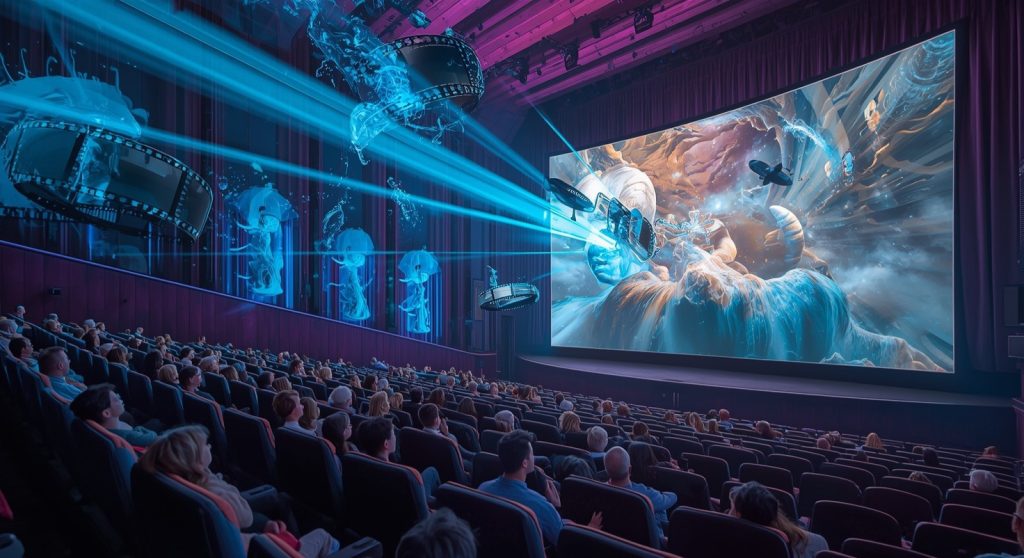

IMAX Explained: Today we can watch movies anywhere; on phones, tablets, home theaters, and giant 4K TVs. Yet millions of moviegoers still line up at the box office, willing to pay a premium price for one specific word: IMAX.
Why? Because IMAX isn’t just a “Bigger Screen”. It’s a comprehensive film format, an advanced projection system, a custom audio design, a specialized auditorium layout, a camera technology, and a filmmaking philosophy rolled into one. It is a synchronized sensory experience built to overwhelm your senses, the exact way cinema was originally meant to be enjoyed.
Whether you are gearing up for the massive upcoming theatrical slate or trying to figure out if your local theater is offering the real deal, this definitive guide breaks down the science, the formats, and the insider secrets of the world’s most immersive cinema ecosystem.
TL;DR: The Quick Breakdown
- Not Just a Screen: IMAX is a complete cinema ecosystem managing everything from specialized camera sensors to unique auditorium geometry and room acoustics.
- Format Matters: 15/70 Film offers unmatched organic texture on screens up to 8 stories tall; Laser (IMAX 2.0) provides the sharpest digital clarity and deepest contrast; Digital is the standard multiplex upgrade.
- The 26% Bonus: Fusing native IMAX cameras expands the vertical aspect ratio, unmasking up to 26% more picture than restricted standard widescreen screens.
- Physical Sound: Custom speakers and custom sub-bass layouts deliver uncompressed audio you actively feel in your chest rather than just hear.
- The Seating Strategy: Avoid the neck-straining first 3 to 4 rows. Aim for the dead-center sweet spot horizontally and vertically for pristine acoustic calibration and full peripheral immersion.
- 2026 Premium Slate: Prime upcoming blockbusters including Christopher Nolan’s The Odyssey (July 17) and Dune 3 (December 18) are custom-built to maximize these premium environments.
What IMAX Really Is: A Full Cinema Ecosystem.
Most traditional movie formats only focus on updating one piece of the theater experience, such as adding few extra speakers or expanding screen width. IMAX completely redesigns the entire puzzle from scratch.
To achieve maximum sensory immersion, IMAX maintains strict engineering control over every single environmental and technical element inside the auditorium:
- Screen Size & Curvature: IMAX screens are significantly taller, not just wider than standard cinema screens. They are custom-engineered to be slightly curved, wrapping directly into your peripheral vision.
- Auditorium Geometry: Unlike standard flat, elongated theater designs, IMAX rooms are built deep and steep. The seating layout is intentionally brought much closer to the wall-to-wall, floor-to-ceiling glass, completely filling your field of view.
- Projection Standards: IMAX dictates custom mastering and color grading standards alongside proprietary projection brightness and frame sizes to maximize image uniformity.
- Production Pipeline: The ecosystem begins way before the theater booth, influencing custom camera manufacturing and dedicated audio channel placement.
When all of these distinct pieces work together seamlessly, the technical borders of the room fade away. You forget you are sitting in a multiplex theater; you feel as though you are inside the movie itself.
The IMAX Origin Story: From Science Labs to Hollywood.
IMAX did not get its start in mainstream Hollywood cinema. It originally began as a large-format scientific and documentary projection system showcased exclusively at world expos, museums, and planetariums.
What made it stand out immediately to early audiences was its staggering clarity. Traditional cinemas relied on standard 35mm film strips. IMAX pioneers engineered an enormous 70mm film format that ran horizontally through cameras and projectors. This massive frame size allowed breathtaking visual detail to remain perfectly sharp and crystal clear, even when projected onto screens the height of an entire building.
Over the decades, this scientific marvel evolved into a global powerhouse. It transformed into a premium theatrical brand, a custom sound pipeline, a digital remastering process, and a worldwide network of specialized theaters. Hollywood directors quickly adopted the format because it wasn’t just a technological upgrade; it was an unparalleled vehicle for storytelling power.
The Three Major Types of IMAX Theaters (Explained Clearly).
The biggest source of confusion surrounding the IMAX brand stems from theater variations. The IMAX label gets applied to several different projection and auditorium setups, and they do not deliver the same experience. To ensure you get exactly what you pay for, you must understand the three primary formats currently operating in the wild:
+—————————————————————–+
| IMAX FORMAT COMPARISON |
+——————-+——————–+————————+
| IMAX DIGITAL | IMAX LASER | IMAX 15/70 FILM |
| (Multiplex) | (Modern Premium) | (Holy Grail) |
| | | |
| * Larger Screen | * Dual-Laser | * 70mm Film Frames |
| * Upgraded Audio | * Ultra-Bright | * Natural Textures |
| * Accessible | * Deepest Blacks | * 6-8 Stories Tall |
+——————-+——————–+————————+
A) IMAX 15/70 Film: The Legendary Format
This is the holy grail of physical media tracking and presentation. It is the original, massive, museum-sized screen experience designed to make the audience feel entirely microscopic.
This is why the format persists in an era of perfect home theaters and instant streaming. IMAX does not compete on convenience; it competes on presence. It turns the theater into a controlled environment where framing, brightness, and sound are no longer variables, but engineered constants designed to maximize impact. When a film is built for it, the difference is not subtle, it is structural.
- The Technology: It bypasses digital files entirely, running physical, gargantuan 70mm film frames horizontally through a specialized projection system.
- Why It’s Special: The effective resolution of 15/70 film is incredibly high, well surpassing the detail limits of standard 8K digital projection. It delivers stunning natural grain, unmatched image depth, and an organic visual texture that digital formats simply cannot replicate.
- The Scale: These screens are increasingly rare but can reach a staggering height of 6 to 8 stories. It represents IMAX in its absolute purest, most uncompromising form.
B) IMAX With Laser: The Modern Premium Standard
As the industry shifted toward digital infrastructure, IMAX engineered its true successor: Dual-Laser projection. This format represents the absolute pinnacle of modern digital theater technology.
- The Technology: It utilizes a state-of-the-art laser light source to project near-4K resolution per eye directly onto massive screens.
- Why It’s Special: Laser projection delivers extreme on-screen brightness and exceptionally deep, ink-like blacks. The contrast ratio is vastly superior to standard digital systems. It maintains perfect visual uniformity from the exact center of the screen all the way to the corners.
- The Vibe: It offers an ultra-sharp, clean, modern look. Fast-moving action sequences remain pin-sharp instead of smearing or blurring, and dark sci-fi starfields or vivid neon landscapes look entirely lifelike.
C) IMAX Digital: The Multiplex Version
This is the most common version of the format, frequently found retrofitted inside existing shopping malls and commercial multiplexes.
- The Technology: It utilizes standard dual-digital xenon lamp projectors, which typically offer lower native resolution than laser or film counterparts.
- Why It’s Special: While purists sometimes label it “fake IMAX” due to its smaller screen size, it remains a massive, highly noticeable upgrade over traditional standard auditoriums.
- The Vibe: You still get a significantly taller screen, optimized geometry, and thunderous sound calibration. It is an excellent, highly accessible option for casual blockbuster viewing.
How to Spot a “True” IMAX Venue Instantly?
You don’t need to dig through technical spec sheets or google auditorium dimensions to figure out if your local screen is a true giant-format layout or a smaller multiplex retrofit. You can tell the difference using a few quick structural tells the second you walk into the room:
- Look at the Screen Height: A classic, full-scale IMAX screen towers vertically. It will look remarkably tall rather than just wide, stretching completely from the floor to the absolute ceiling.
- Check the Curvature: The screen should possess a distinct, sweeping inward curve designed to hug your peripheral vision.
- Analyze the Room Depth: True IMAX auditoriums are built with steep, amphitheater-style stadium seating that goes straight up rather than stretching far back.
- Note the Proximity: If the front row of seats feels intentionally pulled forward, putting you incredibly close to a giant wall of glass, you are in a custom large-format layout.
The Tell-Tale Sign: If the auditorium looks exactly like a standard movie theater room “but the screen is just a little bit bigger,” you are sitting in a standard IMAX Digital setup. It is still an upgrade, but it won’t deliver that jaw-dropping, dizzying sense of scale.
Pro-Tip: Want to ensure your local theater isn’t a multiplex retrofit? You can check your local theater specifications and find certified premium screens directly through the Official IMAX Theater Finder.
The Camera and Sound Advantage
The magic of the IMAX format isn’t just about the size of the glass inside the theater—it is dictated by the gear used on set.
The 26% Visual Bonus
Traditional cameras capture movies in standard widescreen aspect ratios (typically 2.39:1). IMAX-certified digital cameras and high-format film cameras utilize massive sensors that capture significantly more vertical information per frame.
When a director shoots a sequence natively for IMAX, the aspect ratio vertically expands during those specific scenes. In an IMAX auditorium, this unmasks up to 26% more image on the screen.
+————————————+
| Standard Widescreen |
| (Restricted 2.39:1 Frame) |
+————————————+
| ================================ |
| || IMAX Expanded Sequence || | <– 26% More Visual Data
| || (Full Vertical Height) || | Captured on Set!
| ================================ |
+————————————+
Suddenly, sweeping desert horizons open up, skyscrapers tower higher, and action sequences gain a massive sense of vertical space that is completely cut off and invisible on a standard theater screen.
Sound You Can Feel in Your Chest
Great visuals are nothing without precision audio, and IMAX treats sound engineering like a physical science. The format does not just turn up the volume; it maximizes acoustic precision.
- Custom Tooling: Every auditorium features a custom-calibrated speaker array designed specifically for that room’s unique acoustic signature.
- Directional Accuracy: Proportional alignment allows sound designers to pinpoint audio in space, making jet engines or overhead helicopters feel directional and physical.
- Sub-Bass Impact: Dedicated, uncompressed sub-bass channels deliver clean, heavy rumbles that shake your seat and hit you directly in the chest without a single hint of audio distortion.
The Best Format for Each Movie Genre
To maximize your ticket investment, you should match the genre of the film to the specific strength of the IMAX format you are attending:
- Sci-Fi, Space, & Neon Spectacles \rightarrow Choose Laser: The immense contrast and bright dual-laser light source make starfields, laser fire, and dark space horizons pop with breathtaking clarity.
- Historical Epics, War, & Nature \rightarrow Choose 70mm Film: Massive practical landscapes, historical battlefields, and wildlife footage benefit massively from the unrivaled scale, depth, and organic textures of physical film.
- Fast Action, Car Chases, & Superhero Flicks \rightarrow Choose Digital: Fast-paced, brightly lit, CGI-heavy superhero movies look fantastic with a standard scale and audio boost, meaning a standard Digital setup handles them beautifully without straining your eyes.
The Ultimate IMAX Seating Guide
Because IMAX screens are engineered to fill your entire field of view, your physical position inside the auditorium drastically impacts how your brain processes the film and how the audio tracks around your ears. Use this mapping strategy the next time you open a ticketing app:
- The Sweet Spot (Dead Center): Horizontally and vertically centered. This is the exact acoustic calibration point where the sound system is balanced, and the screen perfectly occupies your peripheral vision.
- The Heights (A Few Rows Above Center): This is the ideal alternative. It gives you an incredible view of the screen’s full vertical height without requiring you to tilt your neck back at all.
- The Safety Row (One Row Behind Center): Keeps the full scale intact while letting you relax your gaze slightly.
- The Front Rows (Avoid): Try to stay away from the first 3 to 4 rows in Laser or 70mm Film venues. Sitting this close forces your eyes to constantly dart across the glass, exposing you to a level of visual intensity that can trigger mild tracking anxiety.
Looking Ahead: Deep-Dive into the Remainder of the 2026 IMAX Slate
The theatrical calendar for the second half of the year features massive blockbuster presentations engineered to push large-format geometry, premium screen configurations, and uncompressed room acoustics to their absolute limits. Securing optimal tickets for these major upcoming titles ensures you experience them with maximum structural immersion:
🌊 Moana (Live-Action Adaptation) – July 10, 2026
Disney brings its sweeping, beloved ocean-faring tale into the live-action realm with a grand-scale adaptation starring Dwayne Johnson back in the physical frame as the demigod Maui alongside Catherine Laga’aia. A sweeping open-ocean movie demands a massive viewport to let your eyes trace vast natural horizons and towering tidal wave sequences. When projected through an IMAX system, the wall-to-wall curved glass wraps around your peripheral vision to simulate the true vastness of the Pacific.
🎞️ The Odyssey – July 17, 2026
Following up the global standard set by Oppenheimer, Christopher Nolan’s highly anticipated The Odyssey stands as the absolute crown jewel presentation of the year for pure film purists. This historical action-drama adaptation of Homer’s epic stars Matt Damon, Tom Holland, Zendaya and Anne Hathaway, and was shot entirely using native IMAX 70mm film cameras. On a classic 15/70 giant layout, the vast landscapes unfold with an organic visual texture that digital formats simply cannot replicate.
🦖 The End of Oak Street (Formerly Flowervale Street) – August 14, 2026
Anne Hathaway and Ewan McGregor lead an adrenaline-soaked, Spielberg-esque suburban adventure packed with prehistoric scale from director David Robert Mitchell and producer J.J. Abrams. Built from the ground up for a premium theatrical experience, this mysterious 1980s-set creature feature thrives on maximum vertical screen space. The uncompressed sound engineering ensures every massive footprint and roar hits your chest with clean, thunderous impact.
🧟 Resident Evil – September 18, 2026
The iconic survival horror franchise gets a massive, cinematic reset under the direction of horror icon Zach Cregger (Barbarian). Keeping strict fidelity to the video game lore, the production pulls audiences directly into a terrifying viral outbreak layout. The format’s custom room tuning and pitch-black contrast are engineered to lock down the total room atmosphere, making every dark corner look intensely sharp and deeply unnerving.
🥊 Street Fighter – October 16, 2026
Capcom’s legendary fighting game gets the explosive, high-format adaptation it deserves, starring Jason Momoa and 50 Cent. Taking place across an intense global tournament layout, this martial arts blockbuster leverages the extreme brightness of Dual-Laser screens to prevent fast combat from smearing or blurring, dropping you directly into the center of the stadium arena.
🏹 The Hunger Games: Sunrise on the Reaping – November 20, 2026
The brutal arena games expand back onto large-format layouts with this highly anticipated prequel tracking a brand-new generation of Panem history. The scale of the massive, hostile arena environments is custom-tailored to fill your entire peripheral view. Furthermore, the custom audio channel calibration will effortlessly translate the thunderous roars of the crowd and the heavy physical impact of the action directly to your chest without a hint of distortion.
🪐 Dune: Part Three / 💥 Avengers: Doomsday – December 18, 2026
In an absolute box office clash, the holiday season belongs to the premium format giants. Dennis Villeneuve invites audiences back to the sweeping spice fields of Arrakis for Dune: Part Three, utilizing towering aspect ratios to unlock magnificent desert vistas and sandworm rumbles. Sharing the calendar window is Marvel Studios’ massive multiversal crossover Avengers: Doomsday, featuring Robert Downey Jr.’s Doctor Doom. Both world-shattering blockbusters are built from the ground up to completely overwhelm your peripheral vision, ensuring December will demand a dead-center center seat.
The Cinematic Verdict: IMAX as the Definitive Theatrical Standard.
Strip away the branding and what remains is simple: IMAX is not an incremental upgrade to cinema; it is a different hierarchy of presentation. Standard formats frame a film; IMAX expands it, vertically and acoustically, to occupy space that conventional projection deliberately discards. The result is not just increased clarity or scale, but a reconfiguration of how image and sound are experienced in real time.
This is why the format persists in an era of perfect home theaters and instant streaming. IMAX does not compete on convenience; it competes on presence. It turns the theater into a controlled environment where framing, brightness, and sound are no longer variables, but engineered constants designed to maximize impact. When a film is built for it, the difference is not subtle, it is structural.
About the Author
Hi, I’m Vansh, the founder of Vibe On Cue. I track the absolute best ways to experience cinema, from the biggest Hollywood Blockbusters and upcoming release dates to the finest details of PVOD & Streaming and pristine Blu-ray & 4K physical media. And when the credits roll, I break down the narrative with deep-dive Ending explained guides. If you live for the full life cycle of film, stick around and explore the site!!!