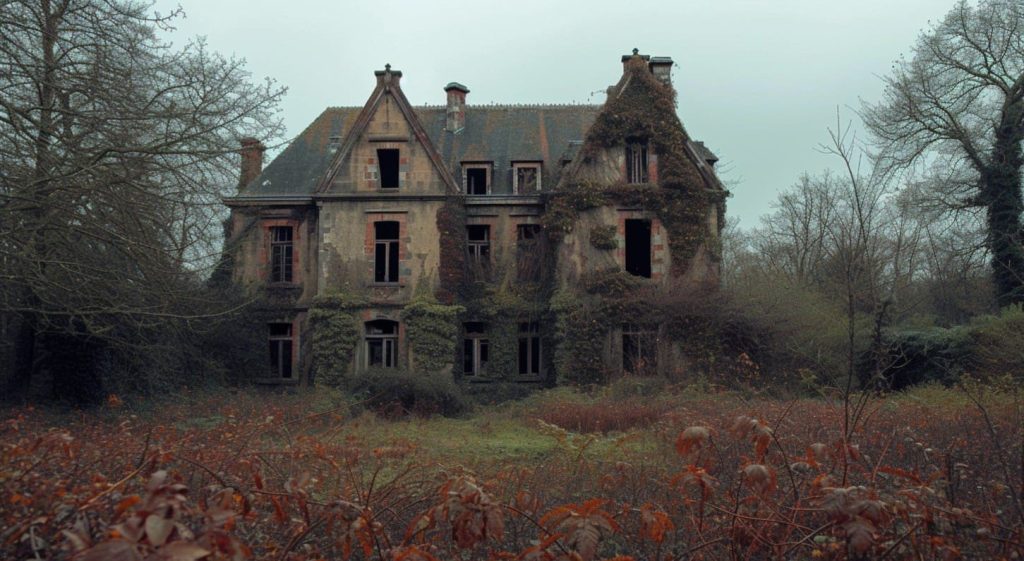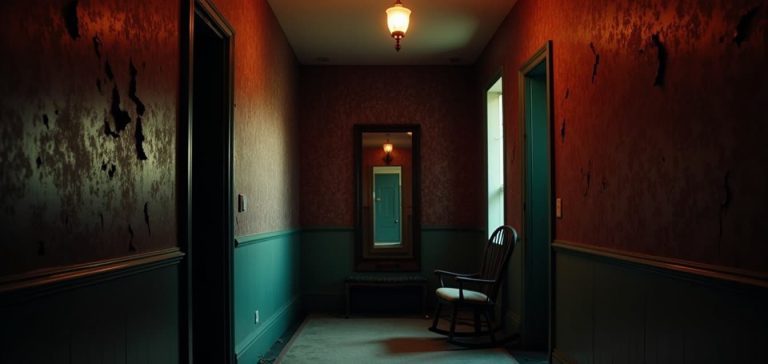

Else Ending Explained: Walking out of Else genuinely messes with your head. I sat there in total, stunned silence while the credits rolled, just trying to process the absolute madness I’d just watched. Honestly, it’s the kind of movie that leaves you with this weird, paranoid urge to check if your shoes are sticking to the floor. It completely skips trying to tell a normal story and goes straight for your nerves, leaving you feeling totally wiped out and hyper-aware of everything around you.
We are forced to confront our own internal boundaries as the house lights come up. The film turns the act of watching into something dirty and intrusive, making us feel like direct accomplices to the cosmic decay on screen. Trust me, it’s an experience that completely rejects easy answers, choosing instead to leave an indelible, oily fingerprint on your psychological well-being.
It makes you think about how we handle our own relationships when things get tough. You start realizing that the grotesque mutations on screen are just a giant, twisted mirror for the way we let ourselves get completely consumed by the people we love. It is a deeply uncomfortable realization that stays with you long after you leave the theater, completely changing the way you look at the walls of your own home.
Quick heads-up: We are diving straight into heavy spoiler territory from here on out. If you haven’t watched “Else” yet and don’t want the wild ending ruined, bookmark this page and come back once you’ve seen it!!
The Setup: Lore and Critical Rules of the Universe
To really understand what the hell just happened, we have to look closely at the terrifyingly intimate rules of this silent, surreal epidemic. This unnamed affliction doesn’t just kill its hosts; it physically merges human flesh with the non-living matter surrounding it. If a character leans against a wall for too long, sits static in a chair, or touches a bedsheet, their skin begins to fuse permanently with the fabric and concrete.
We see this early on when an unhoused man outside the flat melts directly into the pavement, requiring emergency services to physically tear his body from the street. Crucially, the narrative establishes that the infection triggers and accelerates when an unaffected person looks directly into the eyes of someone already changing. The transmission is fundamentally driven by empathy and receptiveness. True human connection literally acts as the environmental catalyst for your physical boundaries to dissolve into the architecture.
These rules turn everyday survival into a minefield of static terror for our characters. You cannot rest, you cannot seek comfort in furniture, and you certainly cannot look a loved one in the eyes when they are suffering. It creates a universe where cold, unfeeling isolation is the only clinical medicine left to preserve your anatomy.
The Catalyst: Where Everything Goes Wrong
The delicate sanctuary built by the introverted graphic designer Anx (Matthieu Sampeur) and the chaotic, expressive Cass (Édith Proust) shatters the moment isolation breeds codependency. Anx relies on rigid routines and ASMR videos to soothe his crippling anxiety, treating his apartment as a protective shield against the outside world. Cass, conversely, is a tornado of untamed energy who finds the physical constraints of martial law deeply suffocating.
The irreversible shift happens midway through their mandatory lockdown when they choose to abandon their psychological armor and look deeply into each other’s eyes. They break the universe’s ultimate rule of survival: to retain your individual human form, you must remain emotionally detached. Once that look is shared, a strange accumulation of pebbles and organic matter begins to manifest beneath the furniture, signaling that their shared environment is closing in.
Their mistake is beautiful but fundamentally fatal to their humanity, and we can all relate to that desperate need for closeness during a crisis. By choosing to truly see each other’s internal pain, they make a conscious choice to stop fighting the flat’s encroaching walls. It is a moment of romantic suicide that seals their physical fate, transforming their private domestic space into a literal, flesh-eating trap.
“If you are interested, you can check out our other detailed breakdowns on Hokum, Obsession, Passenger, and our complete breakdown of the Backrooms ending explained or track its arrival with the official Backrooms digital release date.“
Breaking Down the Climax: Step-by-Step
In the final fifteen minutes of the film, the apartment block completely transitions into a living, breathing labyrinth of flesh, wood, and drywall. Anx and Cass have mutated past the point of recognition, their bodies stretching across the rafters and melting into the room’s infrastructure. We hear the disembodied voice of their Japanese neighbor, Mrs. Setsuko, reciting a haunting story through the communal garbage chute about a prehistoric lungfish.
Suddenly, the film’s visual language undergoes a radical, jarring transformation that completely throws the audience for a loop. The vibrant, neon pinks and blues of the flat drain away completely, leaving a cold, high-contrast monochrome palette. At the exact same time, the widescreen frame constricts into a suffocating, boxy aspect ratio. The camera pans across abstract, shifting shapes of fused limbs, plaster, and everyday household items before exploding into a vast, featureless, monochromatic void where individual identity completely ceases to exist.
The sound design mimics this visual collapse, trading organic human noises for industrial hums and wet, rhythmic thumping. As we watch this happen, we are left staring at a landscape of living architecture that no longer resembles our world. The final sequence stops operating as a traditional movie narrative and morphs into a sensory, abstract gallery of human-concrete fusion.
Decoding the Core Metaphor: The Psychological Subtext
Let’s look past the Cronenberg-style body horror and practical effects for a second because beneath the surface, Else is a brilliant psychological dissection of relationship anxiety. Anx’s name is a transparent nod to his interior state; he embodies the terrifying fear of losing oneself to an intrusive partner or an overwhelming world. It also stems from a deeply buried trauma. As an 18-year-old, Anx watched his mother slowly succumb to cancer in this exact flat, describing her terminal decay as watching her “become a thing.” The virus physically manifests that grief, turning the act of watching a loved one change into an environment you literally can’t escape. The physical virus acts as a literal manifestation of what happens when you enter an intensely codependent, consuming relationship.
Your personal boundaries completely erode, and you physically dissolve into your partner’s environment until you can no longer tell where your ego ends and theirs begins. Director Thibault Emin uses the transformation to explore how modern life’s trappings drop away during trauma. The movie captures the ultimate paradox of intimacy: the terrifying reality that truly loving someone requires you to risk the total destruction of your independent self.
We see this play out as the couple struggles to maintain their individual routines amidst the rot. For anyone who has ever been in a heavy relationship, the apartment clearly represents the shared baggage, the unspoken compromises, and the claustrophobic weight of building a life with someone else. To fully belong to another person, the film argues that you must allow your own independent walls to be completely knocked down.
Hidden Clues and Foreshadowing You Missed
If you go back and watch the film a second time, you’ll realize Emin cleverly seeds the bizarre, architecture-fusing transformation from the very opening frames.
- The Macroscopic Epidermis: The movie opens with undulating, abstract images that look like microscopic textures of skin, which secretly mirror the vast, hill-and-valley landscapes of the final monochromatic void.
- The Snacking Guest: When Anx later scrolls through party photos to find Cass, the camera catches an alarming background detail of a guest shoving his hand into a snack bowl with a distinct, rocky rash already forming on his arm.
- The Disappearing Ambient Sound: During their earliest conversations, the intricate sound design drops all ambient city noises whenever the two leads lock eyes, hinting that their gaze is actively altering the physics of the apartment.
Furthermore, the physical layout of Anx’s apartment acts as a blueprint for their eventual transformation. The winding hallways and overlapping shadows mimic the pathways of a circulatory system, telling us the flat was already alive. Every framing choice by the director positions the characters as though they are already trapped pieces of furniture inside a display case.
The Tragic Irony of the Final Scene
The final, abstract shot of the movie presents a deeply haunting contradiction that flips traditional horror endings completely on their head. Anx and Cass are no longer human entities in a biological sense, yet they have achieved the absolute, uncompromised closeness they were desperately chasing. The tragic irony lies in the fact that Anx finally conquered his agoraphobia and fear of the outside world by letting his physical boundaries collapse entirely.
He no longer needs to hide inside his carefully designed apartment because he has literally become the structure itself. They are permanently united, free from the anxieties of performance and isolation, but the cost of their perfect union was the complete sacrifice of their humanity. It reframes the body-horror ending not as a bleak punishment, but as an unsettling, beautiful surrender to intimacy.
As viewers, we are left staring at a landscape that is simultaneously a graveyard and a sanctuary. Their human struggles with anxiety and longing are completely cured, but only because there are no humans left to feel them. It is a chillingly romantic victory achieved through total physical annihilation.
The Cyclic Trap: What Happens Next?
When the screen cuts to black, the film strongly points toward a massive, planetary paradigm shift rather than a standard post-apocalyptic dead end. The mutation we witness isn’t an execution sentence for the planet; it is the birth of an entirely new ecosystem where the line between biology and architecture is permanently erased. The building’s garbage chute evolving into a literal digestive tract shows that the built environment is waking up as a singular, conscious organism.
Mrs. Setsuko’s lungfish story reinforces the idea that humanity is simply undergoing a painful, forced evolution that cannot be halted by quarantine or military intervention. Future survivors outside the apartment block won’t find a medical cure. They will eventually be forced to make the same choice as Anx and Cass, letting go of their isolated individuality to join the collective, living landscape of the new world.
The military blockades and political broadcasts heard on the radio are revealed to be entirely pointless. You cannot declare martial law against the earth itself reshaping its surface. The cycle will inevitably continue city by city, block by block, until the entire planet is a single, conscious mass of living brick and bone.
Frequently Asked Questions: Clearing Up the Intriguing Mysteries.
- Why did the movie change to black-and-white and shrink its screen size at the end?
- The shifting aspect ratio and loss of color represent the characters’ reality literally closing in until only their core connection matters. By stripping away the vibrant hues and expansive framing of the old world, the film creates a blank, monochromatic canvas that mirrors their brand-new, unified state of existence. This visual trick also detaches us from a realistic setting. It signals to the audience that we have left the realm of human logic and entered a purely symbolic, surreal space.
- What was the meaning of the story about the prehistoric lungfish told through the vents?
- The parable of the lungfish explains that leaving a safe environment feels like choosing death, but it is actually the mechanism for necessary evolution. It tells us that Anx and Cass merging with the building isn’t a tragic defeat, but a painful, triumphant metamorphosis into a new species capable of surviving the altered world. It frames the horrific physical merging as a natural biological progression. The pain of the transformation is just the price of adapting to a brand-new era of existence.
- Did Anx and Cass actually die in the finale?
- Physically as individual humans, yes, but their consciousness completely survived the change. They transitioned from isolated people into a shared, sentient environment, proving that the virus doesn’t annihilate life—it merely reorganizes it into a collective form. They no longer exist as separate bodies, but their emotional bond remains the foundation of the new structure. Their love quite literally became the very mortar holding their new world together.
About the Author.
Hi, I’m Vansh, the founder of Vibe On Cue. I track the absolute best ways to experience cinema, from the biggest Hollywood Blockbusters and upcoming release dates to the finest details of PVOD & Streaming and pristine Blu-ray & 4K physical media. And when the credits roll, I break down the narrative with deep-dive Ending explained guides. If you live for the full life cycle of film, stick around and explore the site!!!