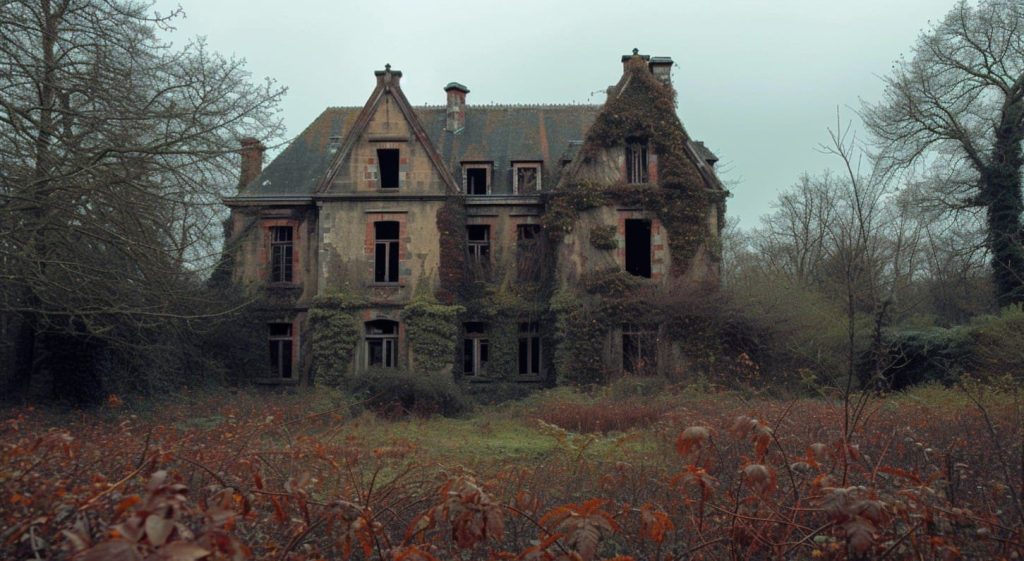

Scream Ending Explained: By the time the party gets going in Scream, you’ve suspected nearly everyone: the boyfriend, the film nerd, the goofy deputy, even the reporter. Then the boyfriend staggers in, bleeding, and for about a minute you let your guard down. That’s the minute the movie has been saving.
What follows is one of the most talked-about finales in horror. Two killers, a plan that sounds almost reasonable if you say it fast, a very long kitchen conversation, a television set, and a survivor who has finally had enough. Everything happens fast and gets pretty noisy. The bad guys end up spelling out their whole plan in a hurry while people are bleeding all over the house.
So if you came away asking why they did it, how he faked that wound, what the plan was for the morning after, or why on earth the villain kept getting back up, you’re in the right place.
I’ll cover the questions in the order the movie raises them, rely only on what the film shows, and label my own guesses as guesses. Full spoilers for the 1996 original are ahead, and I’m mostly leaving the sequels out of it.
Heads Up: We are jumping straight into the deep end of the plot twists now. If you hate spoilers, close your eyes and turn back. (Or, you know, go watch the movie and come right back)!
Who’s Who in Scream?
A lot of names come up below, so here is a quick reference.
Sidney Prescott (Neve Campbell): A high school student dealing with the first anniversary of her mother’s murder.
Billy Loomis (Skeet Ulrich): Sidney’s boyfriend and a horror fan.
Stu Macher (Matthew Lillard): Billy’s best friend and Tatum’s boyfriend.
Randy Meeks (Jamie Kennedy): The video-store guy who knows every horror rule.
Gale Weathers (Courteney Cox): A reporter who wrote a book about Sidney’s mother’s case.
Dewey Riley (David Arquette): A deputy sheriff and Tatum’s older brother.
Tatum Riley (Rose McGowan): Sidney’s best friend.
Neil Prescott (Lawrence Hecht): Sidney’s father, who’s away when the story starts.
Cotton Weary (Liev Schreiber): The man convicted of killing Sidney’s mother.
Ghostface (voice of Roger L. Jackson): The killer’s phone voice.
How Did the Night Get to Stu’s Party?
You need the short version to follow the ending, so here it is.
The film opens with Casey Becker, home alone on a phone call that turns sadistic over horror trivia. She and her boyfriend Steve are both killed. The next morning, the town is in shock, and Sidney is dreading the anniversary of her mother Maureen’s murder, for which Cotton Weary was convicted.
When a masked killer attacks her at home, her boyfriend Billy climbs through her window right after, and she notices he’s dropped a cell phone. He’s arrested, but later released.
Over the next day, the killer calls Sidney again, Principal Himbry is murdered, and school is canceled. Stu throws a party at his remote house to celebrate. Gale and Dewey keep watch.
Tatum is killed in the garage while Randy explains the “rules” of surviving a horror movie to the crowd. Then word of Himbry’s body pulls most of the guests away, which leaves Sidney, Billy, Randy, Stu and Gale’s cameraman Kenny at the house.
Billy and Sidney go upstairs. Ghostface appears and stabs Billy. Sidney runs, Kenny and Dewey are attacked, and Gale crashes her news van and is knocked out. Sidney locks herself in the house with Stu and Randy outside, each accusing the other, and the final stretch kicks off from there.
What Does Billy’s Dropped Cell Phone Mean?
Right after the first attack on Sidney at home, the killer slips away, and Billy climbs through her window. It looks like he’s rushing to help. But Sidney spots something odd: a cell phone slides out of his pocket. The killer has been making calls, and a cell phone in the wrong place sets off alarms for her. Billy is arrested.
It’s a smart bit of misdirection. The phone is a real clue, and it points straight at him. But Billy is released, and the calls keep coming. Now the audience has a problem. If Billy is innocent, what was the phone about? And if he’s guilty, how is the killer still calling?
The movie lets that question hang for most of its running time, then answers it with the reveal. The phone was a real clue, and Sidney was right to be suspicious. She just couldn’t have known there were two of them, so the evidence kept getting canceled out. Has a movie ever made you feel smarter and dumber in the same scene?
Who Is Ghostface, and Why Are There Two of Them?
Get this one right and a lot of the finale falls into place.
Ghostface isn’t a person. It’s a costume, a black robe with a white mask, and anyone can wear it. In this story, two people do: Billy and Stu. That’s how the film pulls off its tricks. When one of them is seen somewhere else, the other can be on the phone or in the hallway.
The film plants a clue that makes this clear in hindsight. The cops lock Billy up, but Sidney still gets a phone call from Ghostface. As far as we know, Billy is sitting in a jail cell when that phone rings. It’s a neat bit of timing. If the killer is calling while Billy is locked up, then it can’t be Billy, right? That’s what the movie wants you, and Sidney, to believe for a while.
Then there’s the phone trace. The police find that the calls come from Neil’s cell phone, but they can’t find Neil. That’s another piece of the plan, and we’ll come back to it. For now, notice how every clue that seems to clear one person actually helps the pair. Two killers means one of them always has an excuse.
How Does Principal Himbry’s Death Fit Into the Finale?
It’s easy to forget about Principal Himbry, because he appears briefly and dies off to the side of the main story. But his murder is what shapes the party.
After he’s killed in his office, classes are suspended, and Stu throws a party to celebrate the day off. Then, partway through the party, news arrives that Himbry’s body has been found hanging, and most of the guests leave to go look. That leaves only a handful of people in the house: Sidney, Billy, Randy, Stu and Kenny.
What difference does that make? A crowded party is a bad place for a finale. With dozens of people around, two killers can’t corner anyone. By emptying the house, Himbry’s death turns a loud social event into a small, closed space where the final conversation can happen.
Whether or not the killers planned it that way, it works out neatly for them. Have you ever noticed how often the guest list in a horror movie shrinks right when things get serious?
What Did Sidney Know About Her Mother’s Murder Before the Reveal?
It helps to remember what Sidney has been carrying. A year ago, her mother was murdered, and Cotton Weary was convicted after Sidney identified him. Then Gale Weathers shows up with a book that suggests Maureen had several affairs, including one with Cotton, and that he was misidentified. Sidney is furious, because it threatens the one thing she’s held onto: that the right man is in prison.
So when Billy says he and Stu killed Maureen over an affair, it lands in two ways at once. It confirms that Gale was at least partly right about Maureen’s secret life, and it means Cotton didn’t do it. In a single speech, Sidney’s whole picture of her mother’s death is rewritten, and the person doing it is the boy she trusted.
That’s why the confession feels so cruel. It isn’t just a villain explaining himself. It’s Sidney finding out that the story she’s built her grief around was wrong, from the very person who held her hand through it.
Why Did Billy and Stu Do It?
Once the killers are revealed, they explain themselves, and the explanation is shorter than you’d expect.
Billy explains that they targeted Sidney’s mom because he found out about her secret relationship with his dad. That affair, he says, drove his own mother to abandon the family. So the whole thing starts with a boy who lost his mother and found someone to blame.
It also explains a moment earlier in the film. After he’s released, Billy tells Sidney, in a clumsy attempt to relate, that his mother’s abandonment felt like her mother’s death. At the time, it sounded like an awkward bid for sympathy. Looking back, it’s a slip. He’s telling her something true, in the worst way.
So what about Stu? The movie never gives him a deep reason. He’s Billy’s friend, he’s loud, he’s goofy, and he goes along. His motive is much thinner than Billy’s, and that’s part of what makes it unsettling.
One has a serious chip on his shoulder, and the other guy just seems happy to be included in the chaos. Is that scarier or less scary? It may be both, because it means the second person didn’t need much convincing.
How Did Billy Fake Being Stabbed?
You may be wondering how a man who was stabbed minutes earlier could walk back in and look fine. The answer is that he wasn’t really stabbed, at least not yet.
When Billy reappears, he looks wounded, and Sidney lets him in. Later he reveals that he faked his injuries. That means the earlier attack, when Ghostface appeared and stabbed him, was staged. Since Billy was the one “stabbed,” the person in the costume had to be Stu, which tells you the two were working together from the start.
Why go to that trouble? It clears his name exactly when he needs it most. A boyfriend who’s been stabbed by the killer can’t also be the killer. It buys him time to get back inside, win Sidney’s trust, and set up the next move.
And look at how it plays out. Sidney gives Billy the gun, because he’s hurt and she needs help. He uses it to shoot Randy and reveal himself. The wound was never the point. The point was getting a gun in his hands without anyone expecting him to use it.
What Are Stu and Randy Doing Outside the House?
When Sidney locks herself in the house, Stu and Randy are stuck outside, and they immediately accuse each other of being the killer. It’s a funny, tense little scene, and it does an important job: it makes you suspect Randy and Stu one last time.
Why does the film bother me? Because Randy is innocent, and the film still wants you to doubt him. The horror-movie expert who talks about rules is, for a moment, the person you think is behind the mask. And Stu, who is guilty, gets to play the panicked friend. He’s a good actor for someone with so little motive.
The truth comes out after Billy lets Randy in and shoots him. Stu then talks into a voice changer, which is the moment he stops pretending. Notice how quickly the accusations end once the real situation is clear. All that suspicion was theater, and the two killers had been enjoying every minute of it.
Why Does Sidney Let Billy Back In?
A fair question, because from the outside it looks like a mistake. Sidney has just seen Billy get stabbed, she’s alone, and she’s locked the doors. When he reappears, hurt and pleading, she opens up. She even hands him the gun.
Why would she? Because everything she has just watched supports his story. Billy was apparently attacked by Ghostface. As far as she knows, he was in custody when the killer called. He’s the person who has stuck close to her all week. Letting him in is the obvious choice with the facts she has.
That’s the cruelty of the plan. It doesn’t rely on Sidney being foolish. It relies on her being decent and sensible. The movie makes sure you feel how reasonable her choice was, so that the betrayal hurts, and so that her recovery in the kitchen feels earned.
What Was the Plan for After the Killings?
If it had worked, the plan would have been tidy, in a horrifying way. The movie lays it out in the kitchen scene, and it has three parts.
First, they kidnapped Neil and kept him out of sight. That’s why he’s missing all night, and why the police trace the calls to his phone. Second, they planned to kill Sidney and blame everything on him.
A father who snapped and killed his daughter’s friends and then his own child is a story that sounds terrible and plausible. Third, they would stab each other to look like survivors who barely made it out alive.
Count how much planning that takes: the calls, the frame-up, the fake injury, and a party at Stu’s remote house where the crowd drifts away once Himbry’s body is found. It’s a plan built around Sidney’s father as the villain and the two of them as the heroes who fought him off.
It also ties to an earlier thread. Cotton Weary is already in prison for Maureen’s murder. So the same family has now had two wrong people blamed for its tragedy, first Cotton and then Neil. That detail matters, because Billy’s confession means the town got it wrong once already.
How Do Phones Tie the Whole Movie Together?
Look back at the film as a whole, and phones are everywhere. The first scene is a phone call. Ghostface’s voice, disguised, is how the killer controls people from a distance. Billy’s dropped cell phone is the clue that gets him arrested. The calls are traced to Neil’s phone, which is how the killers frame him. And in the finale, Sidney is the one who uses a phone against them.
What’s the point? A phone lets someone talk to you without being seen. For a killer, it’s a way to be in two places at once, to scare you while appearing to be somewhere else. Two killers with a voice changer can cover a lot of ground. That’s why the technology is so useful to them and so frightening to everyone else.
And that’s why it’s satisfying when Sidney flips it. The tool the killers used to hide, a voice on the line, becomes the tool she uses to find them. It’s a small payoff, but it closes the loop the movie opened in its first minute.
Why Do the Killers Explain Everything in the Kitchen?
Once they have Sidney cornered, Billy and Stu don’t just finish the job. They stand there and discuss their plan, from the kidnapping to the frame-up to the fake survivor story. It’s the classic villain monologue, and the movie knows it.
Why do they do it? Vanity is one reason. These are two people who love horror movies and see themselves as the stars of one. A good plan doesn’t feel complete until somebody hears it. There’s also a practical reason: Sidney is going to die anyway, in their minds, so there’s no harm in talking.
But the monologue buys time. Every minute they spend explaining is a minute for Gale to wake up, for Sidney to look around, and for the plan to crack. The film is poking fun at the habit, and also using it. They talk themselves into trouble. If they’d simply acted, would the night have ended differently?
What’s the Deal With Billy’s Famous Movie Quote?
During the confrontation, Sidney tells Billy he’s seen one too many movies. His answer is the line most people remember: movies don’t create psychos, they just make psychos more creative.
What does he mean? The film is full of characters who talk about horror movies. Randy is basically a walking guidebook, and the killers quote and imitate them. So you could be forgiven for thinking the killers are a product of that.
Billy is correcting that idea. He’s saying the movies didn’t give him the urge. He already had it. The movies just gave him a better way to dress it up.
That matches everything else in his story. His motive isn’t a horror trope. It’s personal: a mother who left, a woman he blamed, a girl he wanted to hurt. The mask, the creepy calls, and the horror trivia are just window dressing.
To me, that’s the film’s quiet answer to the question it keeps asking about itself. Are these people monsters because of what they watch? No. They’re regular, unhappy people who found a script that fit. Does that make the horror worse or better? That’s up to you.
Does Sidney Break Randy’s Rules and Survive Anyway?
Early in the party, Randy explains how to survive a horror film. Characters who drink, take drugs, or have sex die. Plus, saying “I’ll be right back” is basically a guaranteed death sentence.
Now compare that to what happens. Sidney, a few minutes after that speech, sleeps with Billy. By Randy’s rules, she should be next. And yet she’s the one who walks out alive.
That’s the movie having fun with its own genre. It sets up a rule, lets a character break it, and then refuses to punish her. What does that tell you? It tells you the rules were never real. They’re how the killers think, not how the world works. A movie where you can survive by following a checklist would be predictable, and this one wants to surprise you.
Randy is part of the joke too. The film’s rule-expert is the one who gets shot, and he survives, but not because he followed his own advice.
He survives because the people around him did something smart. The rules, in other words, are a joke the movie keeps telling and keeps breaking.
How Does Sidney Turn the Tables?
When Billy and Stu corner Sidney in the kitchen, it seems like the end for her. Gale, who was knocked out in her van earlier, shows up and distracts them. That’s all Sidney needs.
She takes the killers’ own tricks and uses them against them. She makes a phone call, and she puts on the Ghostface costume, which lets her surprise Stu. She knocks Billy out. Then she drops a television set on Stu’s head, killing him.
Notice what’s missing. Sidney isn’t rescued by Dewey or by the police. Gale gives her a chance, but Sidney is the one who takes it. After a night of being scared, tricked, and cornered, she stops reacting and starts acting. The movie makes you feel that shift, and it’s one of the reasons the ending works.
Gale deserves a second look too. She spends most of the movie chasing a story, and now she’s the one who gives Sidney her opening. It’s an unexpected turn, and it fits the movie’s habit of flipping what you thought you knew about people.
What Did Dewey Do the Whole Night?
Dewey is easy to overlook, but he matters to the ending. He’s the deputy who arrested Billy, and he spends the party watching over the crowd with Gale. When the guests leave to look at Himbry’s body, they nearly run Dewey and Gale over, and that detour leads them to Neil’s hidden car.
That discovery is the reason Neil is found at all. Without it, the frame-up might have lasted longer. Dewey is also attacked, stabbed by Ghostface during the chaos, and the film shows him taken away by ambulance in the morning.
Why does the movie keep this character around? Because he’s the kind of person the genre usually loses early: a goofy, friendly authority figure who’s never quite taken seriously. He’s still there at the end, hurt but present. For a film that spends so much time killing people, that counts as a kind of mercy.
Why Does Billy Keep Getting Back Up?
Billy doesn’t go down easy. Sidney knocks him out, he wakes up and attacks her, Gale shoots him, and he rises again. Randy, from the couch, says the killer always comes back for one last scare. Billy lunges. Sidney shoots him in the head.
What’s going on? It’s the genre’s oldest trick, played out loud. In slasher movies, the killer who seems dead often isn’t, and the movie knows you know it. By having Randy announce it right before it happens, the film gets to scare you and wink at you in the same moment.
There’s a difference worth noticing, though. Billy isn’t a supernatural force. He’s a teenager with a gun and a plan. When he gets up, it isn’t because he can’t die. It’s because he refuses to lose. And this time, the final shot is a real one.
Sidney ends it, and there isn’t a “maybe.” That’s a quiet contrast with the horror classics the film is poking fun at. If you want to see how a monster who truly won’t stay down is handled, my breakdown of the 1978 Halloween ending covers it.
Why Does Sidney Get the Last Shot?
Gale shoots Billy first, and he gets back up. Sidney is the one who finally ends it, with a shot to the head after Billy lunges one more time. It’s worth asking why the movie gives her that moment instead of letting Gale or Dewey handle it.
The simplest reason is that the story is hers. She’s the person whose mother was killed, whose boyfriend turned out to be the villain, and whose father was used as a pawn. For the whole film she’s been on the receiving end of other people’s plans. The final shot is the first time she gets to decide how something ends.
It also matches the way the night has gone for her. She doesn’t wait to be saved. She gets help from Gale’s timing and a lucky television, yet she’s the person who keeps acting.
When Billy comes at her again, there’s no hesitation, and no speech. She just finishes it. Would the ending feel as satisfying if someone else had pulled the trigger?
Who Survives, and What Happens Afterward?
When the sun comes up, Neil is rescued, Dewey is loaded into an ambulance, and Gale reports on the night’s events. Randy, who was shot, is alive and able to warn everyone about the last scare. Sidney is exhausted but safe.
It’s an oddly calm ending after such a loud finale. The movie doesn’t show funerals or investigations. It lets the morning light do the work. For the first time in a long while, nothing is coming for Sidney.
There are still some loose threads. The movie never says how badly Dewey is hurt. It doesn’t say what happens to Cotton, the man who was convicted of Maureen’s murder even though Billy has now confessed to it.
And it doesn’t tell you whether Sidney will ever feel safe again. Why leave those open? Because the story is about a night, not an aftermath. It’s content to end when the danger is over and leave the rest to you.
Why Does the Movie End in Daylight?
After a night of darkness, sirens and screaming, the final scene is quiet. Dawn breaks over the house. Neil is rescued, Dewey is taken away, and Gale stands in front of a camera and reports on what happened.
That last detail is easy to miss. Gale, the reporter who spent the film chasing the story, gets the final shot as the person telling it to the world. It’s a small, wry note: the night’s horror has already turned into the next day’s news.
Why end there and not on Sidney? Because the movie has been poking at the way stories get packaged and passed along, from horror trivia to news reports. Ending the movie with Gale is a quick reminder that their real-life nightmare is already being packaged as tomorrow’s news. It’s a little unsettling, and it’s a good final beat. Does it make you wonder what you’ll say when someone asks you how the movie ended?
What Does It All Add Up To?
At its heart, the ending of Scream is about two people using a story to hide a very ordinary wound. Billy lost his mother, found someone to blame, and built an elaborate show around his anger. Stu joined because it was exciting. Everything else, the rules, the phone calls, the mask, was a costume.
And what beats them isn’t a rule or a trick. It’s a person who refuses to play along. Sidney survives because she keeps thinking, keeps moving, and takes the chance when it comes.
The movie spends two hours telling you how these stories are supposed to go, and then it lets her break all of those expectations. That’s what leaves you smiling, even after all the blood.
Scream spends its whole runtime referencing the classics, and you can see exactly where those survival rules actually started in my deep dive on Halloween (1978)!
TL;DR: Scream in 60 Seconds!
- Ghostface isn’t one person. It’s a costume shared by Billy and Stu, and that’s how the killings and the phone calls line up.
- Billy’s reason is personal: he blames Sidney’s mother for the breakup of his family, and he and Stu killed her.
- Stu’s reason is thin. He seems to be there mostly because Billy is.
- Billy’s “stabbing” is part of the plan. It’s the first act of a show meant to make the two of them look like victims.
- The killers kidnapped Sidney’s father to frame him for everything, and the plan was to kill Sidney too.
- Sidney survives by thinking faster than they do, with a surprise assist from Gale, who comes back at exactly the right time.
- Billy’s last attack is the movie playing the genre’s “one last scare” rule out loud, and then ending it for good.
FAQ: The Quick Summary!
Who are the killers in Scream (1996)?
Billy Loomis and Stu Macher share the Ghostface costume and work together.
Why did Billy kill Sidney’s Mother?
He blamed her for an affair with his father that caused his own mother to leave the family.
How did Billy fake his Injuries?
The earlier stabbing was staged with Stu in the Ghostface costume so that Billy would look like a victim.
Does Dewey die at the End of Scream (1996)?
The film shows him taken away in an ambulance and doesn’t confirm how badly he’s hurt.
About the Author.
Hi, I’m Vansh, the founder of Vibe On Cue. I track the absolute best ways to experience cinema, from the biggest Hollywood Blockbusters and upcoming release dates to the finest details of PVOD & Streaming and pristine Blu-ray & 4K physical media. And when the credits roll, I break down the narrative with deep-dive Ending explained guides. If you live for the full life cycle of film, stick around and explore the site!