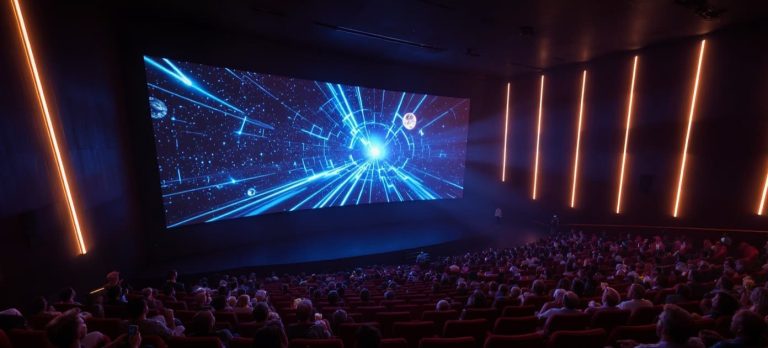

Let’s be honest: streaming movies at home in 2026 is dangerously comfortable. You can watch a crisp 4K HDR movie on your couch, wearing your favorite sweatpants, without some random guy chewing popcorn at 90 decibels next to your ear. With giant OLED TVs and decent soundbars dropping in price every year, the average living room setup is putting standard local theater screens to absolute shame.
Yet, millions of us still haul ourselves to the theater. Why? Because standard theater screens kind of suck now, and understanding exactly what happens behind the scenes makes all the difference when deciding whether to pony up for a premium ticket. That’s where this complete guide comes in to get Dolby Cinema explained without the boring manual jargon.
But what actually happens when you cough up that extra $5 to $8 for a ticket? Is it just high-level marketing BS designed to empty your wallet, or is it legitimately better than the competition?
The TL;DR: What is Dolby Cinema anyway?
When you look at most premium theater formats, they usually brag about one specific feature. IMAX gives you a massive, towering screen. A standard “premium” digital theater might brag about its upgraded sound system or its plush seats.
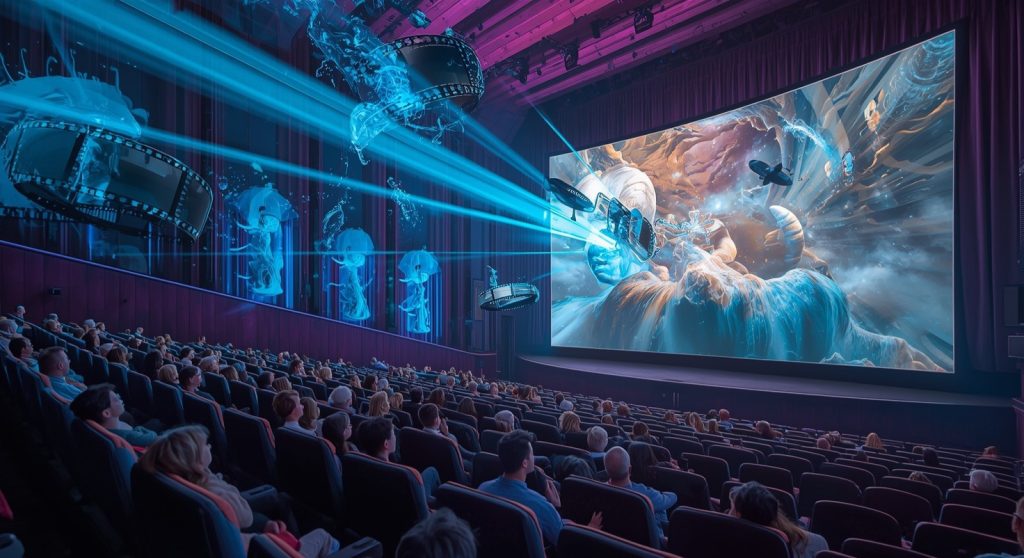
Dolby Cinema, however, is the ultimate crossover episode. Instead of upgrading just one thing, Dolby completely re-engineers the whole auditorium from the ground up to ensure every element works in perfect harmony. The picture, the audio, and the actual architecture of the room work together so you don’t feel like you’re staring at a flat screen; you feel wrapped up in a fully cohesive sensory universe.
It all breaks down into three main pillars:
- Dolby Vision: Insanely bright dual-laser projection with contrast ratios that make standard screens look prehistoric.
- Dolby Atmos: True 3D object-based audio that moves around and above you with laser precision.
- The Inspired Design: Perfectly angled rows, acoustic calibration, low-lighting environments, and red plush luxury recliners that literally rumble with the sub-bass so you feel the movie in your bones.
The Origin: How Dolby Accidentally Ruined Regular Theaters For Us?
This wasn’t an overnight upgrade. Dolby Laboratories has spent decades slowly taking over how we experience movies.
The obsession started all the way back in the 1990s when Dolby Digital brought multi-channel sound to theaters, making big orchestral scores and action sequences sound massive for the first time. Next, they engineered Dolby Vision HDR to fix how washed-out colors looked on digital projectors.
The absolute game-changer dropped in 2012 with Dolby Atmos. Instead of just panning sound from left to right, Atmos completely revolutionized cinema audio by allowing sound to move freely in three-dimensional space. Hollywood directors immediately fell in love with it because it gave them ultimate control over their storytelling. Dolby Cinema is the ultimate culmination of all those decades of tech packed into a single room.
Dolby Vision: Because “Regular” Theater Screens Are Too Dim
If you’ve ever sat through a moody sci-fi thriller or a dark horror movie in a standard theater and thought, “Why is this screen so muddy I can barely tell what’s happening?” you are not alone. Standard commercial projectors use aging bulbs that lack contrast and brightness.
Dolby Vision is the brain of the visual setup. It utilizes dual-laser 4K projectors that completely trash standard digital screens.
- Real Blacks, Not Muddy Gray: In a normal theater, “black” looks like a washed-out dark gray because the projector light leaks onto the screen. Dolby Vision can turn off light output completely for specific pixels, ensuring that dark alleys or dimly lit corridors look terrifyingly deep and real.
- High Dynamic Range (HDR) Pop: This ensures both the brightest highlights and the darkest shadows retain flawless detail without getting clipped. Neon lights look electric, cosmic phenomena look tangible, and explosions actually look like blazing fire instead of a blurry yellow blob.
- Details You’d Usually Miss: Because the pixel mapping is incredibly precise, you can spot the individual textures on a costume, the shimmer of light on water, or a single tear in an actor’s eye.
- The 3D Savior: If you’ve ever hated 3D movies because the glasses make the screen look dark and depressing, Dolby fixes this. The raw brightness of Dolby Vision combined with properly fitted Dolby 3D glasses ensures that 3D films are actually sharp, bright, and realistic.
Dolby Atmos: Sound That Attacks You From All Angles
If Dolby Vision is the eye candy, Dolby Atmos is the ear candy.
Traditional theater sound is incredibly basic. It’s “channel-based,” meaning engineers just blast audio out of big speaker groups on the left wall, right wall, or behind you. If a spaceship flies overhead on screen, the sound designers just fake it by cranking the volume on the side speakers.
- Speakers Everywhere: A legit Dolby Cinema has an array of specialized acoustic speakers installed on the ceiling directly above you, creating true vertical sound motion.
- True 3D Sound Movement: If an enemy throws a weapon from the front left of the frame to the back right, the sound smoothly tracks across the room in a perfect diagonal line, matching reality.
- The “Whisper” Factor: Atmos handles quiet nuances masterfully. When a character whispers right behind your left ear, it sounds so directional and close that it will legitimately trigger your anxiety.
The Premium Showdown: Dolby Cinema vs. The Competition
When you’re staring at your ticketing app trying to justify spending your hard-earned cash on a premium format, you’ve got a few competing choices. Let’s break them down honestly.
IMAX
IMAX is like that friend who thinks louder and bigger is always better. It gives you a massive, towering screen which is great for scale and epic, world-ending blockbusters. However, because it focuses heavily on raw size, it often lacks visual and auditory precision. The colors can look slightly washed out compared to Dolby, and the sound design completely lacks Dolby’s pinpoint 3D spatial object tracking.
4DX
This is the theme-park novelty option. If you want your chair to violently shake, water sprayed in your face, wind generated in the room, and random scents blasted at your nose, go for it. But if you actually want to pay attention to the movie’s plot or enjoy fine details without getting whiplash, avoid it. It completely distracts from actual storytelling.
ScreenX
This format wraps the movie onto the side walls of the theater, creating a 270-degree viewing experience. While it sounds visually interesting in theory, the side projections are often blurry, it only works for specific scenes, and it completely forgets to upgrade the audio precision. It’s mostly just a gimmick.
Pro-Tips: How to Hack Your Dolby Cinema Visit
Do not just blindly buy any random ticket on opening night and hope for the best. If you’re paying premium upcharges, you need to optimize.
1. The “God Tier” Seating Strategy
Are all seats created equal? Absolutely not. In a Dolby auditorium, you want to be completely centered horizontally. Aim for the middle rows, slightly above the exact geometric center of the theater. If you sit too close to the front, the dual-laser projectors will overwhelm your vision; if you sit too far back against the wall, you lose the dome-like effect of the overhead ceiling speakers.
2. Pick the Right Genre
Don’t waste an extra $8 to see a slow-paced indie drama where two people sit in a brightly lit kitchen talking for two hours. Save Dolby Cinema for the massive blockbusters. It completely shines during heavy sci-fi epics, dark horror films, and complex action movies where the color grading and audio mapping take weeks for filmmakers to finalize in post-production. Even remastered older film classics gain an insane second life here.
3. Not All Auditoriums Are Maintained Equally
Even though Dolby Laboratories enforces incredibly strict quality baselines, some local commercial chains manage their gear better than others. If the projectors are slightly out of calibration or a ceiling speaker is blown, you are getting ripped off. Do a quick search on local movie forums or Reddit to see which specific location in your area has the best-maintained Dolby room.
How to Find a Legit Dolby Cinema in the USA?
Alright, you’re sold. But if you live in the United States, you can’t just stroll into any random theater chain and expect an authentic Dolby setup. You have to know the landscape.
- Hunt Down an AMC Theatre: In the US market, AMC has the exclusive premier partnership for Dolby Cinema. If you are looking at tickets for a Regal, Cinemark, or Marcus theater, you are not getting the official, fully loaded Dolby package.
- Look for the Exact Label: Make sure your digital ticket explicitly says “Dolby Cinema at AMC.” Do not get tricked by auditoriums that merely say “Dolby Atmos audio available.” A standard theater can hook up Atmos speakers, but without the dual-laser Dolby Vision projectors and the custom-built rumbling acoustic seats, you’re only getting a fraction of the real experience.
- The Big City Advantage: Major US metropolitan hubs like New York, Los Angeles, Chicago, Dallas, and San Francisco have multiple Dolby locations to choose from. If you live near one, look for the newer builds, as their laser setups are pristine.
- Book Way in Advance: Because Dolby auditoriums utilize massive, premium electronic recliners instead of cramped, traditional stadium seating, the rooms actually hold fewer total people. For massive, highly anticipated blockbusters, those prime “God Tier” middle seats will sell out days, sometimes weeks before the premiere. If you don’t plan ahead, you’ll be stuck sitting in the front corner getting a massive neck cramp.
The Final Verdict: Is the Upcharge Actually Worth It?
Look, Dolby Cinema isn’t just about throwing fancy, expensive tech at a wall to see how loud or bright they can make a screen. It’s a total cinematic philosophy.
When top-tier directors spend months meticulously tweaking the exact color contrast of a dark scene or carefully placing sound cues to build psychological dread, standard theaters completely ruin it. They use cheap bulbs, outdated speakers, and poor room acoustics that wash out the artistic vision.
Dolby Cinema is the only major format that locks down the environment so tightly that you experience the movie precisely how it was mastered in the studio. It makes blockbusters feel monumental, it makes horror movies intensely terrifying, and it makes sci-fi look like a flawless window into another universe.
The next time a massive movie drops, skip the couch streaming, bypass the over-hyped IMAX screen, and use Dolby’s official locator to find your closest AMC Dolby auditorium. Your eyes and ears will thank you.
About the Author.
Hi, I’m Vansh, the founder of Vibe On Cue. I track the absolute best ways to experience cinema, from the biggest Hollywood Blockbusters and upcoming release dates to the finest details of PVOD & Streaming and pristine Blu-ray & 4K physical media. And when the credits roll, I break down the narrative with deep-dive Ending explained guides. If you live for the full life cycle of film, stick around and explore the site!!!