
Victorian Psycho 2026 Release Date: Somewhere in 1858, a governess is quietly deciding who gets to survive the week and horror fans have been circling the calendar ever since her first blood-streaked trailer dropped. Whether you’re desperately searching for the official premiere date or just wondering if it’s worth a trip to the theater, here is everything we actually know for sure right now.
It’s rare for a horror film to generate this much conversation before it’s even opened, but Victorian Psycho has managed it by leaning hard into a single, irresistible pitch: what if the most controlled, buttoned-up era of English history had a Patrick Bateman hiding inside one of its households, and that household happened to hire her as a nanny? Just hearing that setup was all it took to hook random scrollers and have them memorizing the premiere date.
Half the reason people are still talking about it is because the movie itself has mutated so much since the initial announcement. A different lead actress, a different distributor, a script written by the original novelist herself. This is a film that’s been rebuilt in public, and somehow came out the other side with more momentum than it started with. Before getting into the release date itself, it’s worth understanding just how unusual that journey has been.
Quick Answer: When Does Victorian Psycho Come Out?
Victorian Psycho opens exclusively in U.S. theaters on November 13, 2026, distributed by Bleecker Street. That date comes straight from the studio’s own film page, so there’s no ambiguity here, no “targeting a fall window,” no “sometime in Q4.” It’s locked, it’s on the calendar, and tickets are being teased through Bleecker Street’s own reminder signup.
The film already had its formal coming-out party earlier this year. It premiered at the 2026 Cannes Film Festival in the Un Certain Regard sidebar back in May, which is typically where festivals slot in the stranger, riskier, more auteur-driven work rather than straightforward crowd-pleasers. That pedigree matters here, because Victorian Psycho isn’t a mainstream studio horror release; it’s an arthouse-adjacent swing that happens to have a killer premise and a genuinely starry cast.
What Is Victorian Psycho About?
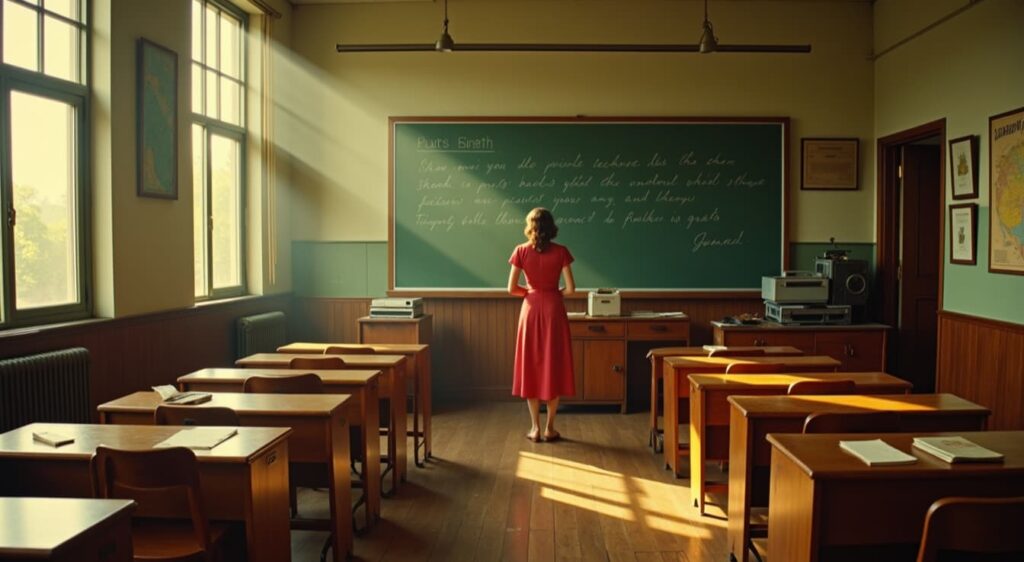
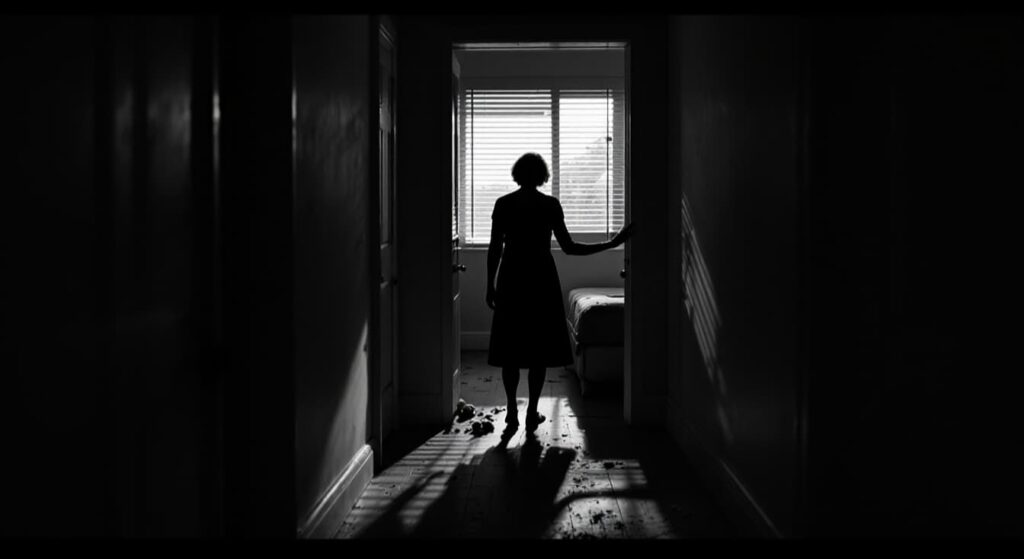
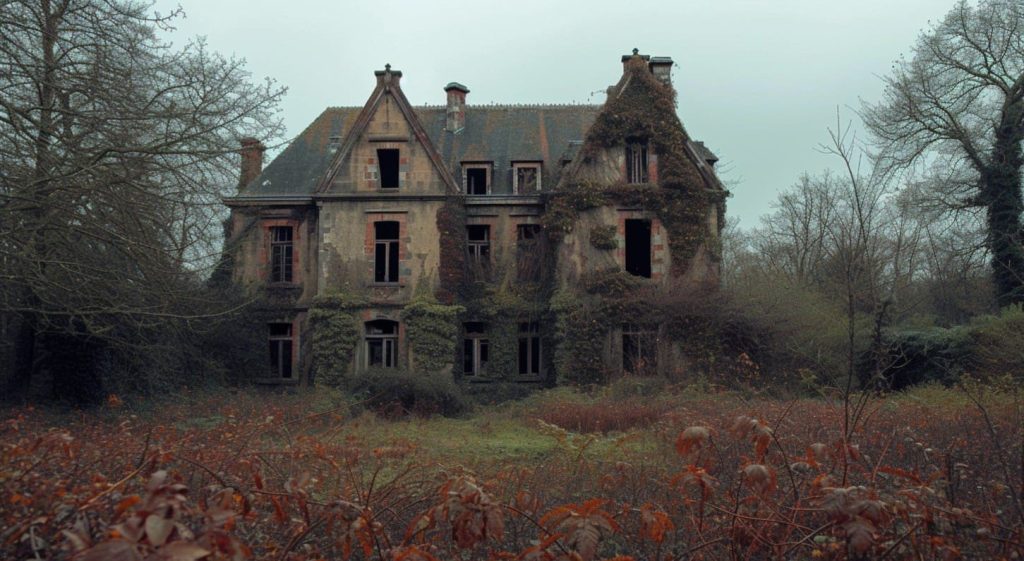
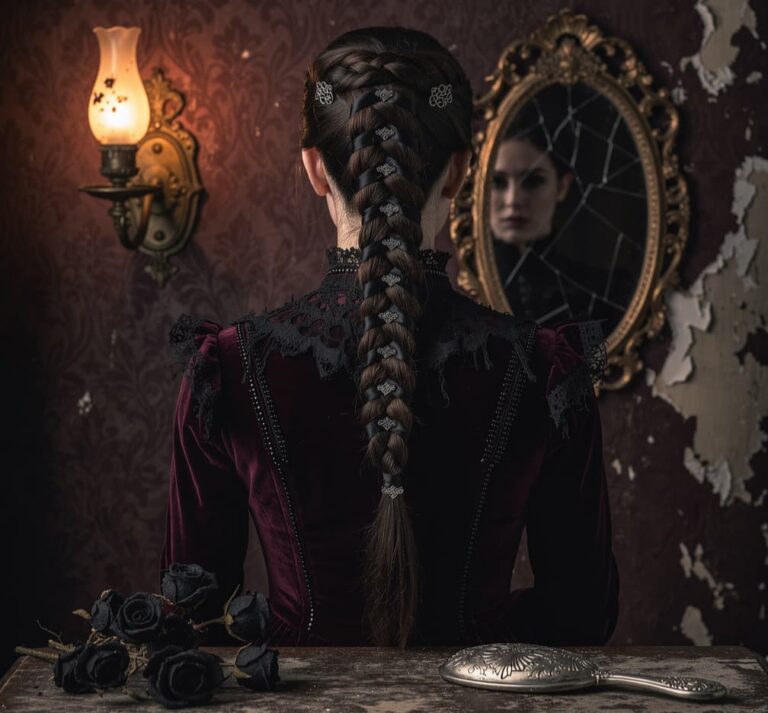
The setup reads like a Brontë novel that got handed a box cutter. It’s 1858, and an eccentric young governess named Winifred Notty arrives at Ensor House, a remote and suitably gargoyle-covered gothic manor, to take a position educating the two children of the estate’s owners. She’s polished, composed, and this is the part the marketing leans into hardest quietly, ferociously unhinged underneath all that Victorian propriety.
As Winifred settles into the rhythms of the household, staff members start disappearing without explanation. The family slowly begins to suspect that their new hire might not be exactly who she claims to be. It plays out like your standard gothic nanny setup: a woman who gets to boss the kids around but has zero control over her actual life. But instead of just suffering in silence, this governess gets to let her rage out in a very physical, bloody way.
The internet keeps pitching this as “American Psycho in a corset.” Believe it or not, that isn’t just some catchy PR nonsense drawn up by the studio; the character is genuinely built around that exact concept. Winifred even goes by the nickname “Fred” in a few key scenes, which feels like a wink nobody involved is bothering to hide.
Names carry a lot of weight throughout the film, actually. Winifred’s surname, Notty, is a pretty transparent play on “naughty,” and the household she infiltrates is full of similarly loaded names a supporting character named Mrs. Fancey, references to a family called the Pouncey-Fanceys elsewhere in the story. It’s the kind of detail that signals the film isn’t trying to be taken as strait-laced, straight-faced period horror. It wants you to notice the joke is baked into the wallpaper.
The Source Material: A 2025 Novel Gets the Fast-Track Treatment
Victorian Psycho isn’t an original screenplay; it’s adapted from Virginia Feito’s novel of the same name, published in February 2025 by Liveright. It was Feito’s second book, following her acclaimed debut Mrs. March, and it landed with the kind of buzz that made a film adaptation feel almost inevitable.
What’s unusual is how fast that adaptation happened. Feito didn’t just sell the rights and step back she wrote the screenplay herself, meaning the film had her fingerprints on it from the page to the set. Going from a February 2025 book release to a May 2026 Cannes premiere is a genuinely quick turnaround for a literary adaptation, and it suggests the industry saw something immediately cinematic in the material rather than something that needed years of development notes.
It also helps that Feito already had a track record of translating unsettling women onto the page. Her debut novel, Mrs. March, built its entire premise around a wealthy Manhattan housewife slowly unraveling into paranoia and delusion after suspecting she’s the inspiration for a novelist’s unflattering character.
Victorian Psycho essentially takes that same fascination with women who are quietly coming apart at the seams and swaps the modern psychological slow-burn for a much bloodier period setting. If you’ve read Mrs. March, or seen any of the buzz around it, Victorian Psycho reads like Feito deciding to stop hinting at the violence simmering under her characters and just let it out.
The Wild Ride to Get This Cast Together!
If you feel like you’ve seen this movie’s poster evolve over the past year and a half, that’s because the cast has actually changed and the backstory is more interesting than the usual “scheduling conflict” excuse.
Margaret Qualley was originally announced as Winifred back in October 2024, with A24 acquiring U.S. distribution rights that December. What made the pairing feel inevitable at the time was Qualley’s history with Wigon: the two had already made a film together, a claustrophobic two-hander about a power struggle between a hotel heir and his dominatrix, and it’s what put Wigon on the map as a director unafraid of tonal whiplash. Composer Ariel Marx scored that earlier collaboration too, and she’s back again here, so there’s a real creative through-line even with the lead role recast.
Then, by May 2025, everything shifted. Qualley exited the project, A24 stepped away from distribution, and Maika Monroe stepped into the title role instead. Jason Isaacs joined the cast around the same period. A couple months later, in July 2025, True Brit Entertainment picked up UK and Ireland distribution rights, and Bleecker Street swooped in for the U.S. rights that August, right as production was gearing up in Ireland.
It’s a genuinely unusual path for a film to take swapping both its lead actress and its distributor before a single frame was shot but the upside is that Monroe stepping in feels less like a consolation casting and more like a correction. Between It Follows, Watcher, and Longlegs, she’s built an entire screen persona around barely contained psychological unraveling, and handing her an actual license to be the aggressor instead of the victim is the kind of role reversal horror fans have been quietly hoping someone would give her.
Principal photography began on August 18, 2025, in Ireland, which is also where the gothic manor exteriors and interiors were shot giving the whole production that damp, stone-walled, perpetually overcast atmosphere gothic horror lives and dies on.
Meet the Household of Ensor House
The full cast reads like a mini masterclass in “actors having way too much fun”:
- Maika Monroe as Winifred Notty, the governess with a very specific set of skills she’d rather keep hidden. It’s a sharp pivot for Monroe, who’s spent most of her career playing the person being hunted rather than the one doing the hunting.
- Jason Isaacs as Mr. Pounds, the master of Ensor House. Multiple early reactions single him out for going delightfully over the top, treating the role less like period drama and more like broad, gleeful parody.
- Ruth Wilson as Mrs. Pounds, the lady of the house, playing things admirably straight against all the chaos swirling around her a deliberate contrast that seems designed to keep at least one foot of the film grounded in genuine dread.
- Thomasin McKenzie as Ms. Lamb, a household staffer who tries to befriend Winifred with absolutely no idea what she’s actually dealing with.
- Evie Templeton as Drusilla Pounds, one of the two Pounds children under Winifred’s care.
- Jacobi Jupe as Andrew Pounds, the other Pounds child, and one of a handful of young actors this year turning up in unusually dark, unsettling material.
- Amy De Bhrún as Mrs. Fancey, rounding out the estate’s supporting cast.
Ruth Wilson has talked openly about why this kind of role appealed to her, pointing out that horror has historically pushed women into the victim slot far more often than the aggressor slot, and that getting to flip that dynamic felt like genuine creative freedom. It’s also worth noting the quiet symmetry there: Wilson played Jane Eyre in the BBC’s acclaimed 2006 adaptation, and Victorian Psycho leans directly into and then completely dismantles a lot of the same governess-in-a-big-house tropes that Brontë’s novel helped define.
She’s also no stranger to playing women with a darker undercurrent than they let on, having spent years as the unpredictable Alice Morgan on the BBC’s Luther.
Behind the Camera!
Zachary Wigon directs from Feito’s screenplay, working with cinematographer Nico Aguilar and a score from Ariel Marx. Wigon’s previous feature was Sanctuary, a twisted, tonally slippery relationship thriller that already showed he’s comfortable working in the space between genuine tension and dark comedy which is exactly the tightrope Victorian Psycho is trying to walk on a much bloodier scale.
Sanctuary was a two-person chamber piece confined almost entirely to a single hotel suite, so Victorian Psycho represents a genuine scale-up for Wigon a full period production, an ensemble cast, and a sprawling gothic manor standing in as practically its own character. That’s a significant jump in production complexity for a director with only one previous feature to his name, and it’s part of why the film’s reception has been treated as a real test of whether Wigon’s specific sensibility, prickly, funny, and uncomfortable in equal measure, scales up past an intimate two-hander.
The film carries an R rating for strong bloody violence and brief sexual material, and runs a little over 100 minutes so this isn’t a bloated, over-padded gothic epic. It’s built to move, which tracks with Wigon’s own instincts as a director; even Sanctuary, despite being confined to one location, was praised for never letting its tension slacken.
How Was It Received at Cannes?
Early reaction out of Cannes has been a genuinely mixed bag, and that’s worth being upfront about rather than pretending everyone loved it uniformly. Critics have consistently praised Monroe’s total commitment to the role, along with scenery-chewing supporting turns from Isaacs and Wilson, who lean into wildly different registers, Wilson playing it dead serious, Isaacs going almost cartoonishly big that somehow coexist in the same movie.
Where the reviews get more divided is tone. Some critics have felt the film can’t quite decide whether it wants to be a straight-faced psychological horror or a pitch-black comedy, and that the balancing act occasionally works against itself rather than for it. There’s also been some pushback on how the film handles the reveal behind Winifred’s motives, with a few critics feeling the script holds that card too close for too long and then doesn’t do quite enough with it once it’s finally played.
Others have leaned more positive, praising Monroe’s performance as genuinely funny and committed even when the film around her wobbles, and pointing out that the movie’s willingness to lean into recurring visual gags including a running joke about pineapples as a symbol of Victorian wealth shows a script that knows exactly how silly it’s willing to get. Either way, nobody’s calling it boring. The consensus so far is that Victorian Psycho is messy, ambitious, and never dull, which is a pretty reasonable pitch for a September horror release.
If you’re interested, you can check out our Werwulf Release Date!
Should You Watch the Trailers or Go In Blind?
Bleecker Street has released two official trailers so far, and both lean hard into the film’s tonal identity rather than trying to disguise it as a straight horror movie. The most recent one, which dropped in late July 2026, doubles down on the blood-soaked, punk-attitude energy leaning into Winifred’s darkly comic voiceover narration and giving away just enough of the household chaos to get horror-comedy fans excited without spoiling the specific reveals the third act is clearly holding back.
If you’re someone who likes going in cold, the trailers do give away the overall vibe and a good chunk of the “staff keep vanishing” mystery mechanics. If you want maximum surprise, it might be worth watching just the first teaser and skipping the fuller second trailer.
Marketing-wise, the choice to feature Winifred’s own narration so heavily in the trailers is a smart one; it immediately signals that this isn’t a straight period horror film playing things somber and restrained. It’s telling the audience up front: you’re not watching this from the terrified household’s point of view, you’re watching it from inside the head of the person terrorizing them. That’s a meaningfully different contract with the audience than most gothic horror trailers make, and it’s probably the single biggest reason this film has been generating more buzz than a typical late-September horror release usually gets.
The trailers also lean on a soundtrack choice that’s been getting almost as much attention as the footage itself: chugging, aggressive electric guitar work that feels closer to a punk track than the swelling orchestral score you’d expect from a Victorian period piece. It’s a deliberate mismatch, and it works the same way the film’s whole premise works: taking something associated with restraint and properness and slamming it against something loud, modern, and completely unbothered by decorum. If the trailers are any indication, the finished film isn’t interested in being tasteful about any of this.
The Governess Trope Victorian Psycho Is Quietly Dismantling
Gothic fiction has leaned on the governess figure for a very long time, and almost always for the same reason: she’s an outsider with real access but no real power, someone smart enough to notice everything wrong with a household and yet completely dependent on that household for her livelihood. Jane Eyre is the obvious touchstone, and Henry James’s The Turn of the Screw pushed the same setup into full psychological horror territory a few decades later, letting audiences wonder whether the governess in that story was seeing genuine ghosts or slowly losing her grip on reality.
Victorian Psycho takes that exact same structural setup the watchful outsider, the isolated manor, the children who need educating, the employers who hold all the cards and simply swaps the powerlessness for a weapon. Winifred Notty isn’t quietly suffering under a system stacked against her, she’s using the position’s built-in invisibility as cover. Nobody questions a governess moving quietly through the halls at odd hours, which historically was the whole tragedy of the role. Here, it’s the whole joke, and the whole horror.
It’s a clever trick because it doesn’t require the audience to know any of that literary history to enjoy the film, but it rewards you if you do. Anyone who’s read Jane Eyre or sat through a stagier adaptation of The Turn of the Screw will recognize almost every beat of the setup here right up until the moment the film stops playing along with expectations and starts subverting them, hard.
American Psycho in a Corset: Unpacking the Comparison Everyone’s Making!
The Bateman comparisons started circulating before a single frame of this film existed, and they hold up better than most marketing shorthand tends to. Both stories center on someone outwardly composed and socially fluent, embedded deep inside a rigid, appearance-obsessed world corporate Manhattan in one case, an aristocratic English household in the other while hiding something genuinely monstrous underneath. Both use that composure as the engine for dark comedy, letting the audience in on the joke while everyone else in the story stays oblivious.
The comparison gets more interesting once you look at what each story is actually pointed at. American Psycho used its premise to skewer 1980s corporate excess and hollow status obsession. This film, by handing the same structural position to a woman with almost no other outlets available to her, ends up saying something different using Winifred’s secret violence as a pressure valve for an era that offered women in her position essentially nowhere else to put ambition, rage, or agency. Same “monster behind a composed exterior” premise, aimed at a completely different pressure cooker.
Whether the film fully earns that thematic weight is exactly where critical opinion splits; some feel it commits to the idea seriously, others feel it’s more interested in shock value than the subtext underneath. Either way, it’s clearly the frame the marketing wants audiences thinking in, and it’s a genuinely useful one if you’re deciding whether this is your kind of movie: anyone who liked American Psycho’s mix of satire and violence has a reasonable shot at liking this too.
Why This Release Is Worth Actually Circling?
Late September has become a reliable landing spot for horror that’s a bit too strange for a big October tentpole slot but too commercial to stay purely festival-only. This film fits that gap well: a recognizable, starry cast wrapped around a project whose actual DNA (Un Certain Regard premiere, a novelist adapting her own book, a director with exactly one previous feature) leans arthouse rather than studio franchise.
That’s also what makes it a solid rewatch candidate down the line. Films built around an unreliable, darkly funny narrator tend to reward a second viewing once you already know where the bodies are (literally, here), letting you watch everyone else’s reactions instead of chasing the mystery yourself. If the tonal balancing act that’s split critics happens to land for you the first time through, this is exactly the kind of film that tends to get better once the whodunit tension is off the table.
It also helps that this is a genuinely rare theatrical proposition right now a mid-budget, star-led horror film with no franchise, remake, or extended universe attached to it. Original horror concepts featuring actual movie stars have gotten scarce enough that this stands out simply by existing on its own terms, independent of how any individual viewer feels about the tonal experiment.
When and Where You Can Actually Watch It?
Right now, this is a theatrical-only release with no PVOD or streaming date on the books which tracks, since it hasn’t opened in theaters yet. Once the exclusive theatrical window wraps up this fall, it’ll eventually land on digital rental and streaming, and that’s the point where a genuine rent-versus-wait breakdown will actually be useful to write.
The gap between the Cannes premiere in May and the November theatrical date is a fairly standard festival-to-theatrical runway long enough to build buzz through reviews and trailers without letting momentum go cold. That timing suggests a normal theatrical window ahead of any digital release rather than an unusually short one, though Bleecker Street hasn’t confirmed specifics on that yet.
For right now, though: November 13, 2026, in theaters is the only way in.
Most Googled Questions: Answered!
Is Victorian Psycho Based on a True Story?
No. It’s based on Virginia Feito’s 2025 novel of the same name, a work of horror fiction. The Victorian setting is real history dressed up as fiction, not a true crime account.
Who plays the lead role in Victorian Psycho?
Maika Monroe plays Winifred Notty, the governess at the center of the story. She replaced Margaret Qualley, who was originally attached to the role before exiting the project in 2025.
Is Victorian Psycho a horror movie or a comedy?
Both, by design. It’s being marketed and reviewed as a horror-comedy, with critics comparing its tone to a Victorian-era spin on American Psycho gory, theatrical, and self-aware about its own absurdity.
Where was Victorian Psycho filmed?
Production took place in Ireland, where filming began in August 2025.
What is Victorian Psycho Rated?
It carries an R rating for strong bloody violence and brief sexual material.
Did Victorian Psycho always have this cast?
No. Margaret Qualley was originally cast in the lead role in October 2024, alongside distributor A24. Both exited the project by May 2025, with Maika Monroe taking over the role and Bleecker Street eventually picking up U.S. distribution rights.
Is Victorian Psycho a sequel or part of a Franchise?
No, it’s a standalone adaptation of Virginia Feito’s standalone novel. There’s no existing franchise or connected universe attached to it.
About the Author.
Hi, I’m Vansh, the founder of Vibe On Cue. I track the absolute best ways to experience cinema, from the biggest Hollywood Blockbusters and upcoming release dates to the finest details of PVOD & Streaming and pristine Blu-ray & 4K physical media. And when the credits roll, I break down the narrative with deep-dive Ending explained guides. If you live for the full life cycle of film, stick around and explore the site!!!