
The Odyssey Release Date: Alright, let’s cut through the noise. Christopher Nolan’s Homer adaptation has basically taken over movie Twitter for months now, and the actual answer to “when can I see this thing” is July 17, 2026, opening wide across the US and UK through Universal Pictures. Every bit of chatter about casting fights, the scramble for IMAX seats, and those blurry set photos that kept leaking from three different continents, none of that changes this one fact.
That said, anyone who’s followed a Nolan rollout before knows the release date is never the whole picture. Let’s break down what makes this one genuinely different, who’s actually in it, and why the folks who caught an early screening in London are throwing around some pretty rare praise.
Circle the Date (And a Sneaky Early Option)
July 17 is your standard wide-release day. But if standing in line with the weekend crowd isn’t your thing, a handful of theater chains are running preview shows the evening before July 16, with some starting as early as 2 p.m. So depending on which chain’s near you, you could genuinely be watching Odysseus fight his way home almost a full day before most of the country.
To put the size of this rollout in perspective: the film already had its world premiere in London on July 6, 2026 a full eleven days ahead of the wide release. Deadline covered the red carpet, and by all accounts it turned into its own event; Matt Damon, Tom Holland, Zendaya, Anne Hathaway, and Robert Pattinson all showed up, and ticket demand got so intense that Universal had to slot in an emergency second screening at the BFI IMAX just to keep up. That gap between a press premiere and the general release isn’t unusual for a film this size, honestly? it gives critics time to build word of mouth, and it gives the studio a read on how audiences are reacting before wide release locks everything in.
Why This Weekend Isn’t Like Any Other Blockbuster Friday?
Here’s what actually sets this one apart from your typical big-budget release: The Odyssey is the first movie ever shot entirely on IMAX’s 70mm film cameras from the very first day of production, not converted or upscaled afterward, actually filmed that way from the jump. IMAX’s CEO Richard Gelfond has gone on record saying Nolan used camera technology on this shoot that literally didn’t exist in filmmaking before this project.
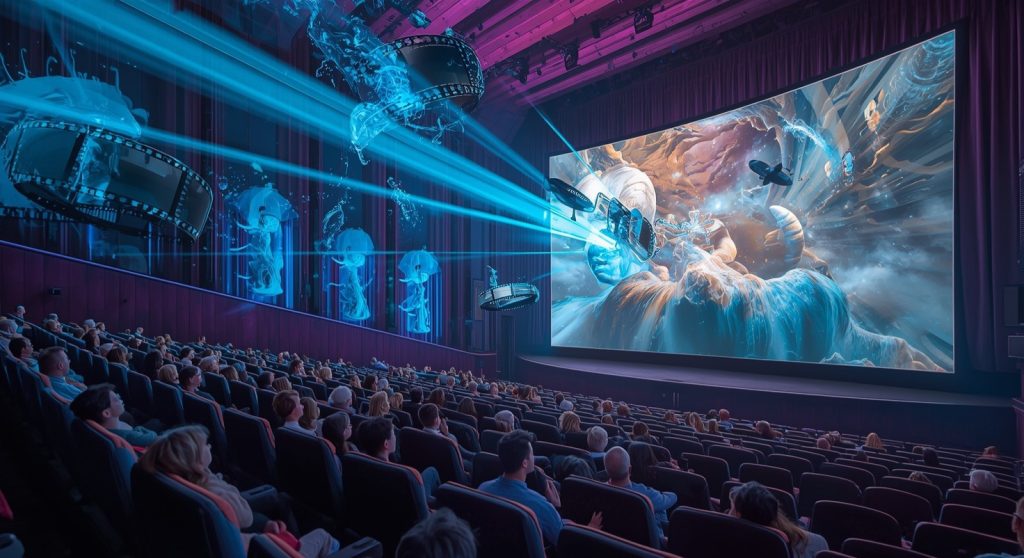
That’s more than a neat trivia fact; It actually changes how you should approach seeing this movie. IMAX has locked in exclusive access to the film for its first three weeks in theaters, which means the version Nolan actually designed this entire production around is only available if you can snag an IMAX ticket during that window. If your plan is to “figure it out eventually,” you might end up figuring it out after your local IMAX has already sold out for the weekend you wanted.
And this isn’t just studio hype talking. Universal opened ticket sales for opening-weekend IMAX 70mm screenings a full year before release; back in July 2025, which is an unusually early move even by blockbuster standards and reportedly around half of all US IMAX theaters showing the film sold out within 12 hours of tickets going live. You can keep an eye on premium availability directly via the official You can keep an eye on premium availability directly via the official IMAX The Odyssey Portal.
Runtime, Rating, and What You’re Actually Signing Up For
Runtime lands at 2 hours and 52 minutes, noticeably shorter than Oppenheimer’s three-hour-plus sprawl. The bigger surprise is the rating: this one’s landed an R, a real pivot from Nolan’s last decade of mostly PG-13 studio releases like Tenet, Dunkirk, and Interstellar.
Makes sense given the source material, if you think about it. Homer’s poem never softens the violence, and the ending where Odysseus deals with the suitors squatting in his house isn’t something that translates well watered down. Universal hasn’t confirmed exactly what pushed it to R. violence, language, some combination, so treat that detail as unconfirmed until reviews land closer to release. Either way, it signals this isn’t being marketed as some gentle mythology lesson for the whole family, despite what earlier promotional material might’ve implied.
The Cast Is Absolutely Loaded
This might be the deepest ensemble Nolan’s ever put together, which is saying a lot right after Oppenheimer.
Matt Damon takes the lead as Odysseus, the king of Ithaca clawing his way home after ten brutal years of war and monsters. He told Variety this role was unlike anything he’s tackled before, saying the constant hopping between massive global locations made the shoot genuinely feel like filming three or four different movies simultaneously. Nolan has reportedly leaned heavily on classicist Emily Wilson’s widely praised 2017 translation while building out the character, filtering a nearly 2,700-year-old story through a distinctly modern lens.
The rest of the lineup:
- Anne Hathaway as Penelope, holding Ithaca together while suitors circle her household
- Tom Holland as Telemachus, trying to keep the kingdom from falling apart in his father’s absence
- Zendaya as Athena
- Charlize Theron stepping into the role of Circe, the witch-goddess infamous for turning Odysseus’s crew into pigs
- Robert Pattinson as Antinous, easily the most aggressive of Penelope’s suitors
- Lupita Nyong’o as Helen of Troy
- John Leguizamo as Eumaeus
- Jon Bernthal as Menelaus
- Benny Safdie as Agamemnon
- Mia Goth as Melantho
- Elliot Page, Himesh Patel, Bill Irwin, and Samantha Morton, all Nolan regulars, though the studio hasn’t detailed their roles yet
- Travis Scott, in a supporting turn Nolan has described as a way to connect hip-hop directly to the oral-poetry tradition that carried Homer’s story for generations before anyone wrote it down
That’s an unusually deep bench even before you get down to the smaller supporting roles, and it’s worth pointing out how deliberate this casting looks. Instead of leaning on one or two big names surrounded by lesser-known faces, this ensemble reads like a lineup of people who’ve each already carried their own franchises or awards campaigns; Hathaway, Holland, Zendaya, and Theron have all headlined major films solo, and putting them all under one director in a single ensemble is a different kind of gamble than most studios take on a mythology adaptation. It also means the marketing has multiple built-in fanbases to pull from at once, which goes a long way toward explaining why the promotional push has felt so sprawling for so long.
One thing worth flagging honestly: Nyong’o’s casting as Helen sparked real backlash starting back in May, much of it tied to historical-accuracy arguments, and it’s still ongoing as of premiere week. That’s its own story entirely not something to fully unpack here, but worth knowing if it comes up in the comments section.
What’s This Movie Actually About?
Quick refresher if it’s been a while since your last Homer unit in school: Odysseus spends a full decade trying to get home after the fall of Troy, running into the Cyclops Polyphemus, the nymph Calypso, the Sirens, and Circe’s magic along the way, all while the gods keep interfering with his path. Back home, Penelope is stalling a house full of suitors who’ve assumed her husband is already dead, and Telemachus is growing up fast trying to protect whatever’s left of the kingdom.
Worth remembering just how much that summary is actually compressing, too. The poem isn’t one continuous adventure, it’s really two stories running side by side, one following Odysseus island-hopping through increasingly bizarre encounters, the other following Penelope and Telemachus holding the line at home against men who’ve basically moved into the palace uninvited. How much screen time the film gives each half is one of the bigger open questions right now, since a version that leans harder into the Ithaca side would play completely differently than one that’s mostly a globe-trotting monster gauntlet.
Nolan wrote, directed, and produced, teaming up again with longtime producing partner Emma Thomas. Whether he kept Homer’s famously non-linear structure, the poem starts in the middle of the action rather than at the beginning or streamlined things for modern audiences genuinely isn’t clear from what’s been shown publicly so far. Treat that as an open question until reviews start describing the film’s actual shape.
Just How Big Is This Production?
This wasn’t some backlot shoot with a few establishing shots bolted on for scale. Principal photography ran a full seven months, from February through August 2025, and the production physically moved through Italy, Greece, Morocco, Iceland, Scotland, Western Sahara, and Malta, on top of additional stage work at Universal’s Los Angeles lot. Seven countries for one film tells you the lot about why behind-the-scenes leaks have been trickling out for over a year now, there simply wasn’t one central set to keep quiet about.
Each location was reportedly picked to stand in for a distinct stretch of Odysseus’s journey rather than functioning as one generic “ancient Greece” backdrop, which partly explains why people keep talking about this film’s scope the way they do. The Western Sahara leg specifically drew outside criticism over the choice of filming location, that’s a story worth digging into on its own rather than folding into a release-date rundown, but it’s fair to flag that it’s out there.
Add up all that travel and the number gets big fast: this is reportedly one of the most expensive productions of Nolan’s entire career, with a budget estimated around $250 million. That figure goes a long way toward explaining why the marketing campaign has felt relentless for so long, a shoot this size doesn’t stay contained, and neither does everything built around promoting it.
On the music side, Ludwig Göransson who scored both Oppenheimer and The Mandalorian is back again for composing duties. Worth knowing if you’re the type who remembers a Nolan film as much for its score as its visuals, since Göransson’s work tends to become inseparable from how scenes actually land emotionally.
How Does This Compare to Earlier Homer Adaptations?
Nolan’s far from the first filmmaker to take a swing at this story, and knowing what came before actually shows just how different a bet this version is compared to everything already attempted.
The best-known prior attempt is 1954’s Ulysses, an Italian production with Kirk Douglas bringing real movie-star charisma to the role. It was shot on actual Italian coastline and had legitimate production value for its era, not some cheap cash-in. But watching it today, it plays exactly like what it is: a mid-century picture built to deliver spectacle scene by scene, checking off the Cyclops and the Sirens along the way, without digging much into who Odysseus actually becomes as a person after ten years of war. Adventure movie first, character study a distant second at best.
Then you’ve got the 1997 TV miniseries starring Armand Assante, which did a complete 180. Because it was a multi-part television event, it actually had the breathing room to adapt a massive chunk of Homer’s original checklist. Plus, it even managed to flex hard enough to bag a Primetime Emmy for its visual effects back in the day. Genuinely solid work for a television budget in the ’90s. The problem is “impressive by 1997 standards” doesn’t hold up the same way three decades later, the effects look dated now, and the pacing carries that distinctly made-for-TV quality, leaning more on dialogue-heavy scenes than sustained big-screen set pieces.
What separates Nolan’s version from both isn’t just bigger ambition for its own sake, neither earlier adaptation had the resources, the technology, or the cultural momentum Nolan’s working with here. He’s coming off a Best Picture win, commanding a cast spanning multiple generations of A-list talent, and shooting on camera hardware that simply didn’t exist when either previous version got made. The 1954 film leaned on a movie star and practical locations. The 1997 series leaned on runtime and era-appropriate CGI. Nolan isn’t boxed in by either limitation.
There’s also a real tonal shift worth pointing out. Both earlier adaptations treated the story as monster-of-the-week adventure dressed in period costuming. Early word out of London suggests this one goes somewhere darker, critics have specifically called out a genuine horror sequence in this cut, along with a heavier focus on Odysseus as someone haunted by his own past decisions rather than just a hero clearing obstacles on his way home. Tracks with Nolan’s usual playbook of taking something everyone already thinks they know and finding the more unsettling version underneath it.
None of this guarantees wider audiences will respond the same way once general moviegoers weigh in, big swings can absolutely still miss. But on paper, this is the first time Homer’s epic has landed in the hands of a filmmaker carrying this much weight behind him: this level of resources, this cast, and this specific instinct for blending massive spectacle with real psychological depth.
What Are People Actually Saying?
Full reviews are still under embargo until closer to release, so there’s no official star rating floating around yet. But the first wave of reactions came right after the London premiere on July 6, and by Nolan-premiere standards, they’re about as glowing as it gets.
Variety’s Jazz Tangcay called the film an astonishing achievement, specifically singling out Tom Holland, Matt Damon, and Anne Hathaway for what the outlet framed as career-best work. The Independent went further, calling it Nolan’s biggest film yet and noting it packs roughly triple the large-scale set pieces of any of his earlier movies. Over at the LA Times, critic Joshua Rothkopf described it as staggering, touched by both humor and grandeur, framing it as a return to the kind of theatrical spectacle moviegoing was originally built around in the first place.
Not everyone’s fully on board, though, and it’s worth including the more measured takes rather than making this sound like a unanimous rave. IndieWire’s David Ehrlich said the film gets genuinely clunky in stretches and doesn’t rank among Nolan’s best work, even while praising how the final act ultimately pays off. The Hollywood Reporter’s Aaron Couch flagged something else worth noting on its own: after 25 years of covering Nolan’s theatrical releases, this is apparently the first time the director has put a real horror sequence on screen, a genuinely unexpected move from a filmmaker who’s never really leaned into scares before.
There’s a messier layer underneath all this praise, too. The film’s trailer has racked up an unusually high number of dislikes online reportedly past half a million by premiere week, driven largely by the ongoing casting and historical-accuracy backlash rather than anything about the footage itself. So you’ve got critics calling this a genuine achievement in one corner, and a vocal chunk of the internet still arguing about accents and costuming in the other. Since all of this is early reaction rather than formal reviews, it’s fair to treat the overall picture as still forming the real critical consensus won’t settle until the embargo actually lifts closer to release.
Is IMAX Actually Worth It?
Short answer: yes, pretty much without hesitation, if you can actually snag a ticket. Several critics who caught it in IMAX during the London run called the format essential rather than a nice-to-have bonus. Given the entire film was shot on IMAX cameras and gets a three-week head start before other formats even open up, this is one of those rare cases.
Part of that comes down to how IMAX’s 70mm format actually works, it captures a taller frame than standard widescreen, so scenes shot with those cameras expand vertically. For a film built around sweeping wide shots of coastlines, storms, and mythological set pieces, that’s not a minor difference. Nolan’s talked before about designing specific sequences around that expanded frame, which means watching this on a standard screen could mean literally seeing less of certain shots than the format was built to show off.
No IMAX near you? You’re not completely out of luck, it’s also playing in 70mm and RPX. You’ll just be missing the exact version Nolan built the whole shoot around.
Quick-Reference Recap
- Wide release: July 17, 2026 (US and UK)
- Early shows: some theaters starting July 16, as early as 2 p.m.
- World premiere: July 6, 2026, in London
- Runtime: 2 hours 52 minutes
- Rating: R
- Format: shot entirely on IMAX 70mm cameras, with a three-week IMAX exclusivity window
Most Googled Questions: Answered
When does The Odyssey come out?
Wide release is July 17, 2026, in the US and UK, with some theaters offering early Thursday shows on July 16 starting around 2 p.m.
Is The Odyssey out yet?
Not for general audiences yet. It premiered in London on July 6 for press and select guests, but the wide release is July 17.
How long is The Odyssey?
2 hours and 52 minutes, shorter than Oppenheimer.
What is The Odyssey rated?
R, a departure from Nolan’s more recent PG-13 studio work like Tenet and Interstellar.
Who plays Odysseus?
Matt Damon leads as the king of Ithaca trying to get home after the Trojan War.
Is it based on the Homer poem?
Yes. Nolan wrote, directed, and produced it as an adaptation of Homer’s epic, following Odysseus’s decade-long journey home.
Why is IMAX such a big deal for this movie?
It’s the first feature ever shot entirely on IMAX 70mm cameras, and it’s getting a three-week IMAX exclusivity window before other formats open up.
Who else is in the cast?
Anne Hathaway, Tom Holland, Zendaya, Charlize Theron, Robert Pattinson, Lupita Nyong’o, John Leguizamo, Jon Bernthal, Benny Safdie, and Travis Scott in a supporting role.
Are the early reviews good?
Largely glowing out of the London premiere, with several outlets calling it one of Nolan’s most ambitious films yet, though a few reactions flagged rough patches, and full reviews won’t land until closer to the theatrical release.
Where was it filmed?
Italy, Greece, Morocco, Iceland, Scotland, and Western Sahara, plus additional work at Universal’s LA studio lot.
About the Author.
Hi, I’m Vansh, the founder of Vibe On Cue. I track the absolute best ways to experience cinema, from the biggest Hollywood Blockbusters and upcoming release dates to the finest details of PVOD & Streaming and pristine Blu-ray & 4K physical media. And when the credits roll, I break down the narrative with deep-dive Ending explained guides. If you live for the full life cycle of film, stick around and explore the site!!!