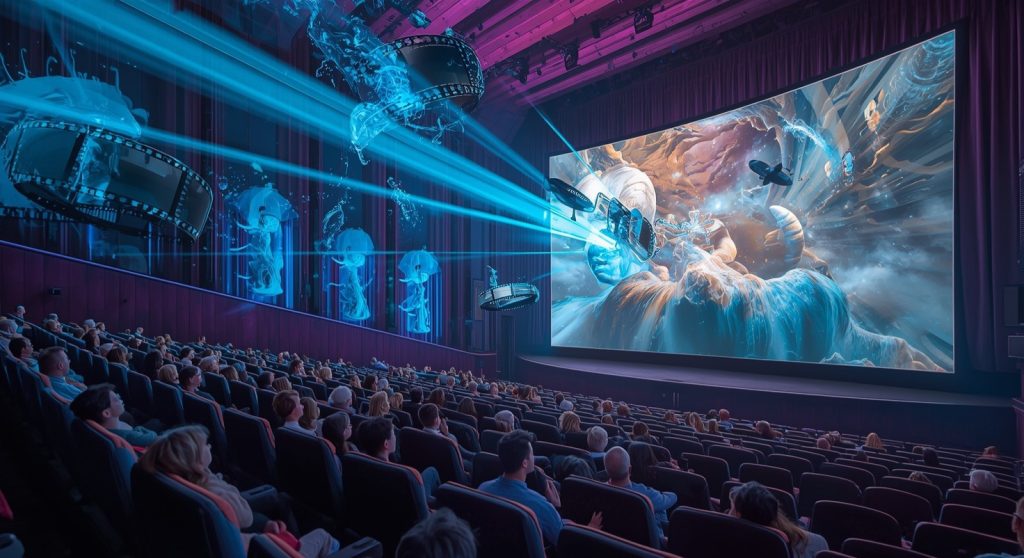

4DX Explained: Hollywood is currently fighting a brutal battle against a formidable opponent: our own couches. With consumer-grade home setups boasting blinding ultra-HD panels and overhead spatial audio channels that make light fixtures rattle, the local multiplex needs a massive competitive edge to get people out of the house.
CJ 4DPLEX a tech firm out of South Korea, built the ultimate solution: 4DX. Instead of letting you quietly watch a film, this premium setup treats your nervous system like an active participant. It pulls mechanical concepts directly from professional aviation simulators and theme park thrill rides to replace passive viewing with full-body kinetic feedback. If you have ever spent a movie wondering why on earth your chair is violently shuddering beneath you, we are lifting the hood to give you a direct, easy-to-digest look at the underlying technology.
What Is 4DX? The Mechanics Behind the Madness!
To explain what is 4dx without the corporate jargon: it is a tightly calibrated environmental simulator designed to trick your brain into feeling speed, gravity, and extreme weather. The format bridges the gap between digital projection and physical reality by using three distinct engineering systems that sync frame-by-frame with the movie.
1. Multi-Axis Kinetic Seating Blocks
These seats share absolutely zero DNA with basic living room recliners or those standard, vibrating massage chairs sitting in shopping center walkways. They are heavy-duty, motorized platforms engineered to shift your body weight across three specific spatial coordinates:
- Pitch: The aggressive front-to-back tilt. Engineers use this dynamic movement to mimic intense vehicular braking, sudden acceleration, or stomach-churning vertical drops.
- Roll: Side-to-side swaying. This perfectly tracks a vehicle sliding through a tire-smoking drift, a motorcycle rider leaning hard into a tight asphalt corner, or a military aircraft executing a sudden banking maneuver under heavy fire.
- Heave: True vertical displacement. This handles the bumpy sensation of hitting a massive pothole, dropping into heavy ocean swells, or ascending rapidly in a commercial elevator.
To keep your senses off-balance, designers also tuck low-frequency bass transducers and miniature mechanical pins directly inside the backrests. These deliver sharp, localized physical thumps to mimic everything from weapon recoil to debris whistling past your neck.
2. Full-Spectrum Atmospheric Systems
While the motorized rows keep your balance center occupied, a vast grid of environmental hardware mounted across the auditorium walls and ceiling handles the atmospheric world-building:
- Pneumatic Air Valves: Nozzles hidden right in the headrest launch targeted, high-pressure bursts past your head, perfectly capturing the kinetic snap of passing ammunition, flying debris, or heavy rotor wash.
- Hydraulic Water Vapors: Micro-jets built into the armrests emit a pressurized, ultra-fine spray. The moment a character plows through standing water or storm waves break onscreen, you absorb a perfectly synchronized tactile mist.
- Auditorium Fog Generators: High-output smoke machines positioned right below the screen can rapidly cloud the entire room, beautifully accenting a smoldering battlefield, creepy graveyard mist, or volatile magical anomalies.
- Perimeter Strobe Rails: High-powered strobe setups are mounted across the upper tracks, delivering sudden bursts of light to simulate blinding lightning, weapon muzzle flashes, or high-energy magical sparks.
- Ventilation Scents: A specialized fragrance-dispensing system built into the ventilation tracks releases subconscious cues like woodsmoke, crisp sea breezes, or damp forest pine.
3. Time-Aligned Spatial Audio Tracking
To prevent your brain from realizing it’s just sitting in a dark room full of loud plumbing, 4DX relies on hyper-precise multi-channel audio tracking. Massive sub-bass arrays are precision-calibrated to fire alongside the motorized chair gears, forcing acoustic pressure waves from an explosion to rattle your ribs at the exact millisecond your row shifts. This micro-second alignment eliminates sensory delay, which is the primary trigger for cinematic motion sickness.
4DX vs Dolby Cinema vs IMAX: Choosing Your Premium Format
When a massive blockbuster drops, figuring out how to spend your hard-earned premium ticket money can feel like trying to solve advanced calculus. When pinning 4DX vs Dolby Cinema vs IMAX against one another in a final matchup, it is clear that these layouts aren’t actually chasing the same goal, each one is built around a fundamentally different vision of theater engagement.
+——————+—————————–+————————————+—————————————+
| Format Feature | IMAX | Dolby Cinema | 4DX |
+——————+—————————–+————————————+—————————————+
| Core Philosophy | Visual Grandeur & Scale | Audio-Visual Perfection | Physical Sensory Immersion |
| Screen Highlight | Towering Aspect Ratios | High Dynamic Range (HDR) Contrast | Multi-Axis Motion Seats |
| Sound Design | High-Output Immersive Sound | Dolby Atmos Overhead Spatial Audio | Synchronized Audio-Tactile Sub-Bass |
| Ambient Elements | Static Theater Setup | Luxury Recliner Comfort | Wind, Water, Fog, Strobes & Scents |
+——————+—————————–+————————————+—————————————+
- The IMAX Manifest: Under this layout, the exhibition is all about monumental scale and geometric presence. The format relies on synchronized twin projectors and a massive, floor-to-ceiling aspect ratio designed to entirely consume your field of view, pulling your eyes directly into a vast, uninterrupted cinematic canvas.
- The Dolby Blueprint: Conversely, Dolby is engineered for sensory purists who demand absolute master-tape accuracy. It sacrifices the overwhelming geometric size of its competitor to focus strictly on microscopic contrast levels via High Dynamic Range (HDR) and fluid, object-based Dolby Atmos spatial soundscapes that trace precise paths through the air above you.
- The 4DX Disruption: Then there is 4DX, which rejects the idea that a movie should merely be observed. It views a film’s audio and video tracks as instructions for a physical environment. Rather than trying to optimize color spaces or screen sizes, it utilizes kinetic seating blocks and tactile weather simulation to convert the audience from passive spectators into actual physical entities within the scene.
Is 4DX Better Than IMAX?
Deciding whether 4dx is better than imax comes down to matching a movie’s creative goals with the proper technical playback. For sweeping historical epics or meticulously composed science fiction sagas that rely heavily on grand scale and uncompromised resolution, a native IMAX presentation provides an elite level of visual immersion that cannot be matched.
On the flip side, if a film thrives entirely on relentless, kinetic momentum, think explosive vehicular pursuits or sweeping, chaotic cataclysms sitting in a static theater can sometimes leave you feeling like an isolated spectator.That is where 4DX alters the entire equation; it abandons pure visual scale to establish an intensely interactive physical relationship with the onscreen action.
The Neurological Blueprint of Kinetic Immersion
While the concept of a shifting theater seat might seem gimmicky at a glance, the technical application is deeply rooted in human cognitive psychology. The environment functions by methodically altering how the brain maps external reality:
- Cross-Modal Synchronization: The human mind constantly verifies its sensory data. When your visual receptors, auditory pathways, and physical touch points receive perfectly synchronized inputs simultaneously, your neurological defenses lower, accepting the artificial projection as a tangible, real-world space.
- Subconscious Equilibrium Hijacking: Your sense of orientation is managed by fluid movement within the inner ear. By feeding continuous, microscopic multi-axis rotations into your vestibular receptors, the motion system convinces your subconscious that your body is experiencing genuine momentum and physical weight, neutralizing your cognitive skepticism.
- Cortical Pathway Amplification: Neurological mapping proves that multi-sensory storytelling stimulates a vastly more complex network of brain regions and cognitive sectors than isolated sight and sound. This heavy influx of sensory information fundamentally deepens narrative suspense, heightens emotional responses, and carves the screening permanently into your long-term memory.
- Visceral Priming Dynamics: Microscopic physical prompts such as a faint, localized structural vibration or a subtle environmental aroma deployed moments before a pivotal scene—trigger a subconscious state of anticipation, naturally elevating your heart rate and maximizing the impact of the final cinematic payoff.
Sub-Sensory Design: The Art of the Micro-Movement
While casual moviegoers typically focus on the most aggressive physical actions—like bone-rattling collisions or dramatic roller-coaster drops—seasoned viewers realize the true sophistication of the format relies on intricate, frame-accurate micro-programming.
The system’s mechanical actuators are precise enough to generate incredibly subtle, low-frequency vibrations. Audiences can easily isolate the individual kick of various firearms, the rhythmic rocking of a vessel drifting against a pier, the distant thrum of heavy footsteps pacing on a ceiling above, or the soft idling purr of a performance engine waiting for a green light. Directors who actively understand this technical toolkit can embed delicate physical clues right into the ambient mix, letting your body instinctively sense an impending narrative shift before your conscious mind even interprets the visual setup.
Genre Selection: Which Movies Are Actually Worth It?
Let’s keep it 100% real: a massive chunk of modern cinema has absolutely no business being watched in a format like this. Pulling up to a 4DX theater for a heavy, dialogue-driven legal thriller or an intimate indie drama is a massive waste of potential; You are basically handing over a massive upcharge just to occupy an ordinary, motionless theater seat that completely sits out the experience. Matching the format to the right cinematic style is how you protect your wallet:
- Action & Superhero Blockbusters: High-budget comic book adaptations and blockbuster spectacles serve as the absolute sweet spot for this technology. The mechanical seat blocks dynamically translate the action frames, shuddering, swaying, and pitching to perfectly match every crushing blow, deflected strike, or high-speed vehicular chase. Sharp compressions of air snap past your head to replicate near-miss bullets, while airborne heroic sequences leverage smooth, synchronized leans to accurately capture the fluid dynamics of flight.
- Science Fiction & Mythic Lore: Interstellar starfighters, high-tech futuristic combat, and sweeping mythical beasts translate beautifully into this physical environment. Air pressure blasts mimic massive thruster propulsion, mechanical acceleration forces stretch out across the rows, and synchronized sub-bass vibrations ensure that every laser fire or plasma blast carries true weight.
- Cataclysmic Journeys & Wilderness Sagas: The moment a film introduces erupting peaks, sudden walls of water, or fracturing glaciers, the auditorium’s built-in systems mobilize to mirror those precise environmental hazards right in your section. By combining intense structural vibrations, ceiling-mounted storm mist, powerful wind gusts, and hard-shifting seat hydraulics, fighting through dangerous environments alongside the characters feels incredibly real.
- Supernatural Tales & Psychological Flicks: Rather than taking shortcuts with basic audio jumps, the format translates slow-burning cinematic anxiety into tangible physical feedback, keeping you constantly on edge. Sudden subtle seat drops, flickering ambient house lights, cold air blasts to the neck, and unexpected mist sprays work in tandem to physically rattle you right as the monster jumps out.
The Strategic Seating Guide: Don’t Ruin Your Sightline!
Where you choose to sit inside a 4DX theater completely controls the intensity and layout of the physical effects. To check seat availability or find a theater layout near you, you can look up active film listings directly on official US exhibitor pages like Regal Cinemas
To ensure you get the absolute best experience for your dollar, avoid random picking and target these specific rows:
- The Center Rows (The Golden Zone): This is where you want to be. It offers the most perfectly balanced, evenly distributed multi-axis motion and ensures the atmospheric effects hit you at the exact angle the engineers intended. Aiming for a row that is slightly elevated and center yields peak motion tracking and full screen coverage without causing serious neck strain.
- The Front Rows (The Thrill-Seeker Zone): This area puts you right in the blast radius of the environmental hardware. It offers hyper-intense visual exposure and hits you with immediate wind, water, and fog. It’s a blast for absolute adrenaline junkies, but it can quickly become an overwhelming, distracting mess for casual moviegoers.
- The Back Rows (The Balanced Zone): Sitting here gives you great, wide panoramic sightlines of the screen. The master spatial audio and deep sub-bass remain remarkably strong, but the physical intensity of the motion seats is dialed down a notch, and environmental elements like wind, fog, and atmospheric scents often lose their punch as they travel across the length of the room to the back.
- The Side Seats (The Dead Zones): Avoid these at all costs. Sitting too close to the far left or right walls risks uneven motion delivery and slight lag or delays from the atmospheric nozzles.
Final Verdict: Is 4DX Worth It?
At the end of the day, when you’re staring at the price premium at checkout, the big question looms: is 4dx worth it?
If you are a cinematic purist looking for a quiet, distraction-free movie night to focus entirely on deep character monologues, intricate plot structures, or flawless color grading, then the answer is a hard no. The constant physical interruptions will likely drive you crazy.
However, if you are looking for an absolute thrill, love full-body immersion, and want to treat a massive summer blockbuster like an interactive amusement park ride, it is absolutely worth every single penny. For the right high-energy film, 4DX successfully reimagines the entire theatrical experience by transforming your body into a co-star where you don’t just watch the story, you actively survive it.
About the Author.
Hi, I’m Vansh, the founder of Vibe On Cue. I track the absolute best ways to experience cinema, from the biggest Hollywood Blockbusters and upcoming release dates to the finest details of PVOD & Streaming and pristine Blu-ray & 4K physical media. And when the credits roll, I break down the narrative with deep-dive Ending explained guides. If you live for the full life cycle of film, stick around and explore the site!!!