
40 Acres Ending Explained: If you’d asked anyone in the summer of 2025 to name the movie about to become a sleeper streaming phenomenon nearly a year later, almost nobody would’ve guessed 40 Acres. It opened in a handful of theaters, got quietly buried under a stacked release calendar, and pulled in a box office total you could count on two hands. By every conventional measure, it should have disappeared.
Instead, it’s back and bigger than it ever was the first time around. Nearly a year after its original release, 40 Acres has surged into the most-watched charts on Netflix across multiple countries, part of that unpredictable second life that only a handful of films ever get. Some of it is timing: star Danielle Deadwyler was just announced to lead Ryan Coogler’s upcoming X-Files reboot, and casting news like that tends to send curious viewers straight back into an actor’s filmography. Some of it is simple momentum the film picked up at the 2026 Canadian Screen Awards, more than a year after it premiered, which is exactly the kind of thing that nudges algorithms and word-of-mouth alike.
Whatever combination of reasons brought you here, if you just finished the movie and immediately started wondering what actually happened and more importantly, what it all means you’re in good company. Let’s break it all down.
*Heads Up: We are jumping straight into the deep end of the plot twists now. If you hate spoilers, close your eyes and turn back. (Or, you know, go watch the movie and come right back)!
TL;DR, Quick Key Takeaways
- The Freeman family survives a brutal siege from a cannibalistic militia sniper Raine and youngest fighter Danis take down the last attackers, while Galen is badly wounded protecting the farm.
- The real ending isn’t the gunfight; it’s Hailey’s choice, once the dust settles, to let Emanuel’s secret houseguest, Dawn, stay rather than cast her out.
- After a film spent building walls, both literal and emotional, the closing beat is a woman who’s spent fifteen years refusing to trust anyone finally cracking the door open.
- It’s not a triumphant ending, more a “maybe we survive this the right way from here” ending.
- Several threads are left deliberately loose: Dawn’s true loyalties, what’s happening beyond the fence, and whether Emanuel’s generation can build something genuinely different.
The Collapse That Built This World
Before getting into who the Freemans are and what happens to them, it helps to understand exactly what kind of world the film has dropped them into, because the ending doesn’t land with the same weight if you skip past this part.
40 Acres is set roughly fifteen years after a chain reaction of catastrophes. First came a fungal pandemic that wiped out the vast majority of animal life on the planet, no more livestock, no more meat, and an entire link in the food chain gone almost overnight. Then came the wars, as whatever governments and communities remained turned on each other fighting over what little arable, farmable land was left. In a collapse built around food scarcity like that, land isn’t property anymore. It’s the single most valuable thing a person can hold onto, worth killing and dying over in a way that would have sounded absurd a generation earlier.
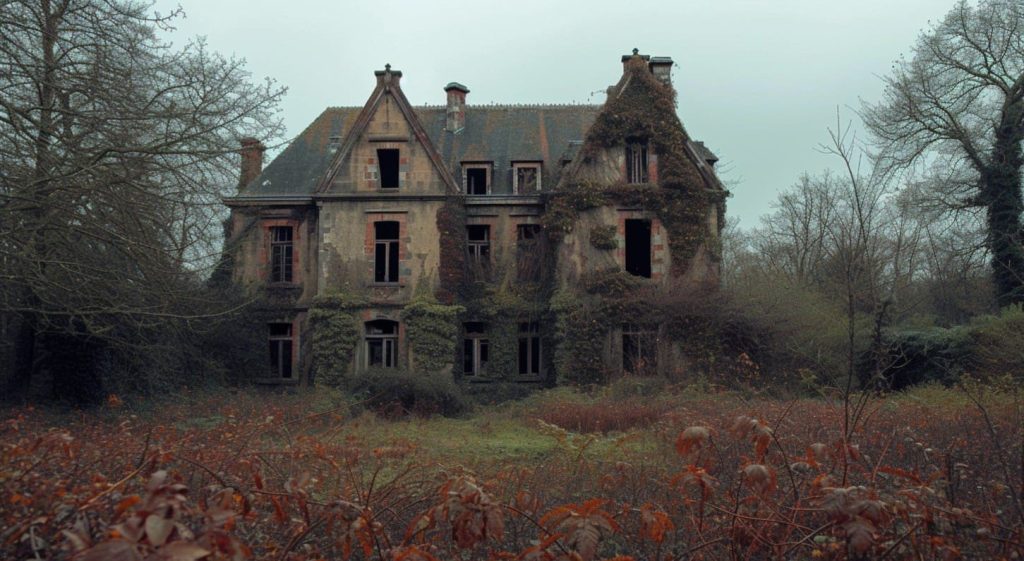
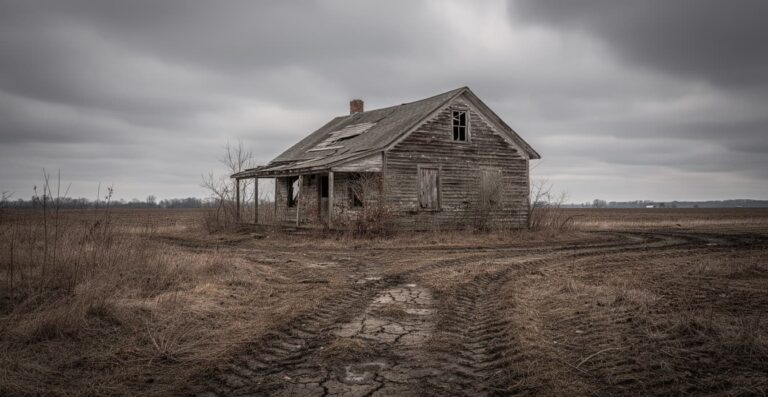
That’s the world Hailey Freeman has spent her adult life protecting. A former soldier, she runs her family’s plot of forty acres of Canadian farmland that’s belonged to her family since 1875 with the discipline of a military outpost. Rules aren’t suggestions. Nobody outside the fence is assumed to mean well. Her partner Galen and her four children grow up under one unspoken understanding: everything the family needs is inside that perimeter, and anything outside of it is a threat until proven otherwise.
The Family Holding The Line
It’s worth slowing down on each member of this family individually, because the ending only lands if you understand exactly what each of them is fighting for and against.
Hailey
Hailey is the one holding everything together through sheer force of will. She’s not warm, and she’s not supposed to be. Every lesson she drills into her kids on how to hold a rifle steady, how to ration ammunition, how to disappear into the treeline without a sound comes from a place of love wound so tightly it reads as coldness to anyone standing outside of it. She’s lost people before the story even begins. She has structured her entire existence around never losing anyone else again, and that structure has calcified into something closer to a fortress than a family.
Galen
Galen, her partner, plays a steadier hand to Hailey’s iron one every bit as protective, but less about control, more about quiet competence. He’s the family’s other line of defense, and when the final assault comes, he pays the steepest physical price for keeping everyone alive.
Emanuel
Emanuel, Hailey’s eldest, is the character the story pivots around. He’s reaching the age where “everything I need is right here” stops feeling true. His hunger for actual human contact beyond his own siblings is what sets the entire plot into motion; everything in the back half of the film traces back to this one understandable want.
Raine
Raine, Galen’s daughter, is the family’s sharpest instrument, an exceptional shot who saves the day more than once during the siege. She’s got none of Emanuel’s patience for strangers, and that hard edge makes her effective once the fighting starts.
Danis
Danis, a little younger than Emanuel and Raine, spends much of the film working toward proving herself as a fighter in her own right, culminating in a rite-of-passage moment the family treats with real ceremony a small, almost tender scene that plays very differently once you know what’s coming.
Cookie
Cookie, the youngest of the Freeman children, is still being shaped by all of this. She’s old enough to help defend the farm in a pinch, but young enough that the family still visibly wrestles with how much violence a child her age should be exposed to, a tension the film never fully resolves and clearly doesn’t intend to.
Dawn
And then there’s Dawn, who isn’t a Freeman at all and whose sudden arrival is the fuse that lights everything else that follows.
The Spark That Lights The Fuse
The inciting moment of the entire film is deceptively simple. Emanuel, slipping away from his chores, spots a young woman named Dawn at a pond deep in the woods, the first person his own age he’s ever really encountered who isn’t one of his sisters. It’s not subtle, and it’s not meant to be. After a childhood defined entirely by isolation, a spark like that is combustible almost by design.
Dawn later shows up at the Freeman farm wounded, claiming the outpost she came from was attacked and destroyed. Emanuel makes the decision that shapes everything from this point forward: instead of telling his mother or turning Dawn away, he hides her, tending to her in secret while the rest of the family remains completely unaware she exists. He knows exactly how Hailey would respond to an unvetted stranger inside the fence shoot first, ask questions never so he takes the risk entirely onto himself.
Meanwhile, the tension outside the farm keeps escalating in the background. The Freemans maintain radio contact with a loose network of nearby homesteads, and one by one, those signals start going dark. No explanation. No warning. Just silence where there used to be a voice on the other end.
This is the question the entire back half of the movie is built to keep you guessing about: is Dawn exactly who she claims to be, a genuine survivor looking for nothing more than safety? Or is her sudden appearance somehow connected to whatever’s silencing every other farm in the network, one after another? The film is careful never to tip its hand too early, and that ambiguity isn’t an accident; it’s designed to put you in Hailey’s shoes, forced to weigh a stranger’s story against mounting, unexplained danger, rather than simply siding with Emanuel’s more trusting instinct from the start.
Guns, Blood, And The Last Stand
Once the militia, a roaming group that has turned to eating other survivors as the food chain collapsed entirely out from under them, finally closes in on the Freeman farm, the film shifts gears completely. The final stretch plays out as one long, escalating siege, and it’s where every single skill Hailey has spent years drilling into her children finally gets tested for real, with everyone’s life on the line at once.
Raine, true to form, takes up a position with her rifle and starts picking off attackers with the same cold precision she’s displayed the entire runtime. Galen and Emanuel push the fight outward into the cornfield, hunting down anyone who manages to breach the perimeter before they can reach the house. But the militia doesn’t fully break under that pressure, and a handful of attackers still manage to make it inside, going after the family directly and even threatening to burn the house down around them if they can’t get in any other way.
The turning point of the entire siege comes down to the youngest members of the family stepping up in a way the film has been quietly building toward from the start. Danis, cornered in a genuinely life-or-death moment, fights off an attacker face to face with the exact rite-of-passage arc the movie set up earlier with her “graduation” scene, now paying off under the worst possible circumstances. Raine, caught in a frantic scramble with her own weapon, finishes off the last of the immediate threat just in time. Galen survives the assault, but not without absorbing a serious wound in the process of protecting the people he loves, a blunt reminder that in this world, even winning a fight costs something real.
By the time the gunfire finally stops and the smoke clears, the farm is still standing. Against every odds stacked against them from the film’s opening minutes, the family is still, somehow, together.
The Real Ending: A Door Left Open
Here’s the part that separates 40 Acres from a straightforward survival thriller with a body count: the true emotional climax of the film isn’t the shootout at all. It’s what Hailey chooses to do in the quiet moments immediately after.
Instead of turning on Dawn once the danger has passed instead of treating her as the loose end she’s spent the entire movie suspicious of, Hailey makes the deliberate choice to let her stay. On the surface, it’s a small gesture. Underneath, it’s enormous. This is a woman who has organized every part of her existence: her parenting, her farm, her entire survival strategy around the belief that outsiders are threats to be neutralized before they can do any harm. Letting Dawn stay isn’t naivety on Hailey’s part. It’s the first time in the entire film that she chooses to bet on connection over control, on the strength of a relationship over the safety of a locked gate.
That choice mirrors exactly what Emanuel had been fighting for the entire runtime, not out of recklessness but out of conviction. His willingness to risk everything to protect Dawn was never rebellion for its own sake. It was Emanuel quietly pushing back against a survival philosophy that had curdled, over fifteen hard years, into permanent isolation arguing, in the only way he knew how, that a family too afraid to ever let anyone in eventually runs out of future worth protecting.
The film doesn’t resolve any of this with a group hug and a clean fade to black, and it’s better for it. It wraps up with a subtle shift toward hope: the realization that staying alive for one more afternoon is only part of the battle, and that the kids might finally get a chance to build something less rigid than the fortress their parents built.
Two Philosophies, One Fence Line
If you strip out the sieges and the gunfights entirely, 40 Acres is really a two-hander between Hailey and Emanuel, and it’s worth tracing exactly how that relationship evolves, because it’s the actual engine driving everything that happens in the final act.
Early in the film, Hailey and Emanuel are constantly at odds in small, simmering ways that never quite boil over. She lectures, he resists. She drills discipline into every waking moment of his life, and he looks for any excuse to slip past the fence line and just exist as a teenager for five uninterrupted minutes. None of this plays as generic rebellious-teen filler; it’s carefully set up so that by the time Emanuel makes the decision to hide Dawn rather than tell his mother, you understand exactly why he does it. He isn’t being reckless for the sake of it. He’s making a values-based bet that his mother’s rulebook, however effectively it’s kept the family alive so far, has also quietly cost them something real and human along the way.
What makes the ending genuinely satisfying is that the movie refuses to let either of them simply be declared “right.” Emanuel’s gamble very nearly gets people killed once the militia closes in. Hailey’s paranoia, had she acted on it fully and turned Dawn away or worse might have prevented that entire risk from ever materializing in the first place. But it also would have confirmed every fear Emanuel had about the kind of adult, and the kind of family he was on track to become if nothing ever changed. The siege forces both philosophies to collide head-on in real time, and Hailey’s choice to let Dawn stay afterward isn’t a surrender to her son’s idealism. It’s her arriving, on her own terms and through her own hard-won trauma, at something very close to the same conclusion he’d already reached.
That dynamic gives the finale far more depth than a standard “kids know best” trope. The film is consistently transparent about one thing: Hailey’s rigid pragmatism was never framed as the antagonist, just a reflection of the brutal world she lived in. The isolation was. There’s a real difference between a mother who is tough because the world demands it, and a survival system that has calcified into something too rigid to bend even when bending is exactly what’s needed to survive what comes next.
Blink And You’ll Miss These!
A handful of smaller choices scattered throughout the film reward paying closer attention, especially once you already know how everything shakes out by the end.
- Danis’s “graduation” scene: Which takes place shortly before the final siege begins, plays very differently on a second watch. What initially looks like a small, almost sweet family celebration is really the film quietly staffing up its own climax making absolutely sure you’ve seen Danis proven capable in a lower-stakes moment before her life genuinely depends on it.
- The radio silence from neighboring farms: Escalates so gradually across the runtime that it’s easy to mentally file it away as background noise on a first watch. Go back and pay attention, and it functions almost like a countdown clock, quietly ticking away underneath every ordinary domestic scene inside the Freeman house.
- Emanuel’s first sighting of Dawn at the pond: Is shot with a softness that’s completely absent from the rest of the film’s harsh, sun-bleached color palette. That visual contrast is doing a lot of quiet work, signaling exactly how differently Emanuel is wired from the rest of his family long before a single line of dialogue confirms it outright.
- Hailey’s early insistence that everything the family needs is already inside the fence: Lands as pure hard-line paranoia the first time you hear it. By the time the ending arrives, that same line plays more like a woman trying to convince herself of something she already, quietly, suspects isn’t sustainable long-term.
- The recurring shots of the fence line itself: Especially the barbed, jagged detailing along the top, take on a different weight once you clock that it’s less a set dressing choice and more a visual shorthand for exactly how much vigilance and how much fear has gone into keeping this family alive this long.
None of these are twists in the traditional sense, but they’re exactly the kind of details that make the ending feel earned rather than sudden once you notice how deliberately they were planted from the film’s opening minutes.
What The Film Refuses To Answer
A handful of questions go deliberately unanswered by the time the credits roll, and it’s worth treating that as an intentional choice rather than a loose end the writers simply forgot to tie off.
- Is Dawn actually trustworthy in the long run? The film gives you just enough to believe her story, but it never fully closes the door on doubt either. That lingering ambiguity is the entire point; Hailey’s decision to trust her is framed as a genuine leap of faith, not a mystery the plot has quietly resolved for you behind the scenes.
- What’s actually happening beyond the fence line? The wider scope of the militia threat, and the fate of every other farm that went dark on the radio over the course of the film, never gets a tidy explanation. The Freemans’ world is deliberately kept small and claustrophobic, and the film keeps the danger just outside it exactly as unknowable to the audience as it is to the family living inside it.
- Will the next generation actually manage to break the cycle? Emanuel’s arc across the film suggests real hope for a less isolationist future, but the movie is smart enough not to promise anything outright. Trust, once fractured by fifteen years of collapse and violence, doesn’t fully heal in a single act of grace, however meaningful that act might be.
None of these should be read as plot holes. They’re the film trusting its audience enough to sit with genuine uncertainty in the same way its characters are forced to.
More Than Dirt: What The Land Really Represents
You really have to look closer at this specific plot of land, because the title is doing a lot more heavy lifting than just measuring how big their yard is.
“Forty acres and a Mule” is a direct reference to a broken promise made to formerly enslaved families in the United States after the Civil War land meant to be redistributed as reparation that, for most families it was promised to, never actually was. By establishing that Hailey’s family has worked this land for generations, the narrative presents their homestead as a rare example of that original promise being realized and sustained over time. That context reshapes almost everything Hailey does on screen. The land is her proof that she kept her word to her family. That’s why the thought of losing it or risking its safety on strangers sparks a rage that goes way deeper than just protecting her property.
The fence, by extension, is never just a barrier keeping cannibals out. Her past losses materialized directly into that perimeter. More than just keeping people out, the fence is actively keeping Hailey isolated from everyone. Every spike represents vigilance earned through loss the film never fully spells out. When Hailey finally lets someone through that fence at the end, the gesture carries the full weight of everything it’s represented which is exactly why it lands as the true climax rather than the shootout before it.
The Real Argument At The Heart Of The Story
Strip away the post-apocalyptic dressing and the cannibal-militia mechanics, and 40 Acres is really about the tension between two survival philosophies: total isolation versus cautious, deliberate openness. Hailey represents the first a hard-won but ultimately unsustainable belief that safety means shutting everyone out, permanently. Emanuel represents the second a riskier bet that connection is still worth preserving even in a world that’s given him every reason to abandon it.
Crucially, the film never argues either philosophy is simply correct. Hailey’s caution kept the family alive for fifteen brutal years. Emanuel’s instinct to trust Dawn nearly got everyone killed. But by the credits, the film comes down gently on the side of Emanuel’s worldview, suggesting survival stripped of connection isn’t really living; it’s just delaying a lonelier kind of ending. Legacy, in the film’s own quiet argument, isn’t only about keeping land in the family. It’s about what you’re willing to risk to make sure whatever gets inherited is worth having.
If you’re interested, you can check out our ending explainers of Backrooms, Obsession and Disclosure Day!
So, What Does The Ending Actually Leave Us With?
Pull it all together, and 40 Acres ends up somewhere more thoughtful than the average survival thriller. The siege gives the film its adrenaline, but the real ending happens in the quiet after a hardened woman chooses, for the first time in fifteen years, to let someone through her fence instead of putting a bullet through the problem. Hailey doesn’t stop being who she is. She just proves she was never as unmovable as she needed everyone, including herself, to believe.
That’s what makes the ending stick with you. It doesn’t hand the Freemans a clean victory or a guaranteed future just for each other, one more day of survival, and a real crack in a worldview that had calcified into something unsustainable. Whether that crack grows into something bigger for the next generation is left open, which feels like exactly the right note for this family to end on.
FAQ: Most Googled Questions, Answered
Does Galen die at the End of 40 Acres?
No. He’s badly wounded during the final siege, but he survives.
What happens to Dawn?
She survives, and Hailey chooses to let her stay with the family instead of casting her out.
Is 40 Acres based on a True story?
No, it’s fictional. The title references the real, broken “forty acres and a mule” reparations promise made to formerly enslaved families after the Civil War.
Does the movie explain what caused the Apocalypse?
Yes, a fungal pandemic wiped out most animal life, followed by wars fought over the collapsing food supply.
Is there a sequel or a Post-credit scene?
No post-credit scene, and no sequel has been announced yet.
Why is 40 Acres suddenly popular again in 2026?
A streaming resurgence, boosted by Danielle Deadwyler’s X-Files reboot casting and the film’s 2026 Canadian Screen Award wins.
About the Author.
Hi, I’m Vansh, the founder of Vibe On Cue. I track the absolute best ways to experience cinema, from the biggest Hollywood Blockbusters and upcoming release dates to the finest details of PVOD & Streaming and pristine Blu-ray & 4K physical media. And when the credits roll, I break down the narrative with deep-dive Ending explained guides. If you live for the full life cycle of film, stick around and explore the site!!!