
The Arborist Ending Explained: I went into The Arborist expecting a fairly standard “creepy woods” horror movie. I came out of it kind of wrecked, honestly, trying to piece together what had actually just happened. No cheap jump scares, no obvious villain you can point at and go “that’s the bad guy” just this slow, heavy dread that builds and builds until you realize the real horror has nothing to do with the forest at all.
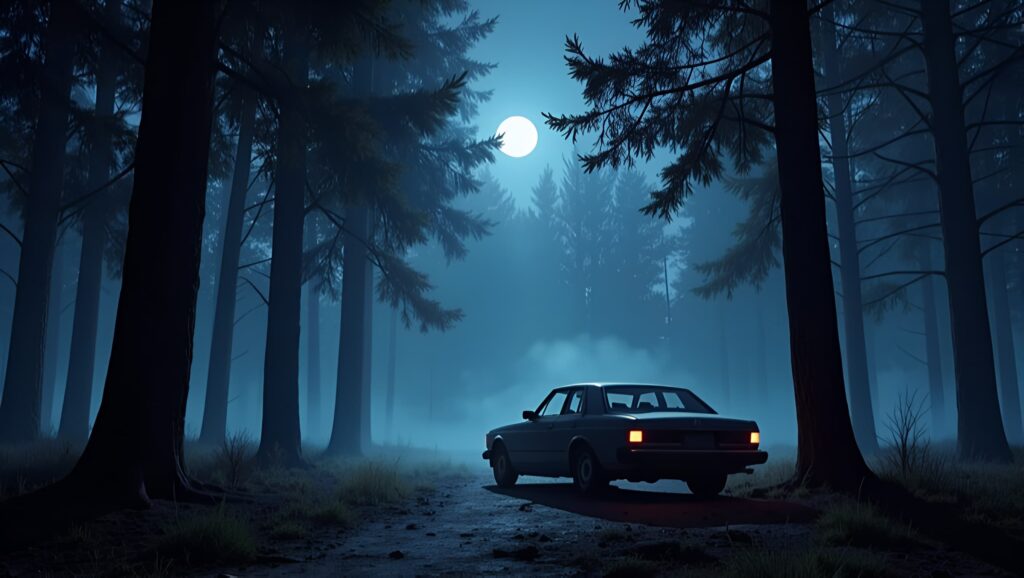
That’s actually what got me about it. You spend the first half waiting for the movie to reveal its monster, and it does, technically there’s a creature, there are the ghosts, there’s a fog that bends time. But none of that is really what the film is about. The fog, the Raven-Man, the dead orphans all of that is dressing. The actual story is about a mother and son who can’t talk to each other, and what happens when grief gets left to rot instead of dealt with. By the time you get to the ending, the supernatural stuff almost feels secondary to the family stuff, which I think is exactly what writer-director Andrew Mudge was going for.
So let’s get into it: the setup, what’s actually driving the plot underneath the ghost story, how the ending plays out, and what it all means once the dust settles.
Quick heads up: We are diving deep into the deep end of the pool here. Full spoilers for The Arborist are ahead, so go watch the movie first if you haven’t already!
The Setup: What’s Actually Going On?
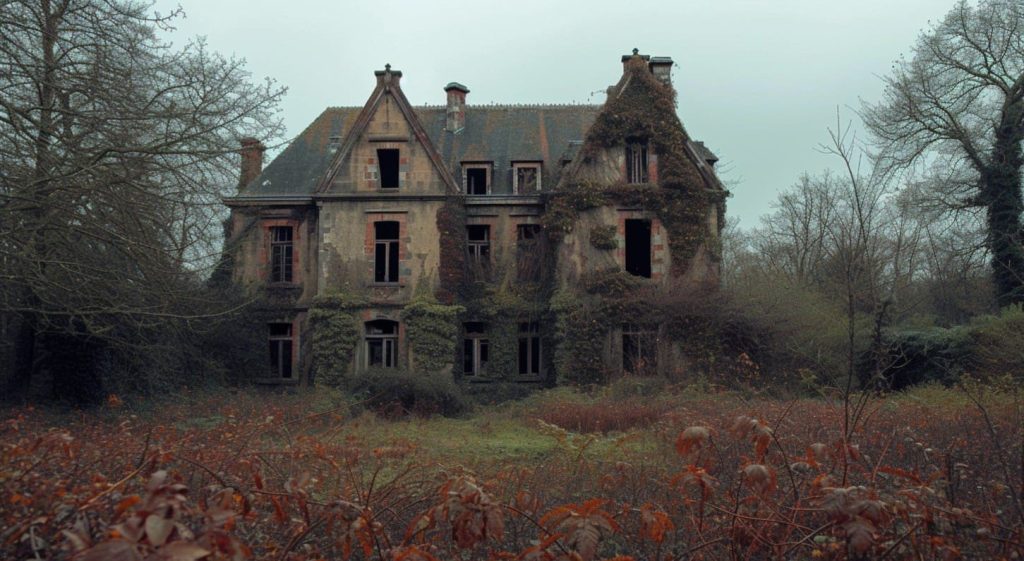
Ellie (Lucy Walters) is a tree surgeon, genuinely good at her job who’s been quietly falling apart since her infant daughter Rachel died of SIDS. She’s drinking through it, not talking about it, and dragging her teenage son Wyatt (Hudson West) along to a remote estate for a job that, frankly, makes no sense on paper: a strange, wealthy recluse named Arthur Randolph (Will Lyman) wants her to cut down trees that look perfectly healthy. Not diseased ones, not dying ones, the good ones. The strong pines that any other arborist would tell you to leave alone.
It’s a weird ask, and the movie knows it’s a weird ask, which is part of why it works as a hook. Ellie needs the money badly enough that she doesn’t push back too hard on the “why.” And that’s kind of the point she’s so deep in her own survival mode that she’s stopped asking the obvious questions, about the job or about her son.
Turns out those trees aren’t just trees. They’re functioning as containment, sealing off a group of orphan spirits who died on the property decades ago, before the Randolphs even owned it in their current form. Every cut Ellie makes with her saw weakens that seal a little more, and she has no idea she’s doing it. She thinks she’s just doing landscaping. She’s actually picking a lock.
This opens up something the movie calls the “Obex” , basically a point where past and present start bleeding into each other, where old tragedies stop staying in the past and start pushing into the present day. The land itself works like a trap, and it runs on one rule: it wants a substitution. A living soul to replace a dead one, to settle a debt that’s technically not even Ellie or Wyatt’s to pay, it belongs to the Randolph family, generations back, long before either of them showed up. They’re collateral damage in someone else’s unpaid bill.
What I like is that the forest doesn’t just sit there waiting passively, either. It’s depicted as actively reactive; it reads the people walking through it and responds to whatever’s already broken in them. The more isolated someone is, the more silence there is between two people who should be talking, the more room the land has to move in. It’s less “haunted house” and more “pressure finds the crack.” Ellie and Wyatt walk in with a crack already there. The land just widens it.
Where It All Goes Wrong?
Here’s the thing that makes this movie hit differently than a typical haunted-woods flick: the real catalyst isn’t the trees. It’s that Ellie is so locked into her own grief she stops seeing her son standing right next to her.
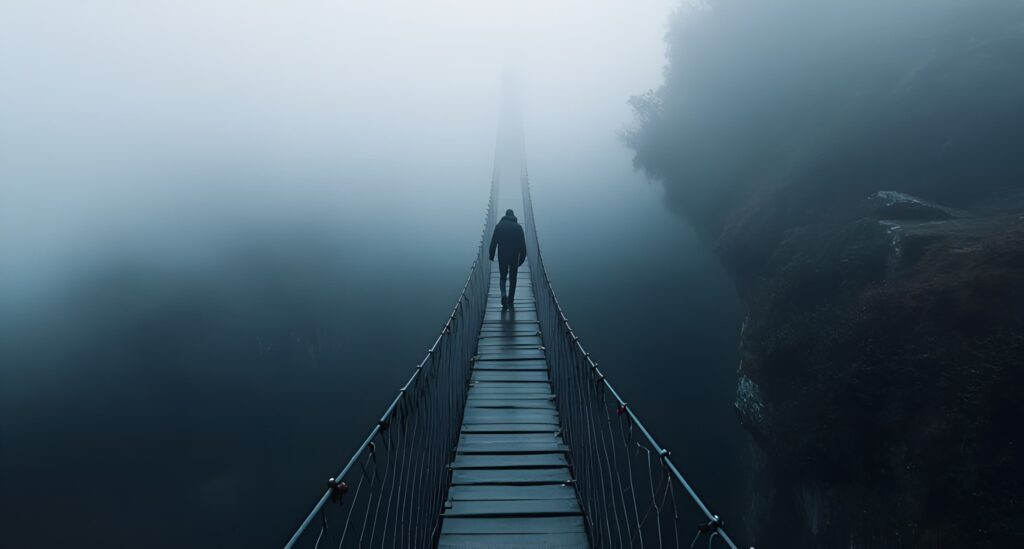
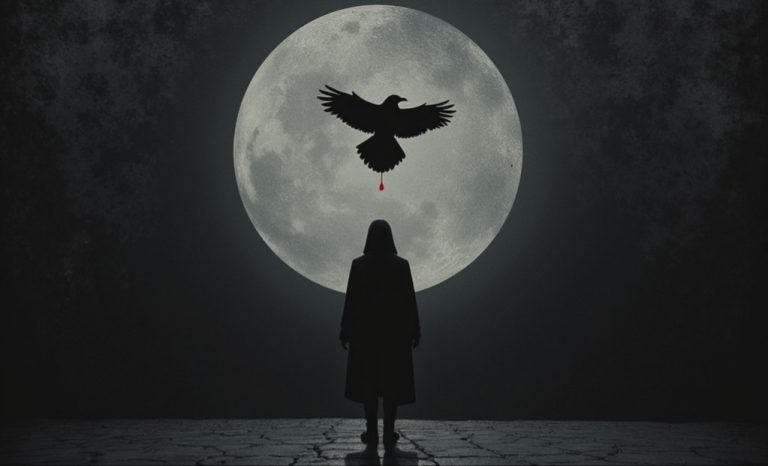
She’s brilliant at spotting rot inside a tree trunk; it’s literally her profession, reading the signs of decay before they’re visible from the outside. And she has zero idea what’s happening inside her own kid, even though, if you think about it, the signs are honestly not that subtle. While she’s out there all day with a chainsaw, drowning herself in physical labor because it’s easier than sitting still with her feelings, Wyatt is left completely alone with his. He starts seeing something out past the tree line, a bird-like figure with human hands, watching him, following him at a distance that’s just close enough to feel deliberate.
He tries to tell her. More than once, actually the movie gives him a couple of real attempts at reaching out, not just one moment that gets brushed past. And each time, Ellie waves it off as typical teenage stuff. Moving is hard. New place, no friends, normal moodiness for a kid his age. Anything but actually sitting down and asking him what’s going on, because asking him what’s going on would mean actually being present, and being present is the one thing she can’t afford right now.
And that’s the opening the estate was waiting for. The more Ellie checks out into the bottle, into the work, into anywhere but the conversation she’s avoiding the stronger the Raven-Man gets, like it’s feeding directly off the distance between them. It starts as something glimpsed at the edge of frame, barely there, and by the back half of the movie it’s acting less like a passive shadow and more like something actively leading Wyatt somewhere specific. It’s not just stalking him. It’s herding him.
The trees were never the real mistake here. Cutting the wood just opened the door. Shutting her son out is what walked the threat right through it.
The Climax, Broken Down
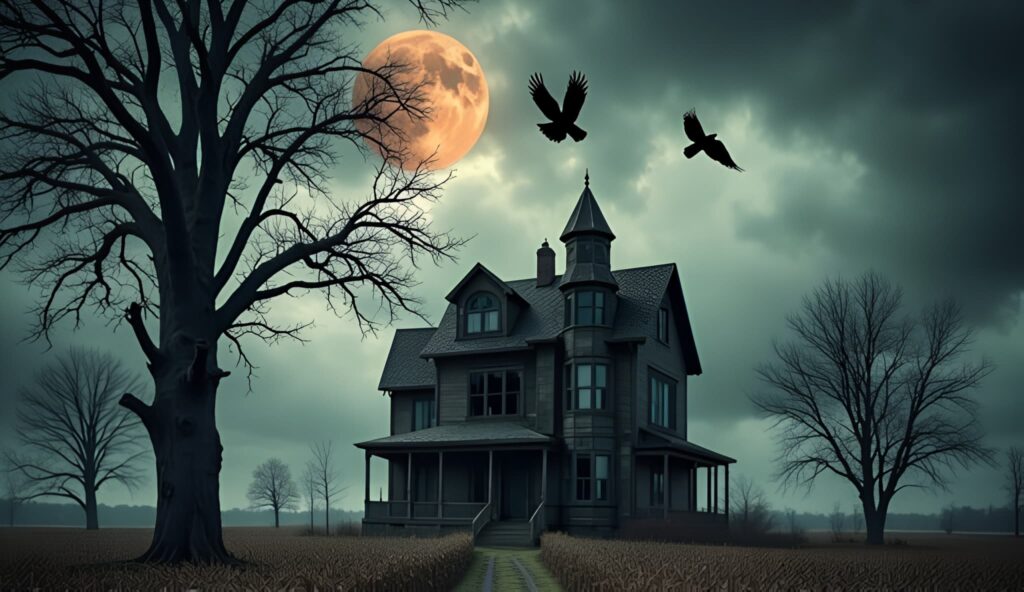
Everything comes to a head in an old stone amphitheater on the edge of the property, the exact spot where those orphans died years ago, the place the whole estate has basically been orbiting around without you realizing it. The Raven-Man leads Wyatt there directly, no more hiding at a distance, fully guiding him now like it’s been waiting for permission to stop pretending to be subtle. Once he’s standing on that ground, the fog rolls in thick and the past basically just takes over the present. The amphitheater stops being a ruin and starts being whatever it was the night those kids died.
Ellie shows up just in time to see her son surrounded by masked ghost children closing in, and the Raven-Man reaching for him with those unsettling human hands. And then comes the gut-punch moment: a phantom version of baby Rachel appears in the fog, looking exactly like she would have if she’d lived. Arthur just stands back and watches the whole thing unfold. He’s not surprised. He’s been counting on this from the start. He needs the land to take Wyatt to pay off a debt that’s been sitting unpaid in his family for generations, and he’s not about to step in and stop it now that it’s finally happening.
This is the moment the whole movie’s been building to, and it’s a genuinely brutal choice the script sets up: Ellie has to decide, in real time, between an illusion of the daughter she lost and the actual living son standing in front of her. It’s not framed as an easy call, either; the fog-Rachel is rendered with enough tenderness that you understand exactly why a grieving mother might reach for it instead of looking away.
She chooses Wyatt. She drops everything: her grief, her drink, her professional composure, all of it and physically throws herself between him and the creature. Then she does the one thing she actually knows how to do: she takes her chainsaw to the Heart Tree, the massive tree actually anchoring all these spirits to the land. It falls. The fog clears almost instantly. The ghosts dissolve into nothing, and the amphitheater’s grip on Wyatt just lets go.
She didn’t save him with some clever trick or a magic word. She saved him by doing the one genuinely hard thing the whole movie has been asking her to do, choosing reality, painful as it is, over a comforting illusion.
What the Movie’s Actually About?
Okay, here’s the part I keep thinking about days later. The script leans hard on this concept called “Wound Wood” and it’s a real arborist thing, not invented for the movie: when a tree gets injured, it grows a specialized layer of tissue to seal the wound off and keep it from rotting from the inside. If the tree can’t grow that tissue fast enough, or the wound is too deep, it stays open, and the tree slowly hollows out from the inside while still looking fine on the outside.
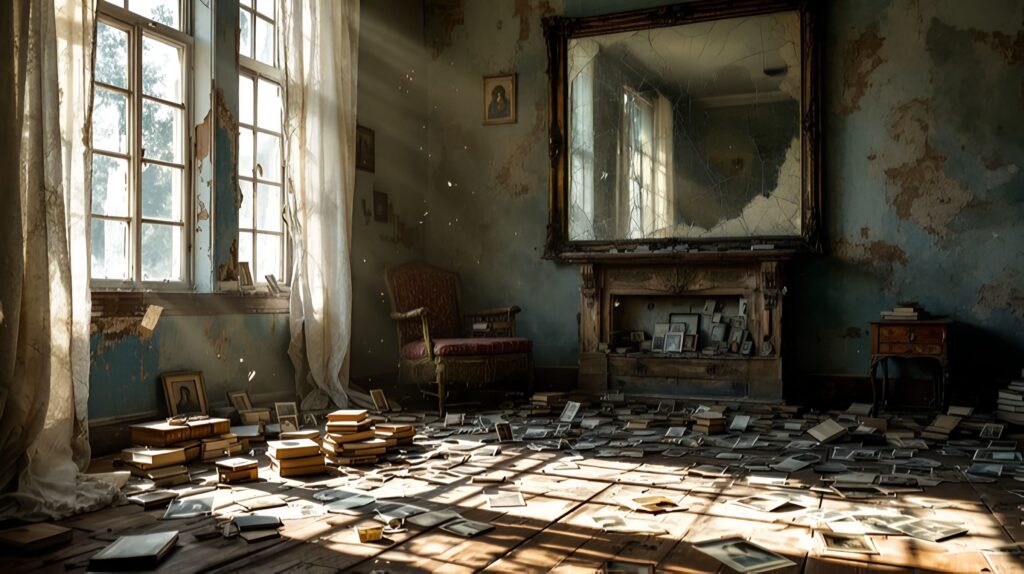
That’s the whole movie, condensed into one piece of botany. Arthur’s property is full of hollow trees because everyone connected to that land is carrying a wound that never got the chance to seal Arthur with his family’s buried history, Ellie with Rachel, even the orphans themselves, who never got a real burial or a goodbye. And the Raven-Man isn’t some random monster the writers thought looked cool; it’s basically a physical projection of Wyatt’s own guilt, given shape and sent walking around the woods. He blames himself, quietly and constantly, for not somehow saving his baby sister, even though there was nothing a kid his age could have done. Those tiny human hands on the creature are the most direct, almost uncomfortable image of that guilt: a baby’s hands, attached to a predator, because that’s exactly what unprocessed helplessness turns into in a kid’s head when nobody helps him put it down.
It’s a genuinely smart piece of design. When you sit with it you take a kid’s grief and guilt, refuse to let him talk about it, and the movie literally gives that feeling talon and sends it after him. The less Wyatt is allowed to say out loud, the more physical and threatening the metaphor gets. That’s not subtle, exactly, but it’s executed well enough that it doesn’t feel cheap either.
Clues You Probably Missed the First Time
A few things worth watching for on a rewatch and the movie really does reward a rewatch, because once you know the ending, half the early scenes read completely differently:
- The Opening scene is doing more work than it seems. Early on, Ellie explains tree decay to Wyatt, almost as small talk while they’re driving up to the estate how a tree can look completely fine on the outside while it’s hollow inside, how you’d never know just from looking at the bark. That’s not just arborist trivia dropped in for flavor. That’s foreshadowing Arthur’s entire life, and honestly her own, in the very first ten minutes, before either of them has any idea what they’ve actually driven into.
- Listen to the background audio during her drinking scenes. It’s easy to miss on a first watch because it’s mixed low, but there’s a faint baby crying laid under the harsh sound of a raven calling a quiet, almost subliminal warning that her unprocessed grief is the exact thing summoning this creature. The movie is telling you the mechanism of the haunting before it ever shows you the Raven-Man directly.
- There’s a property map in Arthur’s study that shows the amphitheater clearly marked as a historical boundary point, visible for maybe two seconds during the second act while Ellie is talking to him about the job. Easy to blink and miss, but it confirms the amphitheater was always the actual destination, long before Wyatt ever sets foot there.
- The animal masks show up again carved into the banisters of the Randolph mansion, which you can catch in a couple of wide shots if you’re looking for it. The house itself has been telling you the truth this whole time. You just don’t notice until you already know what you’re looking at, which is honestly true of most of this movie’s clues.
That Final Shot!
The ending avoids the easy fix, which I really respected. There’s no scene where Ellie suddenly smiles and everything’s fine, no clean catharsis with swelling music. As Ellie and Wyatt drive away from the estate, the camera holds for a long moment on her hand wrapped tight around a broken piece of the Heart Tree, the one she just cut down to save him. And there’s something kind of beautiful hiding in that image if you think about what grafting actually means in forestry joining two genuinely different things together so they grow as one organism going forward, neither one erasing the other.
She’s not pretending Rachel never existed, and she’s not “healed” in any clean, movie-poster way. She’s just decided, in that final shot, to carry that loss as part of who she is now instead of treating it as something separate she has to keep fighting off or drinking away. That’s a meaningfully different ending than the genre usually gives you; most horror movies want you to believe the threat is gone and the characters are okay. This one’s more honest: the threat is gone, and the characters are starting to be okay, which isn’t quite the same thing.
She and Wyatt aren’t fixed, and the movie doesn’t pretend they are. But for the first time since Rachel died, they’re finally on the same side of the silence instead of two people quietly grieving in separate rooms. That’s the whole point of that closing shot: the wound wood is just starting to grow, not finished growing. The movie ends right at the beginning of the actual healing, not at the end of it.
So What Happens to Everyone Else?
Ellie and Wyatt get out. Arthur doesn’t, not really, and the movie makes sure you sit with that contrast before it cuts to black. The last shot of him is just standing alone in his enormous, empty house, completely still, almost like the building has absorbed him into its own hollowness. He spent his entire life trying to bury what happened to those orphans rather than actually mourning them properly, and now that his one shot at finally settling the family debt has failed, there’s genuinely nothing left for him to do. He’s just as hollow as the forest he was trying to feed Wyatt to, and unlike Ellie, he never found his own version of wound wood. He never even tried to.
For Ellie and Wyatt, the supernatural threat is over, the curse is broken, the spirits are gone, the debt isn’t getting paid off with anyone’s life. But the real work, the actually-living-with-it part, is just getting started, and the movie is smart enough not to show you that part. It ends right as that harder, slower process begins. And it leaves you with a question that lingers well past the credits: once a curse like this is broken, does it really end completely? Or does some quieter version of it just keep getting passed down through families, waiting patiently for the next person who decides it’s easier to ignore a wound than to actually let it heal?
Where Does It Sit Next to Other Grief-Horror Movies?
It’s hard to watch this and not think about Hereditary, and I’d guess the comparison is basically intentional. Both movies use a family tragedy as the actual engine and dress the supernatural stuff on top of it. But Ari Aster’s film is interested in inherited doom, the idea that you were never going to escape the thing your bloodline set up for you, no matter what you did. The Arborist is gentler than that, almost stubbornly so. Ellie gets an actual exit. The curse isn’t generational fate here, it’s more like generational debt, and debts can be refused. That’s a meaningfully different message to land on.
The Babadook is the closer cousin, probably. Same basic shape: a single, overwhelmed parent, a kid nobody quite believes, a monster that’s obviously a metaphor for grief and barely bothers to hide it. But Jennifer Kent’s film ends with the monster getting locked in the basement and fed scraps. You don’t beat grief, you just learn to live alongside it, manage it, keep it from running the house. The Arborist goes further than that. It doesn’t ask Ellie to manage Rachel’s death forever in some back room of her psyche. It asks her to fell the actual tree, end the actual ritual, and carry the loss out in the open instead of locking it away. It’s a more hopeful ending than Babadook’s, even if “hopeful” is doing a lot of heavy lifting for a movie this bleak.
There’s also a little bit of The Others in how the film treats its setting, the property itself behaving almost like a character with its own appetite, its own memory. And the orphan-spirits angle, kids who died without a proper goodbye and got stuck because of it, has some DNA in common with classic Japanese horror like Ringu, where the haunting is really just unresolved grief that nobody bothered to deal with at the time. The Arborist doesn’t copy any of these so much as it borrows the genre’s whole toolkit, the ghost, the curse, the haunted land and points all of it directly at one specific, ordinary, devastating thing: a mother who can’t talk to her son about the baby they both lost.
What separates it from most of its peers, honestly, is the ending. A lot of grief-horror either goes full tragedy (the family doesn’t make it, the cycle wins) or full ambiguity (did any of it even happen, was she just losing her mind). The Arborist picks neither. It commits to the haunting being real, commits to the family surviving it, and still doesn’t let them off easy. That’s a harder needle to thread than it sounds, and it’s probably the thing I respect most about the script.
FAQ: Simple Quick Answers
- Is this based on a true story? No but the grief around SIDS is drawn from real experience, even if the supernatural plot is invented.
- What is the Obex, exactly? A localized phenomenon where the property’s past and present collapse into each other is basically a spiritual bottleneck.
- Why does the Raven-Man have human hands? They’re a visual stand-in for Wyatt’s guilt over his sister’s death, helplessness given a physical shape.
- Did Rachel actually come back? No. The vision of her in the climax is a trap, not a resurrection, something the land used to try to secure Wyatt.
- What does “Wound Wood” mean for the characters? It’s the movie’s whole metaphor: just like a tree has to grow new tissue to heal a wound instead of rotting from it, the characters have to actually face their pain instead of avoiding it.
- Why did Arthur pick Ellie specifically? Because her grief was raw enough at the same “frequency,” as the film puts it to attract the orphan spirits already tied to his land.
About the Author.
Hi, I’m Vansh, the founder of Vibe On Cue. I track the absolute best ways to experience cinema, from the biggest Hollywood Blockbusters and upcoming release dates to the finest details of PVOD & Streaming and pristine Blu-ray & 4K physical media. And when the credits roll, I break down the narrative with deep-dive Ending explained guides. If you live for the full life cycle of film, stick around and explore the site!!!