
Hope Ending Explained: Hmmm ok so you just sit through two and a half hours of guns, grenade launchers, a horse chase, and an old man telling a very long story about his stomach trouble in the woods. The craziest part is how it ends: just a quiet conversation between the aliens, cut with a cop who sounds like he’s having a full-blown panic attack trying to catch his breath. Then credits. Then, a little later, a guy limping up a road. And you’re sitting there like, wait, what did I just watch?
That’s the trick of Hope. For most of its runtime it’s a loud, mean, weirdly funny monster movie where you’re firmly on the humans’ side. Then the last stretch quietly flips the whole thing over, and you realize the monsters weren’t really monsters. They were a family looking for a missing kid, and the guy who had him was keeping him in a chest freezer.
Think about how strange that is for a monster movie. No final showdown, no triumphant speech, just a gasping cop saying he feels lost and strange, and two aliens talking about faith. It’s the kind of ending that makes you scroll your phone in the dark at midnight typing questions into a search bar.
Here’s the plan for this Hope ending explained. First I’ll answer the two questions everyone walks away with: does the alien kid come back, and why did those aliens tear through Hope Harbor in the first place? Then we’ll sort out the rest, including that last line, Sung-ki’s surprise return, and where a sequel could even go.
If you’re interested, you can check out our indepth explanation of recent shudder original The Cycle Ending Explained here!
Full spoilers from here, obviously. If you haven’t finished it, go finish it, because the reveal lands harder when you’ve been wrong right alongside the cops!
TL;DR: Quick Version!
- The Alien kid, Kali, does not come back on screen. His bodyguard rips out his own heart and vows to revive him, but the body is in human hands and the movie ends before anything happens.
- The Aliens weren’t invading. They were looking for their prince, whom a local named Yang-bae shot and stuck in his freezer.
- The first creature cries before it dies, which is the movie’s first hint that the “monster” is grieving.
- The last alien conversation is the first time the film subtitles them. Their final line is “Bring forth true fate.”
- Sung-ki, who gets thrown from the car, survives. The mid-credits scene shows him limping up an empty road.
- The humans end up running to the school to fortify it, so the alien problem is nowhere near solved.
- No sequel has been greenlit. The director says a script exists, but he told Inverse he doesn’t want to get near the movie for the moment.
Okay, who’s who in this mess?
Quick Refresher on the people (and Aliens) who matter for the Ending:
- Ko Bum-seok (Hwang Jung-min): Hope Harbor’s police chief. Nervous with a gun, good at reading a room once he stops panicking.
- Ko Sung-ki (Zo In-sung): Bum-seok’s second cousin and the hunter who leads the party into the woods.
- Im Sung-ae (Jung Ho-yeon): The rookie officer who ransacks the armory and ends up saving Bum-seok’s skin.
- Yang-bae (Eum Moon-suk): An odd local carpenter who shot something in the forest and kept it.
- Ahn Nak-yeon (Lee Sang-hee): A retired colonel who tags along with Bum-seok.
- Mr. Hae-sul (Im Hyun-sik): An elderly wild ginseng hunter who warns that there’s more than one monster.
- Va’migere (Cameron Britton): The first alien, the one that wrecks the town.
- J’aur (Alicia Vikander): The aliens’ empress.
- Ma’veyyo (Michael Fassbender): J’aur’s bodyguard and warrior.
- Ai’dovor (Taylor Russell): One of J’aur’s subordinates.
- Kali: The alien prince, the small body in Yang-bae’s freezer.
Wait, What Even Happens in Hope Harbor?
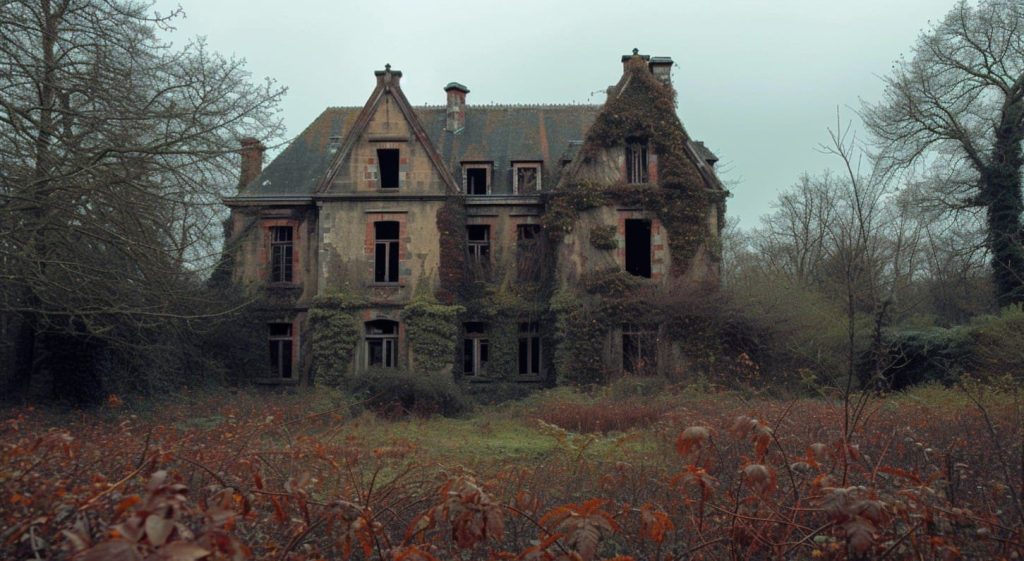
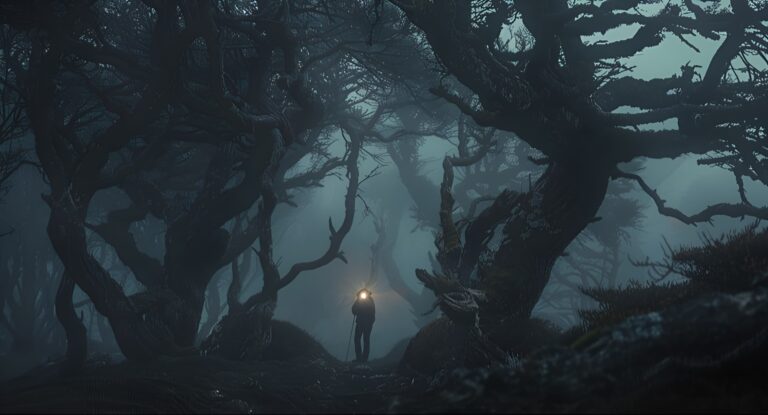
Picture a sleepy fishing village near the border, mostly full of elderly people. Wildfires have pulled every outside responder away, the phones are spotty, and the police chief has basically nobody to call. Then a cow turns up shredded, a farm owner turns up dead, and Sung-ki and his hunting buddies decide it’s a tiger. Why a tiger? Because Mr. Hae-sul said so, and everyone knows tigers wander down from the north every few years. If Mr. Hae-sul says it, it’s true. Bum-seok has never heard this in his life, but somehow he’s the only one.
It is not a tiger. Something big wipes out townspeople, and the first hour is a mess of panic, friendly fire, and a militia that gets massacred. Bum-seok and the retired colonel even shoot a chef by accident, then bicker over whose fault it was, because one of them swears the other told him to fire. Things are so messy in this town that the locals holding the rifles are just about as big a threat as the actual monster.
Sung-ae, the rookie, shows up with grenade launchers she ransacked from the armory, and she and Bum-seok chase the creature in a patrol car. At one point it’s missing a leg. At one point, Bum-seok gets a clear look at the creature, spots it weeping, and it completely throws him off. Then a truck flattens it and it’s over, or so everybody thinks.
The whole vibe shifts during the autopsy, which is exactly when the story starts getting super weird. The creature has five fingers, three knuckles, four toes, and the same basic body plan as a person. It also has an organ no one can name, and a saw can’t even cut through its skin. And Bum-seok quietly mentions that he thought the thing was crying. The surgeon sounds doubtful, but she keeps finding more human details, down to the nostrils.
Meanwhile, at the makeshift hospital, Mr. Hae-sul tells Sung-ae that he saw three of these things in the woods, not just one. Around the same time, Yang-bae turns up insisting he shot another monster and has it in his freezer. Bum-seok throws him out. Then he goes and looks.
Does the Alien Kid come back?
Not on screen, no. And this is where some explainers get it wrong, so let’s be careful.
Here’s what the movie actually shows. The body in the freezer belongs to a small alien child, and the aliens call him the Prince. Kali, if you want his name. He’s dead when we meet him, and he stays that way for the rest of the film. In the final scene, after the Emperor’s giant warship falls out of the sky and crashes into a mountain, J’aur and Ma’veyyo talk. Ma’veyyo promises to find the Prince, to change his destiny, and to use his own heart to revive him. Next thing you know, he’s physically tearing his own heart out of his chest.
Notice what that is: a promise. Nobody in this movie brings Kali back to life. The body is still in human hands, and Ma’veyyo is hurt, with a forest full of armed locals between him and it. There’s even a ticking clock in the dialogue about how little time they have left. You can see why people think the revival happens, since the whole last scene is about it, but the film stops right before the attempt.
That heart is also worth a thought. It looks a lot like the strange organ the surgeon found in the first creature, which suggests this isn’t some random bit of anatomy but a big deal in how these beings live and die. The film doesn’t explain it, and I’m not going to pretend it does.
Could he actually be revived? The aliens seem to think so. Ma’veyyo talks like someone who’s seen it done, or at least believes in it completely, and J’aur’s quiet order at the end sounds more like permission than wishful thinking. But nothing on screen proves it works. Treat it as their belief, not a confirmed fact about how their bodies work.
So the honest answer to your question is: the aliens want to bring him back, they have a plan, and the story ends with that plan unfinished. If a sequel ever happens, this is the first thing it has to settle.
Why did the Aliens Attack Hope Harbor in the First Place?
Because they were looking for a lost kid.
This is the part that makes your stomach drop on a second watch. Yang-bae shot Kali in the forest and took the body home. Someone from the city had told him it could fetch a small fortune, so he put it in the freezer to sell. When Bum-seok sees the little corpse, he looks at its feet and notices the ankles bend the same way as the big creature’s. Then the pieces click: the monster that ripped up the town was searching for its baby, and it never knew the baby was dead.
Yang-bae isn’t a cartoon villain about it, either. He says he felt bad when he saw the creature’s face, like it was crying its heart out. He’s just the kind of guy who feels bad and does it anyway. Bum-seok loses it on him, and honestly, fair. Calling him out for feeling fine about it is probably the most human thing Bum-seok does in the whole movie.
Now, Bum-seok decides the first creature was the child’s parent. Whether that’s true is a bit more complicated, and we’ll get to it in a minute. Either way, think about how a parent feels when they lose a kid in a crowded store.
Their whole world shrinks down to one thing, and they’ll knock over anything to get it back. Think of the aliens doing the exact same thing. Except, you know, they’ve got super strength, claws, and can’t exactly ask the townspeople for directions before tearing the place apart.
And the humans make it worse. When Sung-ki’s hunters stumble onto the crashed ship, nobody stops to ask what these tall strangers want. They see a threat and respond with bullets, exactly like they did with the tiger story: pick the first explanation, grab a gun, and call it a day.
Wait, what did Sung-ki’s group find in that Spaceship?
While Bum-seok is busy being horrified by a freezer, Sung-ki’s hunters are deep in the mountains, and they walk into the biggest discovery of the whole movie. A crashed spaceship, just sitting in the forest. Someone lifts a hatch, another hunter jokes that he’s never even been on a plane and now he’s inside a spaceship, and then they start counting the chairs. Six chairs, so six of them.
Further in, they find a section where the young are kept. Think about that for a second. These aren’t soldiers on a raid. They’re travelers with children aboard, and one of those children is already dead in a freezer on the other side of the mountain.
Then J’aur, Ma’veyyo, and Ai’dovor show up. Somebody yells not to shoot. Somebody shoots anyway. The hunters have convinced themselves it’s a trap, and from that point on there’s no conversation to be had. The aliens kill nearly all of them. Sung-ki is the only one who gets away, and he flees on horseback.
It’s a brutal scene because you can see both sides making the same mistake. The humans see strange giants and fire. The aliens see armed strangers on a ship full of kids and answer the same way. Neither group stops for a second to figure out what the other side actually has in their hands.
Were the “Monsters” Actually the Victims?
Pretty much, yes, and the movie works hard to make you feel it is late.
Notice how the labels keep growing as the movie goes: tiger, monster, parent, alien family, empire. Each upgrade makes the thing you’re fighting a little more human, and the movie is nudging you, one step at a time, to feel it too.
That crying moment in the car chase is the earliest clue. Bum-seok hesitates because the creature looks like it’s grieving, and he can’t unsee it. The autopsy is the second clue, with all those uncomfortably human details. Yang-bae’s guilt is the third. By the time the ship crashes, the humans have been the ones doing the bullying for most of the movie, even when they were terrified.
Na Hong-jin has said it pretty plainly. In an interview with RogerEbert.com he described the humans this way: “They are the aggressors in the story.” You can feel that in the last scene, when the people running toward Hope Harbor sound lost and weirdly guilty while the aliens sound like they’re praying.
Na also pointed out something I love: there’s something almost nativity-like about finding the alien prince in the muck of a carpenter’s freezer. A royal child, a carpenter, a humble place. That’s not an accident in a movie that ends in a Bible verse.
If you want a real-life version, think of the moment you realize you’ve been angry at someone for something you misread. You were so sure, and then you learned the whole story, and now your stomach hurts. That’s the hangover this movie leaves you with.
Was the First Creature Actually Kali’s Mother?
Here’s a question the movie never answers cleanly. Once Bum-seok lays eyes on the dead child, he immediately assumes the rampaging beast was really just a mom or dad frantically searching for their little one. A lot of people walk out of the theater repeating that as fact. But the film never confirms it.
The first creature, the one the credits call Va’migere, is a separate character from the empress everybody calls Your Majesty. J’aur has all the royal energy of the Prince’s family, so the likeliest read is that she’s his mother, and Va’migere is someone on her side who reached the village first. Even that is a guess, because nobody in the movie says the relationship out loud.
Why does it matter? Because Bum-seok’s guess shapes how guilty the humans feel. If the first creature was a mother mourning her kid, then the humans killed a grieving parent. If it was a servant on a mission, the story is more about empire and loyalty than grief. The movie lets you feel both, and it lets the guess stand because the humans never get the chance to check.
What’s that last Alien conversation actually saying?
It’s a short scene, and it carries the whole ending, so let’s go slowly.
The Emperor’s ship has just fallen out of a portal in the sky, hit a mountain, and exploded. J’aur and Ma’veyyo watch it burn. J’aur asks if he can run, and Ma’veyyo says there’s no time left, that only three “molli” remain, which sounds like a unit of time. He tells her not to falter. He swears in the name of something called Gh’ertu that he’ll find the Prince, change his destiny, and revive him with his heart. If the Prince’s destiny changes, so will theirs.
Then J’aur speaks. She says the Emperor came to her in a dream recently. He told her that faith is evidence of what we cannot see. What she’s seeing now isn’t evidence, she says. What she longs for hasn’t happened yet. And then she gives her last order: bring forth true fate.
That’s the film’s last line of dialogue. Some outlets quote it as “change fate,” but the subtitle is “Bring forth true fate,” and Ma’veyyo’s earlier line about changing destiny is where that wording comes from.
Meanwhile, back with the humans, Sung-ae says Sung-ki was just unlucky, a twist of fate. Bum-seok says he feels lost and strange and can’t breathe. And look at the difference. Humans treat fate like bad weather, something that happens to you. The aliens treat fate like a thing you grab and bend, even when everything has gone wrong.
J’aur’s dream speech also isn’t random. It’s lifted from a Bible verse, which I’ll come back to in a minute.
Why does the movie wait so long to subtitle the Aliens?
Honestly? Because the movie is totally setting you up to root for the wrong team.
For most of the runtime, the aliens’ speech is untranslated. You hear barking, hissing, and strange phrases, and the humans react the same way you do. There’s a quick bit where a hunter hears it talk and is just completely lost trying to figure out what the words even mean.
That makes it easy to treat the creatures like animals. Then, in the last minutes, the subtitles finally switch on, and these beings suddenly sound like people. They talk about an emperor, a prince, faith, grief, and what to do next.
It’s a clever bit of audience manipulation. You only find out the aliens are people at the moment the humans are too far away to hear them. Which means you’ve been watching a story where the only characters who could explain everything were the ones nobody would listen to. You could argue it would be cooler to leave them unsubtitled forever so they stay mysterious. I get that. But the reveal wouldn’t sting nearly as much without it.
So why is it called Hope, Anyway?
The easy answer is the village. Hope Harbor is where everything happens. But Na has said that after making the film he sat down and thought about what the title should really mean and how the ending should feel, and that’s when he decided to add a line from the Book of Hebrews about faith being the evidence of things not seen. J’aur’s dream speech is basically that verse, said by an alien empress.
So there are at least three kinds of hope in this movie. The village is called Hope, and it’s the place where hope should be easiest to find: a small community, everybody knows everybody. It gets torn apart. The aliens’ hope is their Prince, the idea that one heart might reverse a death. And the humans’ hope, by the end, is a school building and a pile of borrowed guns.
Notice that none of those hopes are wrong. They just can’t all come true at the same time. That’s what makes the title feel a little cruel at the end. Everyone is holding on to something, and the things they’re holding on to are pointed straight at each other.
Who Actually survives, and what’s with that mid-credits scene?
Let’s start with the guy everybody thinks is dead.
Sung-ki’s last big moment is the highway chase, and it’s the silliest, loudest sequence in the movie. The guy is basically hanging off a running horse with the cops trying to drive right next to him at full speed. Bum-seok and Sung-ae are screaming at him to jump, and he’s screaming back that they’re trying to kill him.
Eventually he makes it into the car, grabs a grenade launcher, and blasts the alien chasing them. He screams that he killed an alien. The whole car celebrates. Then Yang-bae yanks the wheel, Sung-ki gets thrown out and hits a road sign, and Bum-seok is left holding an empty shoe.
Bum-seok asks why he turned the wheel. Yang-bae says a cat jumped out. There is no cat on screen, and he doesn’t even slow down. The movie never says whether the swerve was an accident, and I kind of love how silly and sad that is.
Funny thing: both big disasters trace back to Yang-bae. He shoots Kali, which sets the whole massacre in motion, and then he yanks the wheel and throws Sung-ki out of the car. Sung-ae calls it a twist of fate. I’d call it a twist of Yang-bae.
After the first block of credits, we get one scene. An empty road, some footsteps, heavy breathing, and then Sung-ki appears, limping and badly hurt. He survived. The film doesn’t explain how.
Why does that matter? Because it rhymes with the ending. The humans think Sung-ki is gone, and he comes back. The aliens think Kali is gone, and they’re planning to bring him back. The movie is saying that “gone” doesn’t always mean gone, which is also what the title keeps whispering.
The body count is rough: the hunters, the armed union guys who tried to rescue Sung-ki, and the militia from earlier. Hope Harbor loses a lot of people.
As for everyone else: Bum-seok, Sung-ae, Nak-yeon, and Yang-bae are still alive at the end. Ma’veyyo is hurt but standing. J’aur is alive. Va’migere and the other hunters didn’t make it.
What happens to Hope Harbor Next?
Nothing good, and that’s kind of the point.
The last human scene is Sung-ae suggesting they gather everyone at the school, hand out weapons, and build a fortress. It’s a very Sung-ae plan. Na described her as the kind of person who knows what’s in everybody’s kitchen, so of course her instinct is to gather the neighbors under one roof.
Bum-seok agrees, though his head won’t clear. The final shots cut between the burning mountain, the aliens watching it, and the four of them running toward the village.
Think about what that means. The humans are planning to defend a school against creatures who just want their prince back. The aliens are racing to find a body that’s now in someone else’s hands. Both sides are about to run into each other again, and neither side has the full picture. Unless one of them stops and listens, we’re headed for another round of the same mistake.
And there’s the quiet thing hiding in the background: a warship fell from the sky. Something bigger than Hope Harbor is happening. The movie gives us a glimpse and then leaves.
Is there a Hope Sequel coming?
Not right now, and the director’s mood about it is a little complicated.
According to Na Hong-jin, the first draft was way longer, so the alien history we ended up with was heavily scaled back for the final cut. At Cannes he said a sequel script already existed and that he’d make it if somebody gave him the green light. But after the U.S. release, he told Inverse, “As of now, I don’t even want to get close to this movie.” He added that maybe after some time passes, he can reconsider.
So the honest status is this: a story exists, nothing has been approved, and the guy who’d make it is taking a break from the whole world of Hope. If it ever happens, I’d guess it leans harder into the aliens’ point of view, the Emperor’s war, and the question of what the crashed warship means.
The loose threads are right there: what knocked the Emperor’s ship out of the sky, where these beings come from, and who or what is coming next. That’s why his post-release mood sounds like a pause, not a hard no.
Alright, So what’s the Takeaway?
I think the ending of Hope works because it refuses to give you what a monster movie normally gives you. No clean victory, no final showdown, no big fireworks to wrap things up. You get two sides running in opposite directions and a promise that nobody can keep yet.
It’s messy and unsatisfying on purpose, and it makes the whole movie feel like it was building toward one quiet idea: the first story you believe about someone is rarely the whole story. That’s true of tigers, of monsters, and of strangers who show up at your door in the middle of a crisis.
And that’s why it sticks. You spend the movie rooting for the humans, and then you find out you’ve been rooting against a grieving family. The tiger, the monster, the mother, the aliens: every label was a guess that turned out to be a little wrong. By the time the subtitles finally let the aliens speak, nobody in Hope Harbor can hear them, and the only people who understand what’s happening are us.
If you’re interested, you can check out our The Wailing ending explained here!
FAQ: Most Googled Ones!
Does the Alien kid come back in Hope?
No, the movie ends with his bodyguard vowing to revive him but never shows it happen.
Why did the Aliens attack Hope Harbor?
They were searching for their prince, whom Yang-bae had shot and kept in his freezer.
Is Sung-ki Alive at the End of Hope?
Yes, the mid-credits scene shows him limping up an empty road after the car crash.
Is there a Hope Sequel?
Not officially, since the director says a script exists but nothing has been greenlit and he’s taking a break from the movie.
About the Author.
Hi, I’m Vansh, the founder of Vibe On Cue. I track the absolute best ways to experience cinema, from the biggest Hollywood Blockbusters and upcoming release dates to the finest details of PVOD & Streaming and pristine Blu-ray & 4K physical media. And when the credits roll, I break down the narrative with deep-dive Ending explained guides. If you live for the full life cycle of film, stick around and explore the site!