
Hallow Road Ending Explained: So you just watched Hallow Road, the credits started rolling, and you’re still sitting there going “wait… what?” Yeah, same. This is one of those movies that spends eighty minutes trapping you in a car with two terrified parents, then hands you an ending that just refuses to land the way you want it to. No neat bow. No detective walking you through it in a way that actually satisfies. Just a body in the woods, two shattered parents, and this nagging feeling that something in those final frames mattered way more than it looked like it did in the moment.
And honestly? That feeling is right. Director Babak Anvari didn’t leave things vague because he ran out of answers. He built this ending on purpose to be read two completely different ways, and once you know what to look for, both readings genuinely hold up. One’s heartbreaking and grounded in real grief. The other’s something closer to a fairy tale gone wrong. And buried in the credits, there’s one specific detail that quietly rewrites everything you thought you’d just watched.
So let’s talk through it properly, from that first phone call all the way to what’s actually going on with that “kind” couple on the road, because once it clicks, you’re going to want to go back and watch this whole thing again.
Heads Up: We are jumping straight into the deep end of the plot twists now. If you hate spoilers, close your eyes and turn back. (Or, you know, go watch the movie and come right back)!
TL;DR, Quick Key Takeaways
- Maddie and Frank get a 2 a.m. call from their daughter Alice, who’s hit someone with Frank’s car on a remote road
- As they race to reach her, a “kind” couple shows up on the road claiming to help and starts acting less and less kind
- By morning, police find a body. It’s Alice. A detective tells the parents she was killed hours earlier by a hit-and-run driver, and that everything they experienced on the call was likely trauma, not reality
- The credits quietly reveal that the “kind” couple were voiced by the same actors playing Maddie and Frank meaning they were never a separate couple at all
- The film also seeds a second, Celtic-folklore reading underneath the psychological one, and never fully rules it out
Okay, So What Actually Happens On Hallow Road?
Let’s back up and walk through the night itself, because the details matter here.
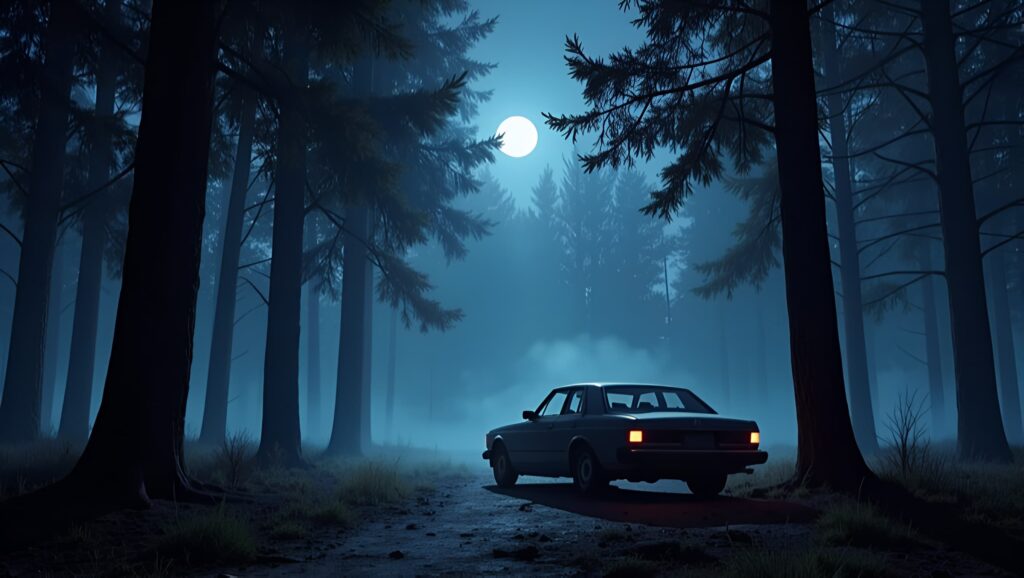
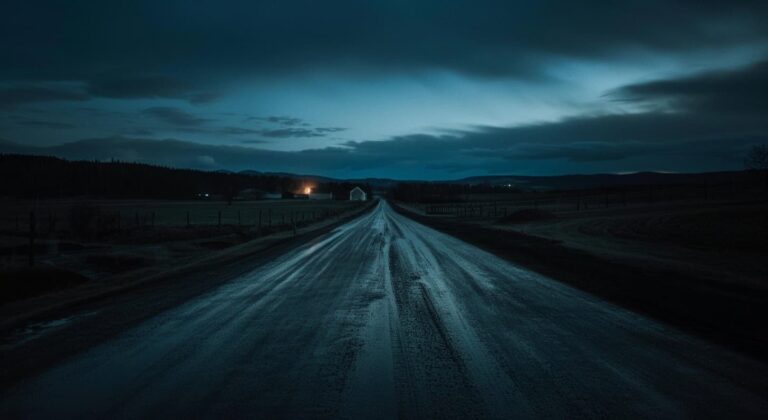
It starts at 2 a.m. Maddie’s [Rosamund Pike] phone rings. It’s Alice [Megan McDonnell], hysterical, saying she’s taken her dad’s car after a fight with her parents and hit someone on a dark road out in the woods. Frank [Matthew Rhys] and Maddie throw on clothes and get in the car themselves, trying to talk Alice through it while they race to reach her. Alice, worth noting, is never shown on screen in the present-day timeline; we only ever hear her voice over the phone.
Right away, you can feel the film establishing what kind of parents these two are. Maddie’s more measured, trying to keep Alice calm and thinking it through logically. Frank is the one who panics and starts making decisions on instinct and it’s Frank who tells Alice, over the phone, to hide the girl’s body rather than call the police.
That single choice is the hinge the entire rest of the movie swings on, and it’s worth sitting with for a second before we move on, because it tells you exactly who these people are under pressure: two parents who reflexively protect their child first and think about consequences second.
While all this is happening, the argument that sent Alice storming out in the first place keeps bleeding back into the conversation. Alice is pregnant. Her parents had just found out and, from what we can piece together, had pushed her toward considering an abortion which is what she was arguing about, high and distraught, right before she got behind the wheel. So this isn’t just a hit-and-run thriller. It’s a family already mid-collapse before the car accident even happens.
There’s also a quieter detail worth flagging here, because it colors everything Maddie does for the rest of the film: she used to work as a paramedic, before some kind of professional fallout pushed her out of the job. You never get the full story spelled out, but you don’t need it every time Maddie tries to talk Alice through the accident scene with clinical, practiced calm, you can feel her leaning on old training to keep herself from falling apart. It’s also, not coincidentally, exactly the kind of guilt the film is going to come back and use against her later.
Then the road itself starts working against everyone. Frank and Maddie’s GPS keeps glitching, throwing up routes that don’t exist or looping them back the way they came. The landmarks Alice describes over the phone don’t match anything on the map.
It plays, at first, like ordinary rural-road bad luck spotty signal, unfamiliar territory, the kind of thing that happens on any dark backroad at 2 a.m. But the more it happens, the more it starts to feel deliberate, like the road itself doesn’t want them to arrive in time. And that’s right around when a stranger shows up on Alice’s end of the line.
Who Is The “Kind” Woman, And Why Does She Get So Unsettling?
A woman’s voice cuts into the call; an older, kindly-sounding stranger who says she’s just stopped to help. At first, this feels like a relief. Someone’s there with Alice. Someone can help her figure out what to do.
Except the woman doesn’t stay kind for long. Her questions get sharper. Her tone shifts from gentle to interrogative to something closer to menacing. And here’s the detail that should stop you in your tracks: this stranger, who Alice has never met, casually references Alice’s pregnancy. Not something a random passerby on a dark road would have any way of knowing.
Maddie tries to intervene through the phone, and it doesn’t work. The woman doesn’t budge, doesn’t back off, and keeps steering the conversation. Soon her husband is there too, and the whole thing tips fully into something predatory. Alice starts describing details that don’t make physical sense, including that the injured girl’s body looks wrong somehow, like it’s changed. Reality, as far as we can tell from Alice’s end of the call, starts fraying.
This is also the point where a lot of first-time viewers start second-guessing themselves right along with Alice. Is this couple actually dangerous, or is Alice high, exhausted, and in shock simply misreading two well-meaning strangers through a panic spiral? The film keeps both possibilities alive at once for a long stretch, and that ambiguity is doing real work: it’s training you to distrust your own read on the situation before it ever gets around to explaining why.
By the time Frank and Maddie hit a police roadblock, the call was cut off entirely. And that’s the last we hear from Alice.
What makes this whole stretch of the film so effective is that you, as the viewer, are stuck in exactly the same position Maddie and Frank are you only ever get Alice’s side of events, filtered through a bad connection, relayed secondhand by two panicking parents who are just as disoriented as you are. You never see the woman.
You never see the husband. You never see the injured girl, or the road, or any of it directly. Every ounce of dread in this movie is built entirely out of voices and reactions, which is exactly why the eventual reveal about those voices lands as hard as it does.
Is Alice Dead Or Alive By The End?
Here’s the gut-punch: the next morning, police are on the scene of an accident, and the body they find is Alice’s.
A detective tells Maddie and Frank, more or less, that Alice was killed hours earlier, struck by a passing driver who didn’t stop and that everything they described experiencing on the phone afterward doesn’t line up with the physical evidence. His read is that the whole ordeal, the “kind” couple included, was a trauma response: two grieving parents’ minds constructing a story they could survive, rather than the flat, senseless truth that their daughter died alone on a dark road.
That’s the literal, on-the-record explanation the film gives you. And on a physical-evidence level, it holds that there’s no damage on Frank’s car consistent with hitting anyone, which rules out the theory that they were somehow responsible themselves. Alice really was hit by someone else, hours before the phone call even happened.
So no, by the film’s own internal logic, Alice does not survive the night. The devastating part isn’t the “twist” it’s that Maddie and Frank spend the entire film racing to save a daughter who was already gone before they got in the car.
And notice how the detective delivers this news not with cruelty, but with the tired, practiced patience of someone who’s had to give this exact speech to other grieving parents before. He’s not trying to be dismissive when he chalks up their story to trauma. He’s seen this pattern. Shock does strange things to memory, and two people who love someone desperately can end up corroborating each other’s version of events without either of them realizing they’re building it together in real time.
That’s arguably scarier than any supernatural explanation the film could’ve given you the idea that grief can make two rational adults construct and believe an entire shared hallucination without either one consciously lying to the other.
Wait..Rosamund Pike And Matthew Rhys Voice The “Kind” Couple Too?
This is the detail that recontextualizes the whole movie, and it’s easy to miss if you don’t stick around for the credits. Anvari has actually said as much directly telling Starburst Magazine that he wanted the couple on the other end of the line to be a kind of “shadow self” of Maddie and Frank, built around the idea that no parent wants to become their child’s monster.
Once you sit with that, the “kind” woman and man stop being a separate, external threat and start looking like something much sadder: a projection. The woman’s judgmental, interrogating tone starts to sound a lot like Maddie’s own guilt talking. The husband’s menace starts to echo Frank’s own fear of what he could’ve been as a father, or what his choices actually cost his daughter. They’re not strangers on a dark road. They’re Maddie and Frank’s worst fears about themselves, given a voice.
It’s a genuinely clever piece of sound design hiding in plain sight. You hear these voices for the whole back half of the movie and never consciously register that you already know them.
Go back and think about the specific things the “kind” woman says. She doesn’t just menace Alice generically; she needles her about the pregnancy, about the argument, about what kind of person Alice is becoming. That’s not random horror-villain dialogue. That’s the exact shape of a parent’s worst 3 a.m. anxieties about their own kid, weaponized and pointed outward.
Frank’s counterpart, the husband, does something similar but angrier, less judgmental, more possessive, more willing to threaten. If Maddie’s fear is “what if I failed her,” Frank’s fear plays more like “what if I can’t protect her no matter what I do.” Split those two anxieties across two “strangers” and you’ve basically got Maddie and Frank’s internal monologue turned into antagonists.
It’s worth saying, too, that this device works because it’s genuinely subtle at the moment. Nothing about the voice performances screams “twist” while you’re watching Pike and Rhys don’t do an obvious vocal trick or a wink to the camera. The reveal only works in hindsight, which is exactly the kind of thing that rewards a second watch.
So What’s With The Halloween Date And The Road’s Name?
Here’s where Hallow Road gets a little more slippery, because the film doesn’t fully close the door on a second reading, even after the detective gives his explanation and the credits confirm the voice-casting trick.
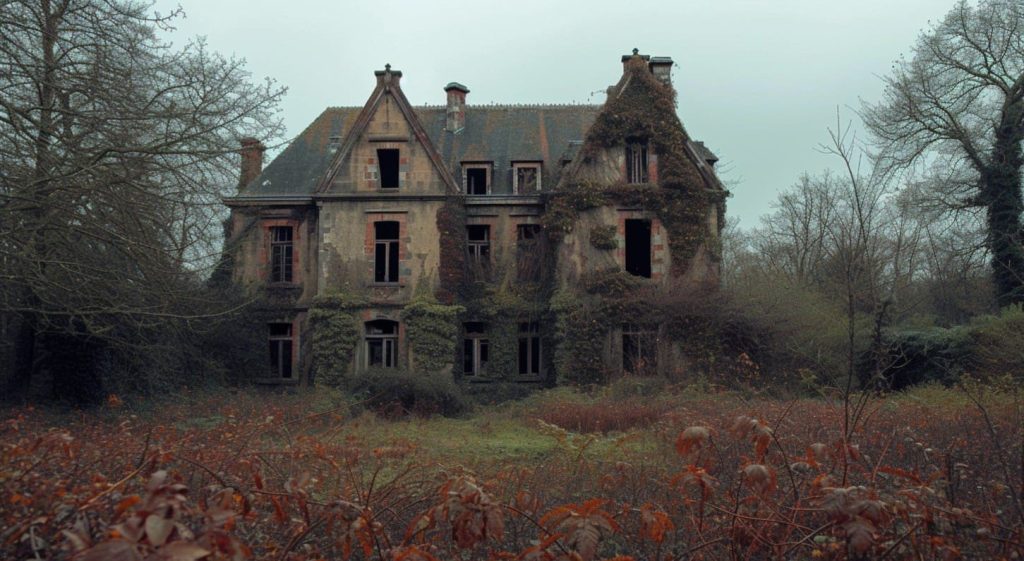
Pay attention to the setting: this all happens on October 31st Halloween, or All Hallows’ Eve and it’s happening on a road that’s literally named Hallow Road. In Celtic folklore, this is supposed to be the night the boundary between our world and the spirit world gets thin.
Combine that with Alice’s description of the “dead girl’s” chest caving in “like wood,” and you’ve got the ingredients for a folk-horror reading sitting right underneath the psychological one: that Alice wasn’t just hit by a car, but lured and replaced by something else entirely, with the “kind couple” standing in as folkloric predators rather than pure hallucination.
The film never confirms this reading the way it confirms the psychological one. But it doesn’t rule it out, either and that ambiguity is clearly intentional. Anvari has talked about wanting Hallow Road to live in that space between family drama and dark fairy tale, and the Halloween setting, the road’s name, and that one unsettling physical detail are exactly the kind of breadcrumbs a director drops when he wants you arguing about it after the credits, not agreeing.
So which one is “true”? Honestly, the film wants you to hold both at once. The literal explanation is the one that’s actually confirmed by the story’s own evidence. The folkloric one is the emotional truth wearing a scarier costume grief really can feel like something supernatural is stalking you, and Hallow Road leans into that feeling rather than picking a lane.
There’s a version of this movie that plays the folklore angle for a genuine jump-scare reveal, and it very pointedly doesn’t do that. It keeps the imagery restrained with a name, a date, one strange physical detail instead of ever showing you fairies or a changeling on screen.
That restraint is the whole point. The moment Hallow Road actually showed you a supernatural creature, it would stop being a movie about grief and start being a monster movie. By keeping it ambiguous, it lets the folklore function as a kind of pressure valve: a way for the story, and for you as the viewer, to imagine something more bearable than the plain, ugly randomness of a hit-and-run.
Why Did Frank Tell Alice To Hide The Body?
It’s worth circling back to this moment, because it’s easy to fly past it in the chaos of the phone call, but it’s honestly the most human beat in the whole film. Frank isn’t a villain here; he’s a father, half-asleep, terrified, hearing his daughter’s voice shaking on the other end of the line, and his brain goes straight to protection mode instead of procedure. Call it wrong, because it absolutely is, but it’s the kind of wrong a scared parent makes in the first ten seconds of a crisis, before the adrenaline lets them think clearly.
That instinct to protect first, deal with consequences later is basically the emotional engine of the entire movie. It’s what estranged Alice from her parents in the first place (the pressure around her pregnancy), and it’s what defines how Frank reacts the second she’s in danger. Hallow Road isn’t really asking “did they do the right thing.” It’s asking what happens to a family when protection and control get tangled up with each other until you can’t tell them apart anymore.
You can actually track this same instinct showing up in miniature, over and over, throughout the call. Every time Alice hesitates, Frank jumps in with an instruction. Every time Maddie senses Alice pulling away emotionally, she tries to pull her back with reassurance instead of space. Neither parent is malicious about it if anything, they’re almost too loving, too involved, too unwilling to let their daughter handle a crisis on her own terms.
And that’s arguably the quiet tragedy sitting underneath the louder, scarier one: even in the version of events where nothing supernatural happens at all, this is a family that never quite learned how to let their kid make her own mistakes without swooping in to manage the fallout for her.
What Was The Fight That Started All Of This?
Rewind past the accident, and the actual inciting incident is much smaller and much sadder: a family argument about Alice’s pregnancy. Her parents wanted her to consider an abortion. She didn’t want that conversation, especially not the way it was being pushed on her, and she stormed out high, upset, and not in a state to be driving which is exactly what put her on that road in the first place.
That’s the detail that makes the film’s ending land as hard as it does. This isn’t a random tragedy. It’s the direct result of a family conversation that went badly, compounding into a worse decision, compounding into the accident that killed her. Every “shadow self” moment later in the film, every accusation the “kind” woman throws at Maddie, every guilt-soaked silence from Frank traces back to that one fight in the house that we never even see.
It’s worth noticing what the film chooses not to do with this detail, too. It never moralizes about the pregnancy or the abortion conversation itself, never tells you which parent was “right” to push the way they did. It’s not interested in relitigating that argument.
It’s interested in the aftermath of what happens to a family when a conversation about protecting someone ends up being the very thing that pushes them into danger. That’s a much harder, sadder thing for a horror movie to sit with than a simple jump scare, and it’s a big part of why Hallow Road lingers the way it does.
Why Does The Movie Never Just Show You What Happened?
This is probably the single biggest source of frustration for anyone leaving Hallow Road wanting a tidier answer, so it’s worth addressing head-on: the film is structurally built to withhold. You’re locked inside a car for almost the entire runtime, hearing events secondhand through a cracking phone connection, which means you’re never given the option of an objective, camera-confirmed version of what happened to Alice.
That’s not a budget limitation talking Anvari told Hyphen that “this is like a modern fairy tale” to him, and fairy tales don’t work by showing you everything. They work by withholding just enough that the listener has to fill in the horror themselves.
It’s also, frankly, a smart choice for a story about grief specifically. Grief doesn’t come with an objective narrator either. It comes with fragments, guilt, half-memories, and the stories people tell themselves to survive the first terrible night.
By denying you a clean, confirmed visual of the accident or the “kind” couple, the film puts you in Maddie and Frank’s exact epistemic position you’re forced to decide, the same way they eventually have to, whether you trust the official explanation or you keep holding onto the version that lets you believe something more meaningful happened than a random driver who didn’t stop.
If you’re interested, you can check out our Obsession ending explained here!
Okay, So What’s The Actual Takeaway Here?
Strip away the folklore and the sound design trick, and Hallow Road is a movie about the exact moment guilt stops being a feeling and starts rewriting your memory of events. Maddie and Frank don’t get a clean resolution because there isn’t one to get their daughter is gone, and the story their minds built to survive that first night is more comforting, in its own twisted way, than the truth the detective hands them the next morning.
Whether you believe Alice died in a senseless accident and her parents hallucinated a monster out of their own guilt, or you believe something genuinely uncanny took her on a night when the veil was thin, the film is making the same argument either way: grief doesn’t wait for you to understand it before it starts reshaping what you think happened.
That’s the version of “twist” Hallow Road is actually interested in not a rug-pull, but a slow, sinking recontextualization delivered in a two-word credits line that most people scroll right past. Knowing that now, every panicked line Maddie and Frank say on that call hits differently the second time around.
FAQ: Most Googled Ones!
Is Alice actually dead in Hallow Road?
Yes, she’s killed in a hit-and-run early in the night, and everything that happens on the phone afterward is what the film frames as her parents’ trauma response.
Who are the “kind” woman and man on the phone?
They’re voiced by Rosamund Pike and Matthew Rhys, the same actors playing Maddie and Frank, confirming they’re a psychological projection rather than a separate real couple.
Why did the woman know Alice was pregnant?
Because she isn’t a stranger at all, she’s a manifestation of Maddie’s own guilt, which is why she has access to information only Alice’s parents would know.
Is there a Supernatural explanation for the Ending?
The film hints at one through its Halloween setting and folklore imagery, but never confirms it the way it confirms the psychological reading.
Why does Frank tell Alice to Hide the Body?
He’s reacting out of pure parental panic and protective instinct rather than logic, which becomes the film’s central theme about how far guilt and protection can distort a parent’s judgment.
About the Author.
Hi, I’m Vansh, the founder of Vibe On Cue. I track the absolute best ways to experience cinema, from the biggest Hollywood Blockbusters and upcoming release dates to the finest details of PVOD & Streaming and pristine Blu-ray & 4K physical media. And when the credits roll, I break down the narrative with deep-dive Ending explained guides. If you live for the full life cycle of film, stick around and explore the site!!