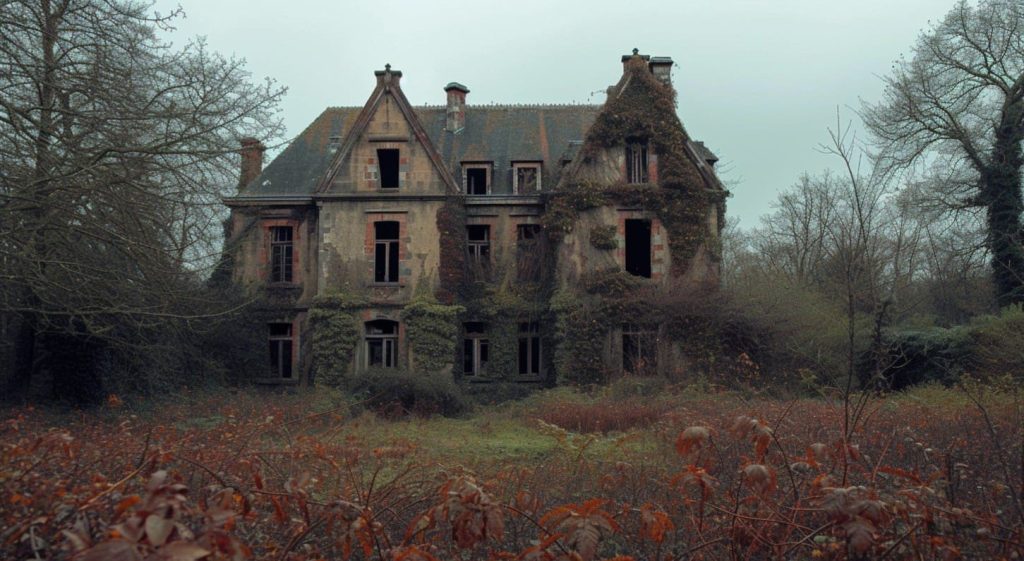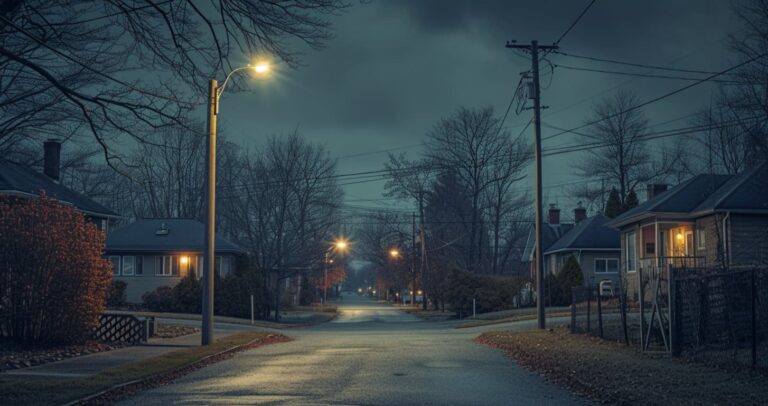

Coherence Ending Explained: you’re at a dinner party, the wine’s flowing, your boyfriend’s ex just walked in uninvited, and somewhere above your house a comet is quietly tearing a hole in the fabric of reality. That’s Coherence in a nutshell, and if you just finished watching it, there’s a good chance you’re sitting there with your laptop open, rewinding the last ten minutes, trying to figure out what you just saw.
You’re not alone. This is one of those movies that plays completely straightforward for the first act, just a group of old friends catching up over dinner and then, somewhere around the second power outage, quietly turns into one of the most disorienting sci-fi thrillers of the last fifteen years. No CGI, no aliens, no exploding buildings. Just eight people, one house, and a night that keeps folding in on itself.
And here’s the thing that makes Coherence so maddening in the best way: it never stops to explain itself. There’s no scientist character breaking the fourth wall to tell you the rules. There’s no title card counting down how many realities are left. You’re figuring it out in real time, right alongside Em, squinting at the same clues she’s squinting at, doubting the same people she’s doubting.
By the time the credits roll, you’re left holding a dozen loose threads and one gut-punch of a final shot, and your first instinct is probably to rewind and watch the last twenty minutes again just to make sure you didn’t miss something.
Here’s the good news: you probably didn’t miss anything. Coherence is one of those rare movies where the confusion is baked in on purpose, but every single beat still adds up if you walk through it in order. It’s less a puzzle box with a hidden solution and more a slow unraveling, where the “twist” isn’t one big reveal but a series of small, quiet gut-punches that build on each other. So let’s sit down and actually work through this thing together, scene by scene, because the ending only makes sense once you understand everything that led up to it.
Heads Up: We are jumping straight into the deep end of the plot twists now. If you hate spoilers, close your eyes and turn back. (Or, you know, go watch the movie and come right back)!
TL;DR, Quick Key Takeaways
- Eight friends gather for a dinner party the same night a comet passes overhead, and a power outage sets off a chain reaction that splits their house into countless parallel versions of itself.
- Each parallel house has a duplicate group of the same eight friends, and crossing through a “dark zone” between houses lets people accidentally swap into different realities.
- Em (the character we follow the whole film) becomes convinced her own life is worse than the alternate versions she keeps glimpsing, and starts making increasingly desperate choices to fix that.
- By the end, Em sneaks into a version of reality where her life looks better, incapacitates the Em who already lives there, and takes her place.
- The final scene implies she got away with it, but Kevin gets a phone call from “the other Em’s” number, which suggests the truth is about to catch up with her.
- The movie ends without resolving anything, which is very much the point.
Who’s Who?
Since Coherence leans on you keeping track of who’s who fairly early on, here’s the group heading into that dinner party:
- Em (Emily Baldoni, credited on the film itself as Emily Foxler) — our central character, a former dancer who gave up ballet after an injury and has been quietly unhappy about it ever since.
- Kevin (Maury Sterling) — Em’s boyfriend, about to leave for a work trip to Vietnam.
- Mike (Nicholas Brendon) — co-host of the dinner, a recovering alcoholic and former sitcom actor.
- Lee (Lorene Scafaria) — Mike’s wife, the other host.
- Beth (Elizabeth Gracen) — a friend with a New Age streak, and someone with a complicated history with Mike.
- Hugh (Hugo Armstrong) — the most grounded of the group, whose physicist brother becomes surprisingly important later on.
- Amir (Alex Manugian) — Hugh’s plus-one, and the guy who brings an unexpected date.
- Laurie (Lauren Maher) — Kevin’s ex-girlfriend, the unexpected date in question.
Eight people, one dinner table, and by the end of the night, a whole lot more than eight versions of each of them wandering around.
What’s actually going on before anything weird happens?
Let’s rewind to the start, because if you watched this at 11 p.m. half-distracted, you probably let a few things slide right past you that end up mattering a lot. The movie opens with Em driving to the dinner, talking to Kevin on the phone, and her call cuts out right as her phone screen mysteriously cracks. Easy to shrug off in the moment, but hold onto it that cracked screen becomes one of the only ways Em can tell her own reality apart from all the others once things get chaotic later on.
Once you’re at the dinner table with everyone, the tension is mostly the ordinary kind. Kevin’s ex Laurie showing up throws Em off her game, and there’s some pointed reminiscing that makes it pretty clear Kevin and Laurie’s relationship isn’t entirely in the past. Meanwhile, everyone’s talking about the comet passing overhead that night Miller’s Comet and Beth mentions that the last time it passed, back in the 1920s, it apparently caused some strange incidents. Radios malfunctioning, people acting erratically.
It’s the kind of story you’d roll your eyes at over dinner, and that’s exactly how the characters treat it too. You’re lulled into the same false sense of “okay, this is just a hangout movie” that they are. Then the power goes out, and it never really comes back.
It also helps to notice how ordinary and specific this friend group feels before anything supernatural kicks in. These aren’t strangers thrown together by a plot device they’ve got history, inside jokes, old flings, and low-grade grudges that clearly predate tonight. That groundwork matters a lot once the reality-bending starts, because the film is banking on you knowing these dynamics well enough to notice when something’s slightly off.
You can’t feel unsettled by an alternate version of Beth or Mike unless you already know what the “real” versions are supposed to feel like, and the movie spends this entire stretch quietly teaching you that baseline.
Why does the power outage change everything?
Once the lights cut out across the whole street, Mike heads to the basement and comes back with three sealed boxes of glow sticks blue, red, and green. The group cracks open the blue box, grabs a stick each, and steps outside to get a better look at the comet. It’s a genuinely pretty shot, right before everything goes sideways, and if you’re anything like most first-time viewers, this is the moment you settle in thinking the worst thing that’s going to happen tonight is an awkward run-in with an ex.
Looking down the street, the group notices something odd: their neighborhood is completely dark except for one house a couple of blocks away that still has its lights on. You’d probably do what they do and not think much of it at first, maybe it’s on a different grid, maybe someone’s got a generator. Hugh, though, wants to go check it out, because his physicist brother made him promise to call if anything strange happened during the comet’s passing, and his phone (like everyone else’s that night) has lost signal. So Hugh and Amir head off toward the lit house to see if they can use a landline.
When they come back, they’re rattled, and they’re carrying a small metal box they found on the porch of that house. Inside: a ping-pong paddle, and an envelope of photographs of the group with a number written on the back of each one. One photo is of Amir, taken that very night, wearing the exact sweater he’d bought earlier that day.
Think about how that would land if it happened to you. You step outside for five minutes, and you come back holding a photo of yourself from an hour ago, in an outfit you only decided on that afternoon, taken by someone you’ve never met. It’s the kind of detail that shouldn’t be unsettling on paper. It’s just a photograph but the specificity is what gets under your skin. A stranger couldn’t have staged that. Which means, whatever’s going on, it isn’t a prank.
What’s actually inside that ping-pong paddle box?
So what is that box, exactly, and why does it matter so much to the rest of the movie? This is where Coherence tips its hand, if you’re paying close attention. The box isn’t a threat and it isn’t a prank, it’s a marker. Every version of this friend group, in every parallel house created by the comet’s interference, put together an identical box that same night, each containing one random object chosen at will. The idea is that if realities start blurring together, an object nobody could predict in advance becomes a way to tell your house apart from someone else’s.
Except it doesn’t really work, because by the end of the night, almost nobody agrees on what object should be in the box. Some remember a ping-pong paddle. Others insist it was an oven mitt, a napkin, or a stapler. That disagreement isn’t a plot hole, it’s the movie quietly telling you that different versions of the group, from different houses, have been mixing together the entire night without anyone noticing.
It’s a genuinely clever bit of design if you stop and think about it. Any object that everyone in every house agreed on ahead of time would be useless as a marker; it’d just be another thing all the realities have in common. The randomness is the whole point. And the fact that the movie never once has a character sit down and explain any of this out loud to you is exactly why it works so well. You’re left to reverse-engineer the logic from the characters’ confusion, which mirrors your own confusion almost perfectly.
How many houses and how many Emilys are actually out there?
Here’s where you should really start paying attention, because this is the section that unlocks everything else. Once Hugh and Amir head back out to investigate the lit house a second time, the film starts revealing just how deep this rabbit hole goes. They vanish into a dark patch between the houses and don’t come back the same. Instead, a different, injured version of Hugh and Amir stumbles back through the door, having apparently had a rough encounter at “the other house.”
From here, the group starts working out the rules almost like scientists would. Beth suggests grabbing the physics book Hugh keeps in his car, and using notes from Hugh’s brother, they piece together the concept of quantum decoherence, the idea, loosely borrowed from real physics, that multiple possible realities can exist at once until something forces them to separate and “decohere” into a single outcome. The joke of the title is that the comet has done the opposite: instead of keeping these realities cleanly separated, it’s caused them to overlap and blur into each other for one chaotic night.
Eventually, the friends realize they’re not dealing with just two houses. There are several each populated by an alternate version of the same eight people, each having made slightly different decisions that night. One group opened the red glow sticks instead of blue. Another went straight to calling the police instead of investigating. Small choices, branching outward into entirely separate versions of the same evening.
And crucially, anyone who wanders into the “dark zone” between houses risks coming out the other side in someone else’s reality entirely with no way of knowing until they’re already there.
If you want the simplest possible way to think about it: imagine texting a friend to ask what they’re doing tonight, and getting three different replies from three different phones, all claiming to be them, all slightly contradicting each other. That’s basically what’s happening to this friend group, except instead of text messages, it’s the actual people walking in and out of the same front door.
And because everyone looks identical, sounds identical, and remembers almost the same night, there’s no clean way to tell who you’re actually talking to at any given moment which is exactly the kind of dread the film leans into for its entire back half.
Why does everyone start turning on each other?
Once the group accepts that they might not all belong to the same reality, the dinner party curdles fast. A note slips under the door clearly written by an alternate version of Mike revealing an old affair between Mike and Beth that Lee never knew about. Hugh gets aggressive. Old grudges that had nothing to do with comets or parallel universes start boiling over, because it turns out swapping realities doesn’t erase interpersonal baggage, it just adds a layer of paranoia on top of it.
It’s a very human touch in an otherwise sci-fi premise, honestly. Give people a genuinely inexplicable crisis, and half of them will still find a way to make it about who slept with whose partner twelve years ago. The tension isn’t really about the comet anymore by this point it’s about trust, and about how quickly people stop believing the person standing in front of them is really who they say they are.
There’s also a really specific kind of anxiety the film taps into here, one you don’t need a comet to relate to. Think about the last time a close friend said something that felt slightly off, a joke that landed wrong, a story detail that didn’t match what you remembered, an opinion that seemed to come out of nowhere. You probably brushed it off.
Coherence takes that tiny, everyday flicker of doubt and blows it up into a full-blown crisis, where every strange comment could mean you’re talking to a stranger wearing your best friend’s face. That’s what makes the group’s paranoia feel earned instead of contrived. The film is just dialing up a feeling most of us already know.
By the time Hugh starts accusing people of not being who they claim to be, and Mike’s affair with Beth comes spilling out into the open, the dinner party has completely stopped being about the comet. They’re asking “can I actually trust anyone left in this room,” and the honest answer, by that point, is no.
At one point, the group even encounters an entirely different version of themselves outside the same friends, different colored glow sticks and the moment plays out like something out of a horror movie. There’s something deeply unsettling about looking at a stranger who has your best friend’s face, your best friend’s voice, and absolutely no memory of the specific dinner you just had together.
What does Em do when she finally crosses into another reality?
While all that chaos is playing out around the dinner table, keep an eye on Em specifically; she’s been quietly unraveling for a different reason the whole time. Early in the night, she admits she gave up a promising ballet career after an injury, and there’s a real sense that she’s spent years wondering what her life would’ve looked like if that hadn’t happened. So when the realities start blending and she gets glimpses into other versions of her own life, versions where things went a little better for her it hits differently for Em than it does for anyone else at that table.
Eventually, Em slips out into the dark zone alone, checking house after house until she finds one where nobody seems to have noticed anything strange happening at all, a version of her own life that looks genuinely happier. Rather than turn back, she makes the decision that defines the whole third act.
She smashes the car window outside on purpose, using the noise to draw everyone out of the house, then ambushes the Emily who lives there while she’s briefly alone, sedated and locked in car, It’s a shockingly calculated move for someone we’ve spent the whole movie watching spiral this isn’t panic, it’s a plan.
Then, with that Emily out of the way, our Em slips into her place inside the house. But the night isn’t done with her yet: a second, different Emily from yet another branch of the split crawls in through the bathroom, clearly having gone through her own version of this chaotic night. Em has to subdue her too, hiding her in the bathtub, and in the scuffle she loses her own ring and ends up taking the other Emily’s instead. Exhausted, she stumbles back to the living room and passes out on the couch.
It’s a shocking pivot for a character we’ve spent the whole movie quietly rooting for, and that’s deliberate. Coherence isn’t really asking “what would you do if you met an alternate version of yourself.” It’s asking something a little darker: what would you actually do if you found proof that a better life for you already exists, and the only thing standing between you and it is someone who happens to look exactly like you?
It also recontextualizes a lot of small moments from earlier in the night. Remember how prickly Em got about the ballet talk at dinner, or how quiet she went whenever Kevin and Laurie’s history came up? None of that was throwaway small talk.
The film was quietly building a portrait of someone who’s spent years assuming her life peaked and passed her by, and once she’s handed literal proof that a better version of that life exists one house over, the movie stops asking you to like her and starts asking you to understand her, which is a much more uncomfortable position to be in as a viewer.
What actually happens on that last morning?
So where does that leave you the next morning, right along with Em? After that second struggle in the bathroom, Em stumbles back into the living room and faints from exhaustion. When she wakes up the next morning, she’s on the couch, and everything looks calm. Lee and Beth are up and cheerful. There’s no sign that anyone in this house has noticed there’s an extra Emily wandering around, or that one of them isn’t supposed to be here.
Kevin comes over, sweet as ever, and hands her a ring one he says he found in the bathroom. That’s on top of the ring she already took off the Emily she left in the tub, so now she’s quietly holding two rings that both, technically, belong to her. Small detail. Enormous implication. Em has, for all intents and purposes, successfully stepped into someone else’s life, and she’s carrying the physical proof of exactly how she did it.
Notice how quiet this whole sequence is, too. There’s no triumphant music, no relieved exhale, nothing to signal that Em has “won.” The morning light, the calm kitchen, the easy affection from Kevin it all plays like an ordinary, cozy scene, and that’s exactly what makes it so uneasy to watch.
You know something the room doesn’t, and the gap between how peaceful this looks and how disturbing you know it actually is does a lot of the emotional heavy lifting here without a single line of dialogue spelling it out.
Who’s calling Kevin’s phone in the final scene?
Here’s the moment that sends most people straight to Google. Kevin’s phone rings. He checks it, and the caller ID shows it’s Emily calling except Em is standing right in front of him. In this new reality, unlike the one Em came from, phones apparently still have working signal and no cracked screens, so the call is real, not a glitch.
Kevin looks at the caller ID, then looks up at Em with a flicker of suspicion, and the movie cuts to black right there. We never hear who’s on the other end. We never see Kevin answer.
The most logical read is that it’s Emily who actually belongs to this reality, the one Em drugged and locked in the trunk either having gotten free and dialing Kevin herself, or someone finding her out there and using her phone. Whether Kevin already suspects something is off, or whether he’s just confused by a call from a number that shouldn’t be ringing, the film leaves entirely up to you.
What’s clear is that Em’s plan hasn’t actually worked. She hasn’t escaped into a clean, better version of her life. She’s just created a new problem inside it, one that’s already starting to surface before the credits even roll.
It’s worth pointing out how deliberately the film sets this moment up, too. Earlier in the night, a cracked phone screen was Em’s one reliable way of proving which reality she belonged to. Now, in this new house, her phone is fine, no crack, full signal which should feel like relief. Instead, that same phone becomes the thing that exposes her.
The one object that used to prove her identity is now the one thing threatening to unravel it, which is a pretty sharp bit of storytelling for a movie that never once stops to spell out its own symbolism.
And if you rewatch the film with this ending in mind, you’ll notice the whole back half is quietly building toward exactly this kind of irony. Every “fix” the characters reach for the ping-pong paddle box, the glow sticks, the photographs is an attempt to nail down some fixed, provable version of the truth in a night where nothing stays fixed for long. Em’s ring and Kevin’s ringing phone are just the last two objects in a long line of “proof” that turns out to prove nothing at all.
So was it all worth it for Em?
This is really the emotional core the whole film is building toward, and it’s worth sitting with for a second because Coherence doesn’t hand you an easy verdict. Em spent the entire movie watching glimpses of a life that seemed richer than hers one where her ballet career maybe went differently, one where her relationship with Kevin felt less complicated. And when she got the chance to reach out and take that life, she did it, consequences be damned.
But the ending suggests that taking someone else’s life doesn’t actually make it yours. Em is standing in someone else’s kitchen, wearing someone else’s ring, and the moment that reality gets tested by a phone call, of all things the cracks start showing immediately.
It’s a bit like moving into someone else’s apartment while they’re still on the lease. You can rearrange the furniture all you want, but eventually somebody’s going to notice you’re not supposed to be there.
If you’re interested, you can check out our Disclosure Day ending explained here!
Wrapping It Up
At its heart, Coherence isn’t really a movie about comets or quantum physics, even though it dresses itself up in that language. It’s a movie about the very human, very relatable feeling of looking at your own life and wondering if you took a wrong turn somewhere. Em’s story just happens to take that feeling to its most literal, most unsettling extreme. What if you could actually find the life you think you deserve, and what if getting it meant erasing the person already living it?
The film never tells you whether Em gets away with what she did. It never confirms who’s calling Kevin’s phone, or what happens to the two Emilys she leaves behind, one in the trunk, one in the bathtub. And honestly, that’s the right call. A tidy resolution would’ve undercut everything the movie spent ninety minutes building a sense that once your reality starts fracturing, there’s no clean way to put it back together.
Coherence leaves you exactly where it found Em: uncertain, a little unsettled, and unsure whether the life in front of you is really the one you’re supposed to be living.
FAQ: Most Googled Ones!
Is Em a good person or a bad person by the end of Coherence?
The film deliberately leaves this open, though her choice to drug and trap another version of herself pushes her firmly into morally gray territory.
Does Coherence ever explain who’s calling Kevin’s phone at the End?
No, the film cuts to black before the call is answered, leaving the caller’s identity ambiguous.
How many Realities exist in Coherence?
The movie never gives an exact number, but the dialogue suggests there could be dozens or even millions of parallel houses branching off from small decisions that night.
Is there a sequel to Coherence?
No, the film has never received an official sequel or continuation.
What is Miller’s Comet in Coherence, and is it Real?
Miller’s Comet is fictional, invented for the film to explain the reality-fracturing event.
Does Coherence have a Post-credits scene?
No, the film ends completely once the credits begin.
Why does Em’s phone crack at the start of the Movie?
It’s an early clue tied to the reality-shifting event, and it later becomes one of the only ways Em can identify which version of reality she’s actually in.
About the Author.
Hi, I’m Vansh, the founder of Vibe On Cue. I track the absolute best ways to experience cinema, from the biggest Hollywood Blockbusters and upcoming release dates to the finest details of PVOD & Streaming and pristine Blu-ray & 4K physical media. And when the credits roll, I break down the narrative with deep-dive Ending explained guides. If you live for the full life cycle of film, stick around and explore the site!!