
Fall Ending Explained: Ok, so you just watched two best friends get stranded 2,000 feet in the air, watched one of them get eaten alive by grief and betrayal before the tower even finished falling apart on them, and now you’re sitting there wondering if what you just saw was really a rescue or just… luck. Good. That means the ending did exactly what it was supposed to do to you, because Fall was never really asking you to root for two friends to make it down safely.
It was asking you something messier the whole time: whether surviving something horrific means you actually earned it, or whether you just got lucky enough to be the one still breathing when it was over.
That question doesn’t hit you until the credits, though, because for most of the runtime you’re too busy white-knuckling your way through a straightforward survival thriller. Two women, one tower, one busted ladder, zero cell signal. Simple. Except Fall keeps sneaking bigger stuff in under the survival mechanics a dead husband, a betrayed marriage, a friendship you’re not sure deserves to be saved and by the time Becky is pushing her best friend’s body off a tower to save her own life, “did she survive” isn’t really the interesting question anymore. “What did surviving cost her” is.
Let’s actually walk through what happened up there, because a few of the biggest moments in this movie play very differently the second you know what’s real and what isn’t. There’s a stretch of this film where you’re watching something that didn’t happen the way it’s shown to you, and if you left the theater or closed Netflix a little confused about when exactly your friend died versus when you found out she died, you weren’t imagining things. That’s the movie doing it on purpose.
Heads Up: We are jumping straight into the deep end of the plot twists now. If you hate spoilers, close your eyes and turn back. (Or, you know, go watch the movie and come right back)!
TL;DR, Quick Key Takeaways
- Becky’s husband Dan dies in a climbing accident after being startled by a bat, sending Becky into a year of depression and estrangement from her father
- Best friend Hunter convinces Becky to climb an abandoned 2,000-foot TV tower to scatter Dan’s ashes and find closure
- The ladder collapses on the way down, stranding them with no water, a busted drone, and no cell signal
- Hunter reveals a “1-4-3” tattoo Dan’s private code for “I love you” and confesses to a four-month affair with him before the wedding
- Hunter climbs down to retrieve their dropped gear and actually dies in the fall, though the film shows you a false, hopeful version of what happened next
- Becky spends days hallucinating Hunter’s continued presence before a lucid moment forces her to face the truth
- She kills and eats a vulture for strength, plants a message in Hunter’s shoe, and pushes the body off the tower to break her own fall and transmit an SOS
- She’s rescued and reunites with her estranged father, who’s been trying to reach her the entire film
Who’s Who?
Quick refresher before we get into it, since the film throws names at you fast in that cold open. Becky Connor (Grace Caroline Currey) is our lead, a rock climber who’s spent the last year barely functioning after losing her husband. Shiloh Hunter, who everyone just calls Hunter (Virginia Gardner), is Becky’s best friend and the one who talks her into the climb.
Dan Connor (Mason Gooding) is Becky’s husband, who you only see in flashback and hallucination, since he dies in the opening minutes. And James Connor (Jeffrey Dean Morgan) is Becky’s father, who spends most of the movie on the ground, trying to reach a daughter who’s stopped answering him.
So What Actually Kills Dan Before the Story Even Starts?
The movie doesn’t waste any time on this one. Becky, Dan, and Hunter are out climbing together this was apparently just their thing, the three of them, before any of the tower stuff and mid-climb, a bat startles Dan badly enough that he loses his grip and falls to his death. It’s fast, it’s brutal, and it’s shot to feel almost mundane, which somehow makes it worse. One second everything’s fine, the next his hand isn’t where it needs to be, and that’s it.
What matters more than the how, though, is what it does to everyone left standing. Becky doesn’t just grieve; she basically disappears. A year later she’s given up climbing entirely, she’s drinking more than she should, and she’s cut her own father out of her life because he made the mistake of suggesting, at some point, that she needed to start moving forward. James isn’t wrong, exactly, but grief doesn’t really care about being told it’s overstaying its welcome, and Becky reads his concern as him not understanding what she lost.
That rift between them is the quiet emotional engine running under the entire movie every time Becky’s up on that tower fighting to survive, she’s also fighting her way back toward a relationship she walked away from.
It’s also worth noticing how little screen time Dan actually gets before he’s gone, because that’s part of the point. You never really get to know him as a fully drawn person; he exists almost entirely as an absence, a wound Becky’s carrying that the movie lets you feel the size of without ever fully showing you what filled it.
That’s a deliberate choice, and it pays off later, because it means your understanding of who Dan was gets built almost entirely out of other people’s memories of him, Becky’s grief, and eventually Hunter’s guilt. By the time the affair reveals lands, you realize you were never getting the whole picture of this marriage to begin with, which is exactly how Becky feels finding it out too.
Why Does Becky Even Agree to Climb the Tower?
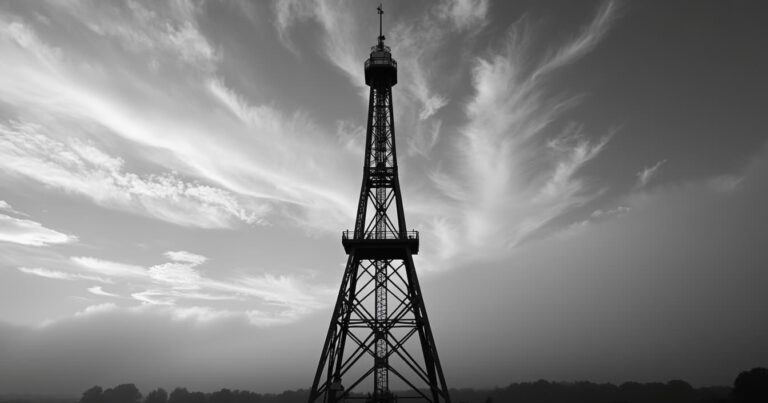
This is the part where you might be shouting at your screen a little, and fair enough climbing an unstable, decommissioned 2,000-foot tower a year after your husband died climbing something else does not scream “healthy coping mechanism.” But Hunter’s pitch to Becky isn’t really about the climb itself. It’s about closure. The B-67 tower is scheduled for demolition soon, it’s the tallest thing around, and Hunter frames scattering Dan’s ashes from the top as a way for Becky to finally let go of him somewhere he’d have actually wanted to be.
There’s also something Hunter isn’t saying out loud yet, which becomes clearer once you know about the affair: she’s not just trying to help Becky heal. She’s trying to make something right with a version of Dan she can’t apologize to anymore. Getting Becky back up in the air, back to something the three of them used to share, reads a little differently once you know Hunter is carrying guilt Becky doesn’t know exists yet. It’s not manipulative, exactly Hunter genuinely believes this trip will help her friend but it’s not purely selfless either. She needs this climb almost as much as Becky does.
And on some level, Becky probably senses that something’s off even before she has words for it. She’s reluctant right up until the moment she agrees, and that hesitation isn’t just about the height or the danger, it’s the same instinct that makes people avoid conversations they’re not ready to have. Agreeing to the climb is Becky agreeing to open a door she’s kept shut for a year, and the tower ends up forcing open a lot more than just her grief over Dan.
That’s what makes the setup work as more than a contrivance to get two women stuck in the air: everyone involved has a reason to want this trip to happen that has nothing to do with what they’re telling each other out loud.
What Goes Wrong on the Way Down?
Everything, basically, and fast. They make it to the top without much trouble, Becky scatters Dan’s ashes in a genuinely emotional beat, and then because this is a survival thriller and the movie only has so long to get you stuck the corroded ladder gives out right as they start their descent. Becky falls, gets caught by the rope tethering her to Hunter, and they both realize there’s now a massive gap of open air between them and the next intact section of ladder. No way up, no way down.
It’s a genuinely nasty piece of bad luck, made worse by how avoidable it feels in hindsight that the ladder had clearly been rusting out there for decades, and nobody checked it before two people entrusted their lives to it. Worse, their backpack water, a drone, basically everything useful falls and lands on a satellite dish several hundred feet below them, close enough to see, completely impossible to reach safely. And then the movie starts stripping away every rescue option one at a time, almost sadistically. Cell signal? Jammed by interference from the communications dish sitting right below them. A passing hiker and his dog? Too far to signal.
A flare gun that finally gets someone’s attention? The two men who see it steal Hunter’s truck instead of calling for help, which might be the single most quietly enraging moment in the whole film. By the time they’re truly alone up there, you understand this isn’t a movie about bad luck happening to good people. It’s a movie about how quickly the world stops being interested in you once you’re not directly in front of it.
What’s smart about this stretch is how methodically it closes every exit before settling into the movie’s real subject. A lesser script might have jumped straight to the affair reveal, but Fall makes you sit in the practical hopelessness first of every gadget, every stranger, every plan failing so that once Becky and Hunter run out of options, the only thing left to unpack is each other.
Why sitting around waiting for a rescue was never an option?
You’re probably not the only one who spent a chunk of this movie mentally screaming at Becky and Hunter to just stay put. Every single risky thing they try, the drone flight, the climb down to retrieve the bag, Hunter’s rope descent feels like it’s actively making their odds worse instead of better. So why keep gambling instead of just waiting for someone to notice a 2,000-foot tower has two people stranded on top of it?
The uncomfortable answer the movie gives you is that waiting was never actually a safe option either. Nobody knows they’re up there. Hunter didn’t tell anyone specific where they were going beyond a vague plan, the location is remote enough that even a flare gun barely gets noticed, and the two guys who do see it steal Hunter’s truck instead of calling anyone.
There’s no search party coming, no timer counting down to a rescue helicopter. Every day they wait is a day closer to death by dehydration, which is a much slower and more certain threat than anything involved in trying to climb down. Doing nothing was never actually the safe choice here; it just looked that way because the alternative was so obviously terrifying.
There’s also a character logic here that’s easy to miss if you’re only watching plot mechanics. Hunter’s established early on as someone who can’t just sit with a bad situation she pushed for this climb, goaded Becky into free-hanging for a video, processes fear by doing something about it, even recklessly. Volunteering to climb down for the bag isn’t a rational risk calculation. It’s who she is, running headfirst at what everyone else would wait out, partly because she can’t sit still with her guilt over Dan any more than she can sit still on a tower.
What’s the Deal With the 1-4-3 Tattoo?
Here’s where Fall stops being just a “will they survive the elements” movie and turns into something with actual teeth. While trying to get a phone message out Hunter packs her phone into a shoe and drops it, hoping it’ll clear the interference zone and someone finds it Becky notices a small tattoo on Hunter’s ankle: “1-4-3.” It doesn’t mean anything to you yet either, probably, unless you clocked it as the classic “I love you” code one letter, four letters, three letters which was apparently something private between Becky and Dan.
Becky puts it together fast, and so does the audience: Dan used that code with Hunter too. Cornered and out of excuses, Hunter finally confesses. She and Dan had a four-month affair before Dan and Becky’s wedding, something that started and ended before Becky ever knew either of them was capable of it. Hunter says she ended it because, in the end, she loved Becky more than she wanted Dan, which is either genuinely tragic or a fairly convenient thing to say once you’re trapped on a tower with the person you betrayed, depending on how generous you’re feeling toward her in that moment.
What makes this scene work isn’t just the reveal itself, it’s the timing. Becky finds out her husband cheated on her with her best friend at literally the worst possible moment to process it stranded, dehydrated, injured, with nowhere to walk away and cool off. She has to keep trusting Hunter to survive the next twelve hours while also hating her for something that happened years ago. That tension, not the ladder or the vultures, is the real engine of everything that happens next.
Did Hunter Actually Make It Back Up With the Bag?
This is the part of the movie you might need to rewatch, because Fall pulls a genuinely clever trick on you here, and it’s easy to miss on a first watch. The day after the tattoo confession, Hunter decides to climb down using their rope to retrieve the dropped backpack water, drone, their last real shot at rescue. It’s a tense, nearly-fatal-looking sequence: Hunter almost falls, injures her hands pretty badly on the way, but ultimately gets the rope secured to the bag, and Becky hauls both her and the supplies back up to the platform.
Except that’s not actually what happened. The film shows you a version of events where Hunter survives the climb, and it keeps showing you Hunter for a while afterward present, talking, helping Becky rig the drone using power stolen from the tower’s warning light, right up through a vulture attack. It’s only later, when Becky is deep into dehydration-driven delirium, that she has a brief moment of clarity and realizes the truth: Hunter fell onto the communications dish during that retrieval attempt and died on the spot.
Everything you watched after that point, the successful climb back up, Hunter’s continued presence, entire conversations was Becky’s mind filling in the gaps, keeping her friend alive because she couldn’t process losing her too.
It’s a subtle enough shift that a lot of people walk away from this movie thinking Hunter died later than she actually did, right around the vulture-and-drone sequence, instead of realizing that the whole stretch was already happening after her death. Once you know to look for it, you can actually feel the film get a little hazier and more disjointed right around the “successful” rescue that’s not sloppy filmmaking, that’s the movie quietly telling you something’s off before it tells you outright.
Think about why the film chooses to trick you this way instead of just cutting straight to Hunter’s death and showing you Becky grieving alone from that point on. If you’d known Hunter was already gone, the drone sequence and the vulture attack would’ve played as a woman losing her mind in isolation, sad, but distant, something happening to a character rather than something you’re experiencing with her. By keeping Hunter “alive” on screen for you too, the movie puts you inside Becky’s denial instead of just watching it from the outside.
You want Hunter to have made it, the same way Becky needs her to have made it, and that shared hope is exactly what makes the eventual reveal land as hard as it does. It’s a genuinely clever bit of storytelling dressed up as a straightforward thriller beat.
Wait, So Why Does Becky Eat a Vulture?
Stick with this one, because it’s less gratuitous than it looks at the moment. By the time Becky’s lucid moment hits and she understands Hunter is actually gone, she’s been without real food or water for days, injured, and now completely alone at the top of a tower with no plan. She wakes up to a vulture literally gnawing at the open wound on her leg which is about as brutal a wake-up call as a movie can give you and in the struggle, she manages to kill it.
Eating it isn’t really a choice so much as the only option left. She needs strength for what’s coming, which is a genuinely dangerous descent to Hunter’s body on the satellite dish below, and she doesn’t have it in her without some kind of fuel. It’s grim, it’s meant to be grim, and it’s the moment the movie stops being subtle about what survival actually costs. Up to this point Becky’s been fighting circumstances. Here, she’s fighting her own body’s limits, and there’s nothing symbolic left to soften it.
There’s also a kind of grim symmetry to it that’s easy to miss at the moment. Vultures have been circling this tower the entire time Becky and Hunter have been stranded up there background detail at first, then a genuine threat once Becky’s alone and vulnerable.
Turning the predator into the meal is the first moment in the whole back half of the movie where Becky actually takes something from her situation instead of just having things taken from her. It’s small, and it’s ugly, but it’s the beginning of her going from someone reacting to disaster to someone actively working her way out of it.
How Does Becky Actually Get Rescued?
Once she’s regained enough strength, Becky rappels down to the dish where Hunter’s body has been the whole time. This is where the movie gets its most quietly devastating beat: she writes a message to her father on a second phone, tucks it into Hunter’s shoe, stuffs the shoe into Hunter’s body, and pushes the body off the tower. Hunter’s body cushions the fall enough for the phone to survive the impact and actually transmit the message. Her best friend’s death, the same friend who betrayed her ends up being the exact thing that saves her life.
James gets the alert, calls emergency services, and rushes to the tower himself. The final image is Becky and her father reuniting on the ground, paramedics working around them, both of them finally past the estrangement that’s been sitting between them the entire film. It’s not triumphant, exactly. It’s more relieved than victorious, which fits everything that came before it.
Notice, too, that this is the one moment where Becky’s plan works exactly as intended, on the first try, with no last-second complication. After every earlier rescue attempt fails or backfires, the movie finally lets one thing go right, built entirely out of grief, resourcefulness, and Hunter’s body, not outside help arriving in time. The world that ignored the flare gun and stole the truck doesn’t show up to save her. She builds the rescue herself, out of the wreckage of everything that already went wrong.
Was Becky’s Rescue Luck, or Did She Earn It?
Honestly? Both, and the movie seems to know that. Strip away the emotional stuff and a lot of what saves Becky really is luck: the ladder happened to break in a spot that left her alive, the aviation warning light happened to have enough power to charge a drone, Hunter’s body happened to land somewhere Becky could actually reach and use. If any one of those pieces had gone slightly differently, this is a much shorter, much sadder movie.
But luck alone doesn’t explain why Becky’s still capable of thinking clearly enough to plan a rescue message after days without water, or why she’s willing to do something as gutting as using her best friend’s body to save herself. That part isn’t luck. That’s someone who’s spent the entire film learning, in real time, that survival sometimes means doing the unbearable thing anyway, forgiving nobody, resolving nothing, just choosing to keep going because the alternative is worse. The tower gave her plenty of bad luck. What she did with it is a different story entirely.
It’s also worth sitting with what Becky’s actually grieving by the time the credits roll, because it’s not just Dan anymore. She’s grieving the version of her marriage she thought she had, the friendship she thought was uncomplicated, and the version of herself who existed before any of this happened. The rescue gets her off the tower. It doesn’t undo any of that. Fall never pretends it does, which is honestly the smartest choice the film makes; a clean, triumphant ending would have cheapened everything that led up to it.
There’s a version of this ending where Becky’s rescue reads as pure, almost cosmic good fortune, right place, right body, right amount of leftover phone battery. But the film keeps reminding you, quietly, that luck only gets you the opportunity. What you do with the opportunity is still on you.
Plenty of people in Becky’s position, that dehydrated and that broken, wouldn’t have had the clarity left to plan a message, tuck a phone into a shoe, and actually execute a plan under that kind of physical and emotional weight. The tower handed her one shot. She’s the one who didn’t waste it.
And in case you’re wondering: no, none of this is based on a true story. Speaking to Radio Times, Director Scott Mann has said outright that the whole thing is fiction, though the tower itself is inspired by a real structure, the KXTV/KOVR tower out in Walnut Grove, California, one of the tallest structures in the country. The filmmakers built the top portion of the fictional B-67 tower on a mountain rather than shooting Becky and Hunter thousands of feet up for real, which somehow makes the vertigo you feel watching it even more impressive.
If you’re interested, you can checkout our Obsession ending explained here!
Wrapping It Up
What sticks with you after Fall isn’t really the height, or the ladder, or even the vulture, as unforgettable as that scene is. It’s the fact that Becky’s rescue depends entirely on the person who hurt her most that she has to keep loving and needing Hunter even after finding out what she did, right up until the very last, most literal way one friend can save another.
The film sets up a straightforward survival premise and then quietly turns it into something about how grief, betrayal, and forgiveness don’t actually resolve themselves just because the danger’s over. Becky comes down off that tower alive. Whether she comes down whole is a different question, and Fall smartly never tries to answer it for you.
FAQ: Most Googled Ones!
Is Fall Based on a True Story?
No, director Scott Mann has confirmed it’s entirely fictional, though the tower design was inspired by a real structure in California.
Does Hunter Die in Fall?
Yes, Hunter dies falling onto a communications dish while retrieving their dropped gear, though the film initially shows a false version of events where she survives.
Why does Becky eat the Vulture in Fall?
She needs strength to attempt her final descent after days without food or water, and killing the vulture that attacks her is her only immediate source of nourishment.
What does the 1-4-3 tattoo mean in Fall?
It’s a numeric code for “I love you” that Becky’s husband Dan used privately, and finding it on Hunter’s ankle reveals the two had an affair before Dan and Becky’s wedding.
How does Becky get rescued at the End of Fall?
She sends a message to her father using a phone hidden in Hunter’s shoe, tucked into Hunter’s body before pushing it off the tower so the impact would transmit the signal.
About the Author.
Hi, I’m Vansh, the founder of Vibe On Cue. I track the absolute best ways to experience cinema, from the biggest Hollywood Blockbusters and upcoming release dates to the finest details of PVOD & Streaming and pristine Blu-ray & 4K physical media. And when the credits roll, I break down the narrative with deep-dive Ending explained guides. If you live for the full life cycle of film, stick around and explore the site!!