
Nope Ending Explained: Okay, so if you just finished Nope and you’re sitting there going “wait… did OJ actually make it?” You are honestly not alone. That ending is the kind that has people texting each other before the credits even finish rolling.
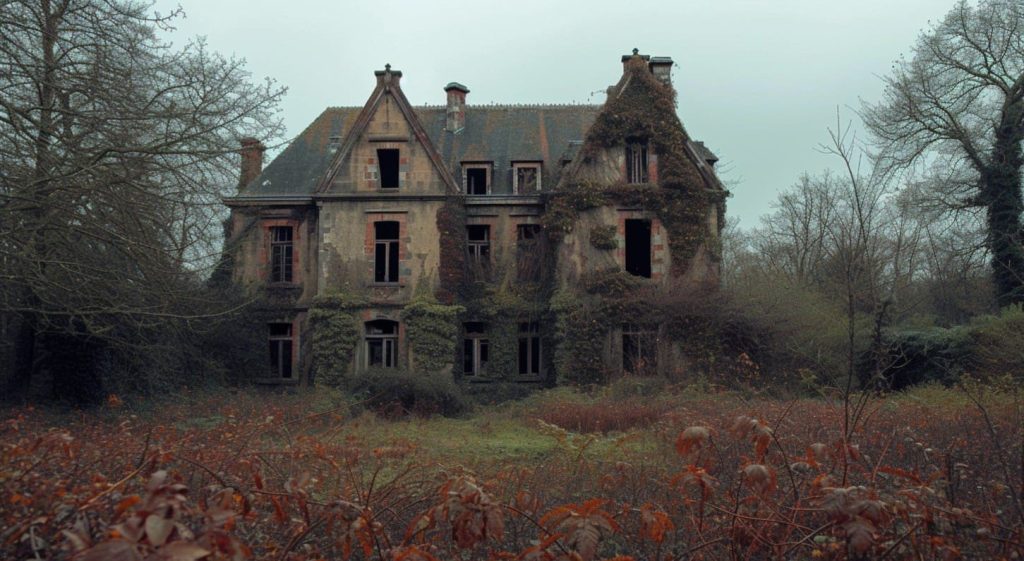
Here’s the thing about this movie: it spends two hours building this slow, creeping dreadful power flickering for no reason, horses that won’t settle, something crossing in front of the moon that just shouldn’t be there. And if you’ve ever spent real time around open land, you already know that feeling in your gut before anyone on screen even says a word. Animals don’t panic over nothing.
Then Jordan Peele just… doesn’t hand you a clean explanation. He gives you a flying saucer that turns out to be something way worse than a spaceship, a washed-up child star running a theme park down the road, and a finale that cuts away at the exact moment everybody’s dying to see spelled out. So the credits roll and you’re left wondering: did OJ actually survive that chase, or did the movie just dress up his death to look like a win?
That’s exactly what we’re digging into here not with a quick yes or no, but by walking through everything the film actually shows you, in the order it shows you. Because the answer really is in there. You just have to go looking for it.
Heads Up: We are jumping straight into the deep end of the plot twists now. If you hate spoilers, close your eyes and turn back. (Or, you know, go watch the movie and come right back)!
TL;DR, Quick Key Takeaways
- Jean Jacket isn’t a spaceship, it’s a living predator that takes on a saucer-like shape to lure in anything that looks up at it
- OJ Haywood (Daniel Kaluuya) figures out that eye contact is the trigger, and avoiding it is the key to surviving the creature
- Jupe (Steven Yeun) tries to turn Jean Jacket into a paid attraction at Jupiter’s Claim, and it ends up killing him, his family, and his entire audience in one of the film’s most brutal sequences
- OJ and Em Haywood (Keke Palmer) split up in the finale: OJ rides out to draw Jean Jacket away while Em heads to Jupiter’s Claim to finish the plan
- Em lures Jean Jacket into swallowing a giant inflatable balloon shaped like Jupe, which bursts inside it and kills it
- The film’s internal logic and its final shot both point to OJ surviving the chase
- Em finally lands her “Oprah shot” undeniable proof Jean Jacket was real, right as it dies
- The Gordy the chimp flashback is where the eye-contact rule that eventually saves OJ’s life first gets taught
Quick heads up before we get into it: alongside OJ and Em, there’s also Angel Torres (Brandon Perea), the electronics store employee who ends up helping rig up the ranch’s surveillance cameras, and Antlers Holst (Michael Wincott), the veteran cinematographer they bring in later to actually catch the creature on film. Keep those two in the back of your mind; they matter more to how this ending plays out than you’d guess at first.
How Does the Whole Thing Actually Start?
So the very first thing that happens in this movie is a death. OJ and Em’s dad, Otis Sr., is just standing outside the ranch house when something falls out of a completely clear sky and hits him with a nickel, moving fast enough to kill him almost instantly. At the time, nobody had any way of knowing where it came from or why. It just reads like a freak accident, the kind of thing that gets a paragraph in a local paper and then quietly gets forgotten.
Except OJ never really lets it go. He and Em end up inheriting a ranch that’s already struggling, a family business built on training horses for film and TV work, and OJ quietly starts clocking things nobody else seems to notice.
The power keeps cutting out at weird hours. The horses spook for no obvious reason. And then, one night, something genuinely impossible shows up overhead, a shape just sitting in the clouds that doesn’t move like weather and doesn’t behave like any aircraft you’ve ever seen.
Where OJ wants to keep his head down and quietly figure out what’s going on, Em sees a whole different opportunity. If they can actually get proof of whatever’s up there, it could be the thing that saves the ranch and finally puts their name on something bigger than horse training. That tension OJ playing it cautious, Em chasing the bigger win is basically what drives the entire movie forward, and it’s exactly why they end up pulling in outside help instead of trying to handle this alone.
That outside help starts small, too. Em and OJ walk into a local electronics store looking for security cameras, and end up talking to a salesman named Angel Torres, who gets pulled into their situation almost by accident. He’s the one who ends up installing the surveillance setup around the ranch, and he just keeps showing back up even after it’s obvious something genuinely dangerous is circling overhead.
It’s a pretty low-key, ordinary way for a character to enter a story like this which is exactly why it hits differently later, once Angel turns out to be one of the people who actually survives to the end alongside OJ and Em.
One more small detail worth knowing: OJ names the creature “Jean Jacket,” after a horse Em had once been promised the chance to train. Weird, kind of offhand choice, but it fits how OJ thinks the whole movie through he processes this impossible thing hovering over his ranch the same way he processes everything else, through the language of animals he already gets.
What Is Jean Jacket, and Why Does It Look Like a UFO?
For a good stretch of the movie, Jean Jacket reads exactly like what OJ and Em assume it is: a saucer, parked in a stationary cloud, occasionally darting out to grab a horse. That assumption gets flipped hard in the back half. Turns out Jean Jacket isn’t a machine at all; it’s closer to a jellyfish or some deep-sea creature, and that saucer shape is basically a costume, a form built specifically to pull in anything curious enough to look up and stare at it. Make eye contact, and it reads that as an invitation. Then it strikes.
That one rule rewires everything you thought you understood about the danger in this movie, and it also finally explains that opening death. The coin that kills Otis Sr. wasn’t some random freak weather event, it was debris. Something Jean Jacket had already swallowed and couldn’t digest, spat back out from wherever it had been hiding. OJ ends up calling this kind of thing a “bad miracle” , something that looks impossible and awe-inspiring from far away, and turns out to be ugly and mechanical the second you get close enough to actually understand it.
Honestly, that phrase kind of works as the whole movie’s thesis: almost everything in Nope that looks miraculous from a distance is really just a predator doing predator things, up close.
None of that matters to the characters yet, though not until OJ figures out the eye-contact rule for himself. And the movie’s actually already shown you where that rule comes from, years earlier, through somebody else entirely.
Why Do the Early Attempts to Film Jean Jacket Keep Failing?
Before OJ and Em get anywhere near understanding what they’re dealing with, the movie spends a solid chunk of runtime just showing you how hard this thing is to catch on camera, and why. Jean Jacket messes with electronics just by being nearby power flickers, cameras cut out, footage comes back useless at exactly the wrong moment.
It’s not just bad luck, either. The creature seems to genuinely interfere with electrical equipment when it’s close, which means every early try Angel’s security cameras make at grabbing a clean shot ends up glitching out or missing the moment completely.
That failure rate is a big part of why Em pushes so hard to bring in Antlers Holst, a cinematographer known for pulling off genuinely difficult, seemingly impossible footage on other projects. His gear’s a real step up from Angel’s home-security setup, built to work around exactly the kind of interference Jean Jacket causes. Even that’s not quite enough on its own, though it takes the group actually understanding how the creature behaves, not just pointing fancier cameras at it, before anyone lands a shot that actually means something.
There’s a quieter point tucked into all these failed attempts, too: chasing this thing with technology alone, without understanding what you’re actually filming, just doesn’t work. It’s a rule the movie applies to its cameras well before it ever applies the same idea to the people standing behind them.
What Does the Gordy the Chimp Flashback Actually Teach You?
If you’ve been sitting there wondering why the movie keeps cutting away to this seemingly unrelated flashback about a chimpanzee attacking a sitcom set in the ’90s here’s where it all clicks.
Jupe grew up starring in a family sitcom built around a pet chimp character named Gordy. During a birthday-episode taping, a set of balloons pop under the studio lights, and the sound sends Gordy into a violent rage he tears through most of the cast on set. Young Jupe survives by hiding under a table, and in the flashback’s most unsettling beat, Gordy actually finds him anyway. He doesn’t attack, though. He reaches out a bloodied hand for their signature on-show fist bump, right before he’s shot dead by responding officers.
So why doesn’t Gordy come after Jupe the way he goes after everyone else on set? Because Jupe’s the one person there who never makes direct eye contact with him during the whole thing. Everyone else does, and everyone else pays for it. It’s the exact same rule OJ later applies to Jean Jacket, just taught first through an animal we can actually recognize, before the movie asks us to apply that same logic to something alien and unfamiliar.
And there’s a real-world echo sitting right underneath it all, too. Trained performing animals turning violent without warning isn’t science fiction. It’s happened before with chimps used in entertainment, and that’s part of why these flashbacks hit as hard as they do. The horror isn’t really that the animal is monstrous. It’s how casually everyone around him assumed something wild could be packaged up safely for a laugh track.
Why Does Jupe Try to Tame Jean Jacket Instead of Running From It?
Here’s the part that turns Gordy from a horrifying detour into the actual emotional backbone of the film. Jupe survives an attack that should have killed him as a kid, and somewhere in the years after, he convinces himself that surviving it meant something. That he was chosen. Protected. Special in a way he could repeat, as long as he approached it right.
So when Jean Jacket starts circling his ranch, Jupe doesn’t treat it like a threat. He treats it like an opportunity. He’s already been quietly buying horses off OJ, and instead of ever mentioning what he’s actually doing with them, he’s been feeding them to the creature to keep it coming back on a schedule grooming it, essentially, the same way you’d train up any animal act for a show.
And that’s exactly what he decides to build: a live attraction at Jupiter’s Claim called the Star Lasso Experience, paying crowd in the bleachers, all of it sold on the promise of seeing the impossible thing in the sky up close.
Where OJ takes his own brush with a dangerous animal and lets it make him more careful, Jupe takes his and lets it make him reckless, convinced whatever protected him once is going to protect him again. Only one of those readings turns out to be right, and Jupe finds that out in front of a live audience, in about the worst way this movie could possibly stage it.
What Actually Happens During the Star Lasso Experience?
This is the sequence that turns the movie’s abstract dread into something you genuinely can’t unsee. Jupe stages his show with a horse standing in the middle of the arena as bait, expecting Jean Jacket to go for the animal while the crowd watches safely from the bleachers. Instead, the creature completely ignores the horse and goes straight for the audience every single person looking up to watch the spectacle they paid for gets pulled into the sky, Jupe included, along with his wife and kids, who are sitting right there watching it happen.
It’s a gutting sequence specifically because of who it spares. The one living thing on that stage that makes it out is the horse used as bait, simply because it never looks up. Everyone who came to witness a miracle becomes part of one instead, in the worst possible sense gone before anyone even fully processes what’s happening.
OJ shows up afterward to check on the horse later identified as Lucky, the same one OJ ends up riding in the film’s climax and finds him completely unharmed, still standing there in the wreckage of an empty theme park.
That’s the moment the eye-contact rule stops being a theory and becomes something OJ can actually act on. He watches an animal survive a massacre just by never looking up, and it’s exactly the confirmation he needs going into everything that follows.
What’s the Deal With the Blood Rain Scene at the Haywood House?
After devouring the crowd at Jupiter’s Claim, Jean Jacket doesn’t just disappear. It drifts toward the Haywood ranch and hovers right above the house, and what happens next is one of the most disturbing images in the whole film: it starts raining blood.
Not weather, not a metaphor the creature is literally expelling everything it couldn’t digest from the massacre, and it comes down on the house in a full downpour, along with debris, coins, keys, and even the metal horse statue Em had stolen from Jupiter’s Claim earlier as a decoy.
It works as pure horror all on its own, but it’s also doing real narrative work. It’s the direct, impossible-to-ignore proof of just how much damage Jean Jacket can do when it feeds at that scale, and it’s what finally convinces everyone left Em, Angel, and eventually Antlers, who reaches out to help after seeing news coverage of the Jupiter’s Claim disaster that this isn’t something they can just walk away from anymore.
A TMZ reporter shows up chasing the same story shortly after, hunting for the same kind of scoop Em originally wanted, and gets taken by Jean Jacket for his trouble. It’s a blunt, almost darkly funny echo of the exact mistake this movie keeps punishing over and over: chasing the spectacle instead of respecting what’s actually up there.
How Does the Final Plan at Jupiter’s Claim Come Together?
By the time the third act kicks in, the group actually has a plan, built on everything OJ’s now confirmed about how this creature behaves. Antlers Holst is the one pushing hardest for a shot with genuinely high-end film equipment instead of relying purely on Angel’s security cameras, convinced a truly perfect, undeniable image is worth almost any risk.
That conviction ends up costing him his life; he’s taken by Jean Jacket while out on his own, chasing the exact kind of impossible shot that’s defined his whole career, the same hunger for spectacle that doomed Jupe, just dressed up in a more respectable, artistic coat of paint.
That loss is what pushes OJ and Em toward a plan that’s smaller and stranger, but built on something Antlers’ approach never had: actual understanding of how the creature behaves. And honestly, it’s worth pausing on just how different this final plan is from everything tried before it.
Antlers shows up with expensive, purpose-built gear and years of experience chasing impossible shots, and none of it saves him. Angel’s approach, a wide net of home-security cameras across the ranch, doesn’t land the shot either, though it does catch plenty of the buildup along the way. What finally works isn’t expensive or clever on paper. It’s just accurate.
OJ rides out on horseback, using himself as bait to pull Jean Jacket’s attention away from Jupiter’s Claim and give Em room to work. He’s not running out there blind his whole job on that ride is just to stay visible without ever looking up.
Meanwhile, Em’s racing toward a leftover piece of Jupiter’s Claim merchandise: a giant inflatable balloon shaped like Jupe himself, complete with one big eye that appears to wink as it fills with air. Get Jean Jacket to notice it, let it swallow the thing whole, and let the balloon do the rest of the work from the inside.
That’s the entire plan, and it plays out exactly like it sounds. Jean Jacket takes the bait, the balloon bursts inside it, and the creature dies from the rupture while Em, stationed at a fixed analog camera nearby, finally gets the photograph she and OJ have been chasing since the very beginning of the movie.
There’s a small payoff for Angel here too, easy to miss with everything else going on: he’s the one who gets Lucky safely back to OJ in time for that final ride, after keeping the horse with him through the chaos following the Star Lasso attack. Not a dramatic beat by any stretch, but it’s a good example of how this movie rewards paying attention to its supporting cast, not just its two leads.
Does OJ Actually Survive the Ending?
Here’s the scene everyone’s really asking about. The last clear shot of OJ mid-chase shows him riding hard with Jean Jacket bearing down right behind him and then the film cuts to Em’s side of the plan entirely. We don’t actually see what happens to him at that moment. He just doesn’t show back up until the very last shot of the movie: seen from a distance, riding toward camera, alive, with reporters already starting to show up at Jupiter’s Claim in response to all the destruction.
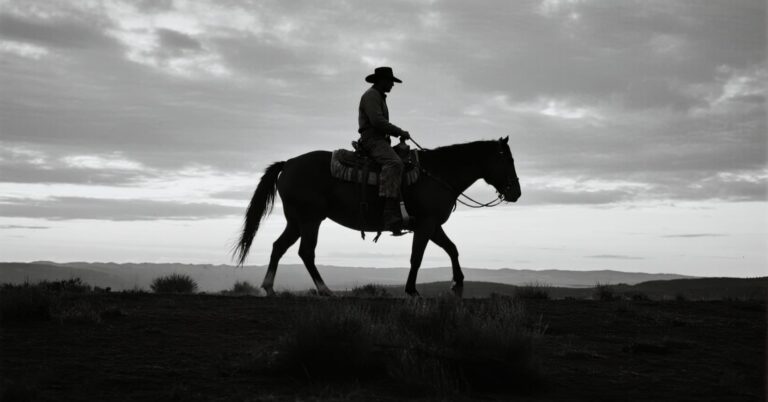
So why does that read as uncertain to some people instead of a clean confirmation? Because the shot is stylized just enough to feel symbolic rather than literal. He’s silhouetted, riding in slow motion under the ranch’s “Out Yonder” sign, framed almost like a ghost or a folk hero riding into legend rather than, you know, just a guy getting home. It’s the kind of image that could be read as memory, myth, or a totally straightforward return, and the film never actually tells you which one it is.
But trace the internal logic this movie spent two hours building, and survives the far stronger read, by a mile. OJ isn’t sacrificing himself blindly out there; his entire plan hinges on staying out of Jean Jacket’s line of sight and staying visible just long enough for Em to finish her half of the job.
The second Em’s plan succeeds and Jean Jacket dies, there’s simply no threat left for OJ to be running from anymore. Nothing in that final shot suggests he got caught before it went down. He’s just riding home.
There’s also a bigger reason his survival fits the story being told here. Nope spends its entire runtime rewarding people who actually study the danger in front of them, and punishing the ones chasing spectacle without understanding it Jupe, Antlers, the TMZ reporter, even the paying crowd at the Star Lasso Experience.
Killing off the one character who does everything right, quietly, off-screen, with zero payoff, would undercut the exact rule this movie just spent two hours building. His survival isn’t some twist bolted on for a happy ending. It’s the payoff the whole story’s been setting up from the start.
Where Do Em and the Ranch End Up?
The film doesn’t linger long after Jean Jacket goes down, which tracks with how it handles the aftermath the entire way through; it trusts you to fill in the emotional beat instead of spelling it out. What we do know: Em gets the photograph that could change everything for the ranch, financially and otherwise, and OJ’s read on animal behavior, sharpened by years of working with horses, ends up being exactly what cracks the mystery and keeps them both alive. For a guy who barely talks through most of the runtime, it’s a quiet kind of vindication.
There’s no scene of the footage getting sold off, and nothing suggesting Jupiter’s Claim reopens or anyone tries Jupe’s mistake all over again. It’s also worth noticing how the siblings’ dynamic has shifted by this point. OJ starts the film closed-off and reluctant, barely holding the ranch together after their father’s death, while Em’s the one pushing for something bigger, chasing fame and money in a way OJ never seems fully comfortable with.
By the end, that balance hasn’t so much reversed as it’s evened out Em still gets her big, undeniable moment, but it only happens because OJ’s patience and read on the creature made it possible in the first place. Neither one of them gets there alone.
Angel and Antlers both play a part in getting the Haywoods to that final moment, too, even though their arcs end up in totally different places. Angel starts out as an outsider with no real stake in any of this, and ends the film as someone who genuinely helps save the ranch, right down to getting Lucky back to OJ exactly when it matters most. Antlers, on the other hand, never makes it to the finish line; his story closes out as a warning about the exact kind of hunger the Haywoods have to resist in themselves if they want to walk away from this in one piece.
If you’re interested, you can check out our Get Out ending explained here!
Wrapping It Up
What makes this ending actually work, even with everything it leaves unsaid, is that the film never withholds the information you need to answer its own questions. Every rule that saves OJ’s life in the finale gets taught to you earlier through Gordy, through Lucky surviving the Star Lasso Experience, through OJ’s own quiet habit of watching before acting.
The ambiguity in that last shot isn’t the movie being cagey for its own sake. It’s Peele trusting the groundwork he already laid to carry the ending without spelling it out. Trace that groundwork back, and honestly, the picture gets a lot clearer than it feels on a first watch.
It also helps to notice how consistently Nope punishes the exact same mistake, just dressed up differently each time. Jupe monetizes the creature and dies for it. Antlers chases the perfect image at any cost and dies for it. The TMZ reporter chases a story instead of respecting the danger, and dies for it too.
OJ’s the only one who treats Jean Jacket like an animal worth understanding rather than a spectacle worth capturing at any price and he’s also the only one of the four still standing when the credits roll. That’s not some coincidence the movie leaves up for debate. It’s kind of the whole point, laid out plainly if you’re watching for it.
FAQ: Most Googled Ones!
Does OJ die at the End of Nope?
No, both the film’s internal logic and its final shot point to OJ surviving his encounter with Jean Jacket.
What is Jean Jacket Actually?
It’s a living predator that disguises itself as a flying saucer to lure in anything that looks directly at it.
How does Em kill Jean Jacket?
She lures it into swallowing a giant inflatable balloon shaped like Jupe, which bursts and kills it from the inside.
Why does Gordy the chimp attack everyone except Jupe?
Jupe is the only person on set who avoids making direct eye contact with him during the attack.
What happens during the Star Lasso Experience?
Jean Jacket ignores the horse used as bait and instead kills Jupe, his family, and the entire watching audience.
What Happened to Antlers Holst?
Jean Jacket takes him while he’s out alone chasing the perfect shot of the creature with his own camera equipment.
About the Author.
Hi, I’m Vansh, the founder of Vibe On Cue. I track the absolute best ways to experience cinema, from the biggest Hollywood Blockbusters and upcoming release dates to the finest details of PVOD & Streaming and pristine Blu-ray & 4K physical media. And when the credits roll, I break down the narrative with deep-dive Ending explained guides. If you live for the full life cycle of film, stick around and explore the site!!!