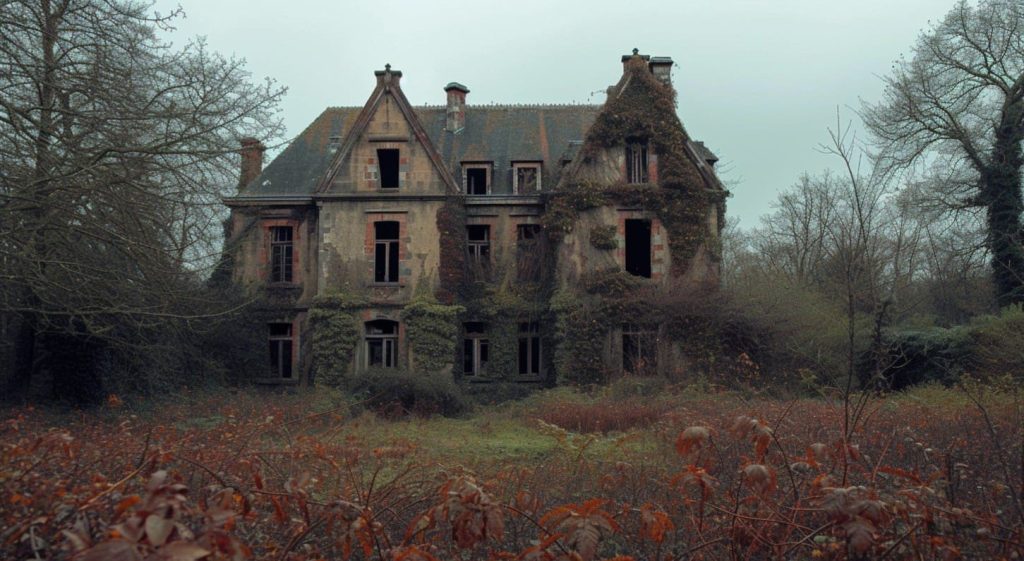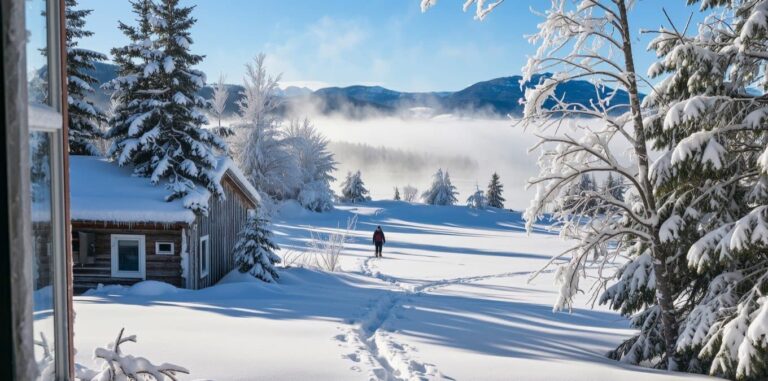

Dead of Winter Ending Explained: The roads get quieter the farther north you go in Minnesota in January, until eventually there’s nothing left but snowbanks taller than the truck and a radio that only picks up static. That’s the drive Barb makes alone, carrying Karl’s ashes to the one place he asked her to bring them: Lake Hilda, where the two of them had their first date more than forty years earlier. It’s meant to be a small, private errand.
A widow, a truck, a few hours of frozen silence, and no one around to interrupt her while she says goodbye.
But what if the person you set out to bury isn’t the one you end up fighting for? Dead of Winter spends its entire runtime answering that question, and the answer it lands on is a lot bloodier, and a lot more selfless, than anyone watching Barb pack that truck would expect. Here’s everything that happens once her quiet errand turns into someone else’s fight to survive, and what that ending actually means?
Heads Up: We are jumping straight into the deep end of the plot twists now. If you hate spoilers, close your eyes and turn back. (Or, you know, go watch the movie and come right back)!
TL;DR, Quick Key Takeaways
- Barb (Emma Thompson) drives to Lake Hilda in northern Minnesota to scatter her late husband Karl’s ashes, and stumbles onto a kidnapping in progress at a nearby cabin.
- The kidnapped teenager, Leah, was taken by a married couple the credits identify only as Camo Jacket and Purple Lady.
- Purple Lady is dying and has decided to harvest an organ from Leah on the frozen lake, then get to a contact in the town of Littlefork who can perform the transplant.
- Camo Jacket tries to abandon the plan and is killed by his own wife. So are two local hunters who respond to Barb’s emergency radio call.
- In the final struggle, Barb helps Leah escape, then deliberately drags Purple Lady into the ice hole with her, drowning them both.
- Barb doesn’t survive. In her last seconds underwater, she opens Karl’s bait box and releases his ashes, completing his final wish in the same moment she gives her life to save Leah’s.
Barb’s Errand Goes Wrong Almost by Accident
Who is Barb before any of this happens to her? The film spends real time answering that, and it’s worth sitting with, because it’s the reason nothing that follows feels like a stretch. She and Karl ran a bait-and-tackle shop together for most of their marriage, tucked into the same snowbound stretch of Minnesota where the story takes place. They tried for kids early on and it never happened, one disappointment after another, until eventually the subject just stopped coming up between them.
Karl started slipping near the end, memory going soft around the edges, and then he was gone quickly, without much warning. Barb is left holding the pieces of a forty-plus-year marriage and one specific instruction: bring him back to Lake Hilda, where they met as much younger people, and let him go there.
She’s never made the drive alone. That’s the detail that sets everything in motion. She hits a fork in the unmarked road, has no real way to double-check which direction is right, and pulls up to the nearest cabin to ask a stranger for directions. The man who answers is friendly enough, gives her the directions she needs, and never once seems like the kind of person a widow should be worried about.
Barb clocks the blood on his porch step and talks herself out of thinking too hard about it, the same instinct most people would have when a slightly odd interaction doesn’t immediately register as dangerous. She drives on.
It isn’t until she’s out near the lake itself, alone with her thoughts and Karl’s ashes, that she hears gunfire. She takes cover and watches the same man from the cabin, now identified only as Camo Jacket in the credits, drag a bound young woman back through the snow at gunpoint. There’s no cell signal to call anyone. There’s no one else around for miles. Barb could put the truck in reverse and be three counties away by dark, and for one long moment the film lets you believe she might. Instead, she goes back.
What Barb Finds at the Cabin?
She creeps close enough to see through a cellar window, and that’s where she finds Leah: handcuffed, gagged, terrified, and clearly not the first thing that’s gone wrong for this couple. Barb doesn’t have a weapon, a phone that works, or a plan. What she has is a red glove and enough nerve to leave a message scratched into the frost on the window glass, telling Leah she isn’t alone and she isn’t leaving her behind.
It’s a small gesture, wordless and almost domestic in how it’s staged, the kind of thing you’d expect from someone used to writing notes for a spouse rather than signaling a stranger she’s about to risk her life for. The film treats it as small too, no swelling music, no close-up meant to underline the moment. But it’s also the exact point where Barb stops being a bystander who happened to see something and becomes someone actively working the problem in front of her.
She barely gets clear of the cabin before a second vehicle pulls in, headlights cutting across the snow, this one carrying the woman the credits call Purple Lady. She steps out already armed with a rifle, moving with the kind of unhurried confidence that tells you immediately who’s actually in charge here, not the man with the gun who dragged Leah back through the woods.
Barb watches from the treeline long enough to understand the shape of what she’s dealing with, two people instead of one, before she has to retreat again into the dark.
There is a masterclass in character building right when she figures out there is another person lurking around. While most of us would have a full-blown meltdown over a creepy warning on the glass, she stays totally deadpan. Spotting that glove instantly triggers a tactical response, and she starts quietly scanning the environment for threats. That chillingly calm reaction communicates her grit far better than ten minutes of spoken exposition ever could.
The Reveal: Why Leah Was Really Taken?
So what does Purple Lady actually want with Leah? Here’s where the film pulls back the curtain on something nastier than a random abduction. Camo Jacket was never the one calling the shots. His wife is, and she’s dying. The film doesn’t spell out exactly which part of her is failing, but it doesn’t have to: the fentanyl sticks she keeps relying on, the blood loss she can’t hide, the way she’s visibly deteriorating scene to scene all point to the same conclusion. She’s a trained surgeon herself, out of legitimate options, and she’s built her own solution.
She intends to kill Leah out on the ice, where the evidence will vanish with the spring thaw, then meet a contact waiting in Littlefork who can perform the transplant she needs using organs harvested from her victim. Leah wasn’t chosen at random either. Purple Lady picked her specifically because of a difficult period in Leah’s own past, betting correctly that no one would go looking for her right away.
It’s a genuinely cold piece of writing, because Purple Lady isn’t playing a monster for the sake of it. She’s playing someone who has convinced herself, completely and sincerely, that this is simply what survival requires. That’s a scarier shape for a villain to take than pure sadism would have been. Most people don’t think of themselves as the bad guy in their own story, and the film lets her keep believing that right up to the end.
It also reframes everything the movie showed earlier without you fully realizing it. The blood on the porch, the gunfire out on the lake, the girl dragged back through the snow at gunpoint: taken on their own, those beats play like the setup for a straightforward hunter-and-prey chase, the kind where the man in the cabin is simply a predator and nothing more.
Instead the film pulls back to something colder and more procedural. There’s no supernatural element, no elaborate conspiracy, no group of accomplices waiting in the wings. Just one dying woman with medical training, a husband who does what she tells him to, and a plan built entirely around the idea that someone else’s body is an acceptable price for her own survival.
Barb Fights Back
Once Barb understands the scale of what she’s up against, she stops hiding and starts working against the two of them directly. She sabotages the cabin’s heating system to strip away whatever warmth advantage the couple has left, forcing them out into the cold on her terms instead of theirs. She manages to snag Camo Jacket’s rifle when he drops it near the lake during one of their close calls, and eventually gets to the couple’s own vehicle radio long enough to put out an emergency call for help.
For a few minutes, it genuinely feels like the balance might be tipping her way, that all her scrambling and improvising has actually bought her something real.
It doesn’t last. Camo Jacket finds her before help arrives, and the two of them fight it out directly, hand to hand, with nothing decided in advance about who’s actually walking away from it. Barb wins, and in the aftermath he admits something that recasts him a little: he’d already decided to run, to abandon his wife’s plan entirely, and he was hoping to slip out before things went any further than they already had.
Barb makes the call to let him go, gambling that he’ll bring back real help from town instead of just vanishing. He doesn’t get the chance. On his way out, he crosses paths with his own wife on the road, and she kills him without a flicker of hesitation, the same clinical efficiency she’s shown the entire film.
Shortly after, two local hunters who responded to Barb’s radio call arrive to help, and Purple Lady kills them too, before Barb even realizes they’d shown up at all. By the time she understands what’s happened, she’s completely alone against a woman who has nothing left to protect and nothing left to lose.
The Final Confrontation on the Ice
With no one left to intervene, Purple Lady takes both Barb and Leah out onto the frozen lake to finish the job. She rigs a makeshift medical tent right on the ice, forces Barb to help strap Leah to a table, and then shoots Barb once she’s no longer useful, assuming she’s dead.
She isn’t. Barb survives long enough to get back up and go after her, and the two of them end up brawling right at the edge of the hole cut into the ice for the procedure. Earlier, quietly, without a word about it, Barb had slipped Leah a small nail while strapping her down, giving her something to work through her restraints with once the moment came. That’s exactly what Leah does.
As Barb and Purple Lady grapple near the water, Leah frees herself and creates the opening Barb has been waiting for.
Barb takes it, but not to save herself. She grabs hold of Purple Lady and pulls them both straight down into the freezing water together. She doesn’t fight to come back up. She holds on, using her own weight to make sure Purple Lady goes under with her and stays there.
It’s not a rescue in the way the genre usually delivers one. It’s Barb choosing to win by refusing to let go, even once it’s clear what that decision costs her.
Does Barb Survive the Dead of Winter?
No. Barb drowns. As she and Purple Lady sink beneath the ice together, Barb opens Karl’s bait box one last time and lets his ashes go into the water around her, finishing the one task she came out here to do in the first place, in the last seconds she has to do it. Leah gets free of the tent and survives. The kidnapping operation, and the two people responsible for it, don’t.
There’s no swelling rescue attached to this, no last-second gasp back up through the ice. The film just lets Barb go under and stay there, and it doesn’t rush to soften that. For a story that’s spent its entire runtime asking what an ordinary person is actually willing to give up for someone else’s sake, any softer ending would have undercut the question it had been building toward the whole time.
What Karl’s Ashes Actually Mean?
Karl asked to be scattered at Lake Hilda because it’s where he and Barb had their first date, decades before any of the grief that would eventually define the back half of their marriage together. It’s easy to imagine what he pictured when he made that request: Barb standing quietly at the shoreline on some calm afternoon, letting him go the way you’re supposed to, in her own time, with nothing else demanding her attention.
Bringing him there was always going to be her way of closing that chapter on her own terms.
The film refuses to let her have that version of it. Instead of a quiet shoreline goodbye, Karl’s ashes end up mixing into the same freezing water Barb is drowning in, released in the handful of seconds she has left rather than the peaceful afternoon either of them would have wanted.
It’s a much harder image to sit with than a calm lakeside farewell would have been, but it’s also probably closer to how grief actually behaves outside of movies. It rarely waits for a convenient, private moment. It tends to show up bundled together with whatever else is already going wrong, competing for a person’s attention right when they can least afford to give it any.
Why Barb Fights This Hard for a Stranger?
Why does a grieving widow risk everything for a teenager she’s known for less than a day? Barb and Karl never got the family they tried for, and that absence sits quietly underneath everything Barb does the moment she realizes Leah is in danger. The film never states it outright as her motivation, but it draws a clear enough line between the child Barb never got to raise and the fierce, almost parental protectiveness she develops for Leah within a matter of hours.
She sees a version of a life she and Karl might have had together. She also sees a young woman who, unlike Barb at this stage of things, still has all her years still ahead of her. Saving Leah becomes Barb’s way of honoring the family she didn’t get to keep, by making sure this one gets to exist.
None of this gets spoken out loud between the two women. Barb doesn’t sit Leah down and explain why she’s willing to bleed for her. She tackles the problem step by step, applying the exact same no-nonsense practicality that has clearly defined her entire life. That restraint is part of what makes the relationship between them land as genuine rather than sentimental.
It plays less like a scripted bond and more like the kind of protectiveness that shows up uninvited in people who’ve spent a long time wanting to give it to someone and never got the chance.
Two Women Shaped by What They Lost
It’s worth noticing that the film draws Barb and Purple Lady as mirror images rather than simple opposites. Both are defined by loss they didn’t choose. Barb lost the children she wanted and then the husband she built an entire life around. Purple Lady is losing her body, watching an illness take away the future she assumed she’d have as a working surgeon. Neither one asked to end up here.
Where they truly diverge is in how they let that heartbreak dictate their next moves. Barb’s grief pushes her toward protecting someone else, even at total cost to herself. Purple Lady’s fear of dying pushes her toward ending someone else’s life to preserve her own. Same raw material, completely opposite results.
That contrast explains the film’s moral center far better than any single line of dialogue could, and it’s a big part of why the final fight between them plays as more than just two women grappling near a hole in the ice. It’s two different answers to the same impossible question about what a person becomes when they run out of good options.
Themes That Carry the Film
Grief drives every decision Barb makes, starting with the trip itself and ending with what she’s willing to sacrifice once Leah enters the picture. Desperation curdling into self-justification drives Purple Lady, who never once seems to register herself as the villain of this story. And isolation runs underneath both of them: no cell signal, no neighbors, nobody coming unless Barb makes it happen herself.
That isolation isn’t just a device to raise the stakes. It echoes the isolation Barb had already been living inside since Karl died, long before Leah ever crossed her path.
None of these ideas get a dedicated scene where a character stops to explain them. They surface through what people do rather than what they say, which is a big part of why the film holds up on a rewatch.
Barb’s early insistence on making this trip solo, her instinct to write a message on frosted glass instead of just running, the way she lets Camo Jacket go instead of finishing him off herself: each of those choices reads a little differently once you already know how the story ends, and how much of it was Barb quietly deciding, scene by scene, what she was willing to give up.
Should You Watch Dead of Winter?
If tense, character-first survival thrillers appeal to you more than jump scares or elaborate plotting, this one delivers. Emma Thompson carries a role that asks considerably more of her than the standard “ordinary woman fights back” premise usually requires, and Judy Greer’s work as Purple Lady is unsettling precisely because she never plays the character as cartoonish. Marc Menchaca does quieter, effective work too as Camo Jacket, a man who reads less like a willing monster and more like someone who got in too deep before he found a way out.
It’s a slow-burn, cold-weather thriller rather than a fast-paced action movie, so go in expecting tension and grief in roughly equal measure. If you need your hero to walk away clean, the ending will sit differently with you than it will for viewers who appreciate a sacrifice that’s allowed to actually cost something.
Where Dead of Winter Leaves You?
So what do you actually walk away with once the ice settles and the credits roll? Not a rescue. Not a widow who got her quiet goodbye after all. What you’re left with is a woman who never set out to be anyone’s protector, who had every reasonable excuse to drive away and let someone else deal with it, and who chose instead to spend everything she had left on a stranger’s life.
That’s the trade the film keeps circling back to from the very first scene: what does a person actually owe someone they’ve never met, once walking away stops being free? Barb never answers that question out loud. She just keeps making the same choice, over and over, until there’s nothing left of the choice to make. Karl gets his lake. Leah gets to keep living.
And Barb gets exactly what she gave, which is everything. Whatever you make of that ending, it’s hard to argue the film didn’t earn it.
If you’re interested, you can check out our Backrooms Ending Explained!
Frequently Asked Questions
Does Leah survive Dead of Winter?
Yes. Leah frees herself during the final struggle between Barb and Purple Lady and survives the ordeal.
Who are Camo Jacket and Purple Lady?
They’re the married kidnappers, credited only by those names rather than given full character names in the film.
Why did the Purple Lady want to kill Leah?
She’s dying and needs an organ transplant. She planned to harvest one from Leah on the frozen lake, then meet a contact in the town of Littlefork who could perform the procedure.
Does Barb survive the movie?
No. Barb drowns after deliberately dragging Purple Lady into the icy water with her, sacrificing herself to stop the kidnapper and save Leah.
What happens to Karl’s Ashes?
Barb releases them into the lake as she’s drowning, fulfilling her husband’s last wish in her final moments.
Who plays Barb in Dead of Winter?
Emma Thompson plays Barb, the widow at the center of the film.
Is Dead of Winter Based on a True Story?
No. It’s an original screenplay written by Nicholas Jacobson-Larson and Dalton Leeb, directed by Brian Kirk.
Where is the Dead of Winter set?
The film takes place in a remote, snowbound stretch of northern Minnesota, centered around the fictional Lake Hilda.
About the Author.
Hi, I’m Vansh, the founder of Vibe On Cue. I track the absolute best ways to experience cinema, from the biggest Hollywood Blockbusters and upcoming release dates to the finest details of PVOD & Streaming and pristine Blu-ray & 4K physical media. And when the credits roll, I break down the narrative with deep-dive Ending explained guides. If you live for the full life cycle of film, stick around and explore the site!!!