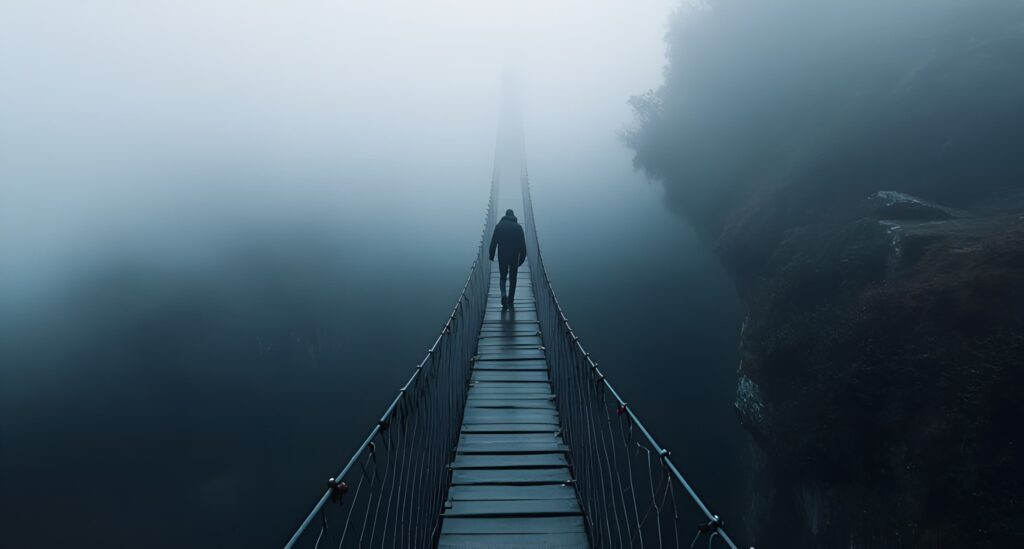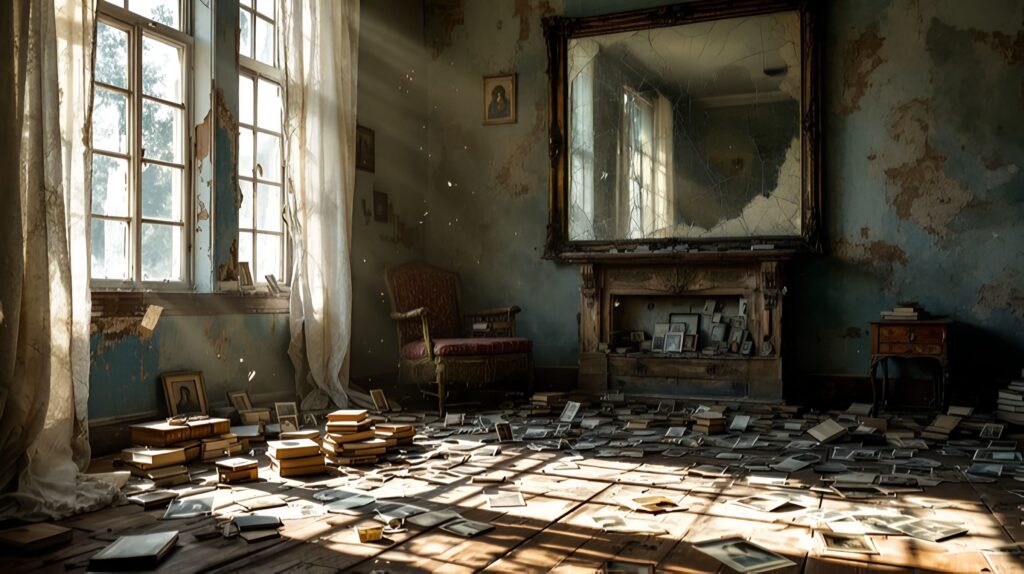

An Taibhse Ending Explained: If you just watched An Taibhse (The Ghost) the first-ever Irish-language horror feature you’ve probably come away more unsettled than clear on what actually happened. That’s not an accident. Critics have described this film as “enigmatic” and “equivocal” almost as a badge of honor, and the ending deliberately withholds the kind of clean, spell-it-out resolution most horror movies hand you. But there’s a lot going on underneath that ambiguity, and once you pull the threads together, the film’s final stretch says something genuinely devastating about grief, isolation, and the ghosts a family can create out of its own trauma.
*Heads Up: We are jumping straight into the deep end of the plot twists now. If you hate spoilers, close your eyes and turn back. (Or, you know, go watch the movie and come right back)!
TL;DR, Quick Key Takeaways
- Éamon and his teenage daughter Máire, survivors of the Great Famine, take a winter caretaking job at a massive, remote Georgian mansion.
- Máire has been haunted for years by an entity she calls Alexander, who she believes may have had something to do with her mother’s death. The haunting follows her to the new house almost immediately.
- After Éamon injures his foot and becomes housebound, he spirals into heavy drinking, paranoia, and increasingly disturbing, controlling behavior toward Máire behavior the film frames as abusive and uncomfortably intimate.
- Alexander isn’t just haunting Máire directly. The film strongly suggests the entity is also working through Éamon, using him as a kind of vessel to carry out its intentions echoing the way BOB operates through Leland Palmer in Twin Peaks, or the way the Overlook Hotel corrupts Jack Torrance in The Shining.
- When a third man unexpectedly arrives at the estate, Éamon’s unraveling turns violent.
- The film’s final minutes offer a brief flicker of hope for Máire before undercutting it the damage inflicted over the winter can’t simply be walked away from.
- The broader implication is that Alexander represents the buried trauma of the Famine itself, manifesting through the family that’s inherited it, rather than a conventional ghost with a simple backstory.
If you want the fuller picture of how the film builds to that ending and why its ambiguity is doing real thematic work rather than just being vague for its own sake here’s the complete breakdown.
Setting the Scene: Two Famine Survivors, One Enormous House
The film opens in 1852, in the bleak aftermath of the Great Famine, as Éamon and his daughter Máire travel by coach to a sprawling, largely empty Georgian estate where they’ve been hired as winter caretakers. It’s a lucky break by the standards of the time, steady work and shelter through the brutal winter months but Máire is anxious from the very first scene, asking her father what happens if Alexander follows her to the new place. Éamon’s response is sharp and immediate: Alexander isn’t real, and he doesn’t want to hear the name again.
That exchange tells you almost everything you need to know about the family dynamic before the plot even gets going. Máire is carrying something of grief, fear, trauma, possibly all three that her father refuses to acknowledge, let alone help her process. The house itself, once they arrive, only amplifies the isolation: it’s an enormous, mostly unfurnished property with dozens of rooms, long corridors, and the kind of oppressive quiet that makes every creak and shifting shadow feel loaded with meaning.
There’s also a quiet class tension baked into the setup that the film never spells out directly but keeps present in the background. Éamon and Máire are Famine survivors taking orders from an absent, wealthy English family, tasked with maintaining a level of comfort and grandeur they themselves have no access to. It’s the kind of detail that could easily go unnoticed on a first watch, but it sets up an undercurrent of resentment and displacement that the house’s horrors will eventually tap into.
Who or What Is Alexander?
Alexander is introduced almost entirely through Máire’s experience of him, which is part of why the film stays so slippery about what he actually is. He manifests in classic haunting fashion at first doors opening on their own, candles left burning, faint moans through the walls but escalate quickly into something more invasive. Máire starts finding an unsettling antique puppet in her room that she didn’t bring with her. She experiences vivid, disturbing flash-visions: a field lined with wooden crosses, fire, blood pooling in a bathtub. And crucially, she believes Alexander may have had a hand in her mother’s death, a loss the film establishes she’s still raw from grieving.
Rather than functioning like a typical ghost tied to one specific dead person and one specific grievance, Alexander plays more like an ambient force, something that latches onto Máire’s grief and fear and uses it as an entry point. It’s the kind of entity that multiple critics have compared to BOB from Twin Peaks: less a ghost with unfinished business of his own, and more a malevolent presence that needs a human host to actually act in the world.
Notably, the film never gives Alexander a clean origin story, no backstory scene explaining who he was in life, no specific tragedy tying him to the estate itself. That absence is deliberate. It keeps him feeling less like a character with motives and more like a force that simply exists wherever grief and isolation have created an opening for him, which is part of why he feels so at home following Máire from her old life into this new one.
Éamon’s Unraveling
That comparison becomes especially important once Éamon injures himself. A wood-chopping accident leaves him unable to do the estate’s physical labor, and rather than adapting, he descends into a spiral of drinking, paranoia, and cruelty. He spends his newly idle hours obsessively building rows of wooden crosses across the lawn, an image that visually rhymes with Máire’s cross vision, suggesting the house, or whatever’s inside it, is feeding the same imagery into both of their heads.
As Éamon’s mental state deteriorates, his behavior toward Máire grows disturbing in ways that go beyond ordinary parental strictness. The film leans into genuinely uncomfortable territory here moments of inappropriate, borderline-incestuous menace that critics have flagged as one of the more upsetting undercurrents of the back half. He becomes possessive, erratic, and physically threatening, all while insisting that whatever Máire says she’s experiencing with Alexander isn’t real. It’s a portrait of a father whose grief and desperation have curdled into something genuinely dangerous and the film increasingly frames him not just as a broken man, but as someone actively being used.
That’s the key turn: Alexander isn’t simply haunting Máire in isolation anymore. He appears to be working through Éamon as well, manipulating a man already destabilized by grief, isolation, and alcohol into becoming an instrument of harm. Whether Éamon was always capable of this cruelty and the house simply removed his restraints, or whether something genuinely supernatural is puppeteering him, is left intentionally unresolved and that ambiguity is very much the point, not a gap in the storytelling.
The Arrival That Breaks the Dam
Deep into the winter, an unannounced third party, a man named Anthony, arrives at the estate. His arrival is the spark that finally pushes Éamon over the edge. Already unmoored by isolation, drink, and whatever influence has been working on him, Éamon responds to the intrusion with escalating, violent paranoia, at one point brandishing an axe in a sequence that’s the film’s most direct visual nod to The Shining’s famous climax.
This is where the “ferocious final few minutes” reviewers keep referencing actually kick in. The slow-burn dread of the film’s first two-thirds gives way to a much more immediate, physical kind of horror, and Máire who has spent the entire film absorbing both supernatural torment and her father’s escalating cruelty is suddenly forced to confront both threats at once, with nowhere left in the house to retreat to.
It’s a deliberate structural choice, too. Up to this point, the film has largely kept its horror internal and psychological visions, dread, the slow erosion of a relationship. Anthony’s arrival yanks the story into something far more externalized and immediate, and that tonal whiplash is part of what makes the final stretch land as hard as it does.
A Flicker of Hope, Then the Floor Drops Out
Without spelling out every beat of the climax, what multiple critics agree on is this: the film briefly offers something that looks like it could be hope or rescue for Máire, only to undercut it almost immediately. The consistent language critics reach for here is telling “the damage has already been done,” a “violent reversal,” an ending that’s “ferocious” rather than cathartic. This isn’t a movie interested in a clean escape or a reassuring final girl moment.
That refusal to offer comfort is consistent with everything the film has been building toward. An Taibhse isn’t really asking “will Máire survive the night” in the straightforward slasher sense. It’s asking whether someone can actually walk away from inherited trauma, generational cruelty, and grief that’s been left to fester in total isolation and its answer, delivered through that final gut-punch, leans firmly toward no. Whatever specific fate meets Máire and Éamon in the closing moments, the film is clear that neither of them gets to simply move on unscathed.
It’s also worth noting how carefully the film paces that final reversal. The brief glimmer of hope isn’t thrown away quickly or cheaply; it’s allowed to breathe just long enough that the audience genuinely believes, for a moment, that things might turn out okay. That’s what makes the pivot land as hard as it does; the film earns its bleakness by first letting you believe the opposite.
Why the Famine Setting Isn’t Just Window Dressing
It would be easy to treat the film’s post-Famine setting as pure historical texture, a moody backdrop for a haunted house story that could technically be set anywhere. But several critics have pointed out that the specific timing matters. Éamon and Máire aren’t just any caretakers; They aren’t just workers; they’re people who survived mass starvation and displacement, now tasked with upkeeping a grand English-owned house that stands as a stark reminder of the comfort denied to them.
Read that way, Alexander starts to look less like a personal ghost tied to Máire’s mother specifically, and more like a manifestation of that larger, unprocessed collective wound the trauma of the Famine itself, seeking a vessel through which to express itself, and finding one in a family already primed by grief and isolation to let it in. It’s a heavier, more thematically ambitious idea than a standard “haunted house” premise, and it’s a big part of why critics kept reaching for prestige horror comparisons like The Witch and The Shining rather than dismissing it as a simple genre exercise.
This is also, arguably, what separates An Taibhse from a lot of other haunted-estate horror. Plenty of horror movies use massive old estates to hide family secrets, but anchoring this haunting to a trauma as massive and recent as the Famine gives the story a much heavier emotional weight. The horror doesn’t just belong to Éamon and Máire’s family, it belongs to everyone who survived that period and never had the chance to properly grieve it.
The Coming-of-Age Layer Underneath the Horror
There’s also a quieter thread running through the film worth pulling on: Máire’s own passage into womanhood, which the film ties explicitly to her torment. Alexander’s hauntings are deeply linked to her period, showing up as graphic visions where blood stains practically everything, from the bathwater and flames to the makeshift crosses. Layered against her father’s increasingly inappropriate and controlling behavior, this reads as the film using supernatural horror as a vehicle for something much more grounded and human: a girl being forced into adulthood not through any natural process, but through trauma, isolation, and a parent who’s stopped being safe.
That layering is exactly why the ending resists a tidy explanation. Is Alexander a literal ghost, a psychological manifestation of grief, or a stand-in for a much older, collective wound? The film seems to want all three readings sitting on top of each other at once, refusing to pick one and close the door on the others.
It’s a genuinely uncomfortable choice, and an effective one. By tying Máire’s bodily transformation so directly to her supernatural torment, the film makes it impossible to fully separate the ghost story from the far more grounded horror of a girl losing the one adult who’s supposed to protect her, at exactly the moment she needs protecting the most.
A Few Details That Land Differently on a Second Watch
Once you know where the film is headed, a handful of earlier moments read very differently the second time through:
- Éamon’s opening line about Alexander. His sharp, immediate denial in the very first scene “he’s not real, I don’t want to hear that name again” plays on a first watch as simple parental dismissiveness. Knowing what we later learn about his own susceptibility to whatever’s in the house, it reads more like a man already aware, on some level, that he’s vulnerable to exactly this kind of influence, and desperate to keep the door shut.
- The wooden crosses. Éamon’s obsessive cross-building during his convalescence seems, at first glance, like a man simply losing his mind out of boredom and pain. Once you connect it to Máire’s identical vision of a field of crosses, it becomes clear the house or Alexander is feeding the same imagery into both of their heads independently, which is a much creepier implication than either of them just going a little stir-crazy.
- The Mr. Punch puppet. A small, unsettling detail that could easily be read as a throwaway jump-scare prop on a first viewing. Puppets have a long horror tradition of representing something being controlled by unseen hands which lines up neatly with the film’s larger idea that Éamon himself is being manipulated like a puppet by something he refuses to name.
- Máire’s menstruation-tinged visions. Easy to dismiss as body-horror flourish in isolation, but tied to the blood imagery recurring throughout Alexander’s visions, it reinforces the reading that her passage into womanhood and her torment are the same process, not two separate threads running in parallel.
How An Taibhse Fits Into Ireland’s Recent Horror Wave
It’s worth zooming out for a second, because An Taibhse didn’t arrive in a vacuum. Ireland has quietly become one of the more interesting places in genre filmmaking over the last several years, with titles like You Are Not My Mother, Oddity, All You Need Is Death, and Fréwaka all mining similar territory grief, folklore, and generational trauma filtered through horror rather than straight drama. What sets An Taibhse apart within that wave isn’t just the language milestone, though that alone is significant. It’s the way the film commits so fully to psychological ambiguity over jump-scare mechanics, trusting its audience to sit with unresolved questions rather than handing them a clean villain and a clean resolution.
That’s also, frankly, part of why the film split critics down the middle. Some reviewers found the ambiguity genuinely haunting the kind of ending that keeps working on you well after the credits roll. Others found it frustrating, arguing the film leans on familiar genre furniture (the isolated mansion, the descent into alcoholism, the axe-wielding climax) without fully earning its own identity separate from The Shining. Both reactions are reasonable responses to the same choice: An Taibhse isn’t trying to reinvent the haunted house movie so much as use its familiar shape to smuggle in a much heavier, more specifically Irish conversation about inherited trauma.
Either way, its cultural significance is hard to dispute. Being the first feature-length horror film made entirely in Irish isn’t just a trivia footnote it’s a genuine milestone for a language that’s had limited representation in genre filmmaking, and it opens the door for more Irish-language horror to follow in its wake.
If you’re interested, you can check out our ending explainers of Hereditary, Midsommar and Obsession!
Wrapping It Up
An Taibhse earns its reputation as an unsettling, deliberately ambiguous piece of folk horror precisely because it isn’t interested in handing you a tidy monster with a tidy backstory. Alexander works because he could be a ghost, a symptom of inherited trauma, or something closer to a possessing spirit using a broken man as his instrument and the film’s final minutes are built to leave all of those doors open rather than shutting them. What it does make unmistakably clear is that nobody walks away from that winter clean. The horror here isn’t just what’s haunting the house. It’s what the house, the isolation, and one family’s unprocessed grief were capable of doing to each other long before anything supernatural got involved.
If you came out of the film with more questions than answers, that’s very much by design. This is a movie that wants you sitting with its ambiguity, not resolving it for you.
FAQ: Most Googled Questions, Answered
Who or what is Alexander in An Taibhse?
A malevolent presence haunting Máire, possibly tied to her mother’s death, the film never confirms if he’s a literal ghost or something else.
Does Alexander possess Éamon?
The film strongly implies it, echoing how BOB operates through Leland Palmer in Twin Peaks.
Is An Taibhse based on a True Story?
No, though it’s grounded in the real trauma of the Great Famine.
What does the Ending mean?
It offers a brief flicker of hope before undercutting it, making clear the harm inflicted can’t simply be escaped.
Is An Taibhse connected to The Shining?
Not directly, but critics widely note its deliberate homages, including an axe-wielding climax.
What language is An Taibhse in?
Entirely in Irish (Gaelic), the first feature-length horror film made fully in the language.
Is there a sequel planned?
Nothing has been announced.
About the Author.
Hi, I’m Vansh, the founder of Vibe On Cue. I track the absolute best ways to experience cinema, from the biggest Hollywood Blockbusters and upcoming release dates to the finest details of PVOD & Streaming and pristine Blu-ray & 4K physical media. And when the credits roll, I break down the narrative with deep-dive Ending explained guides. If you live for the full life cycle of film, stick around and explore the site!!!