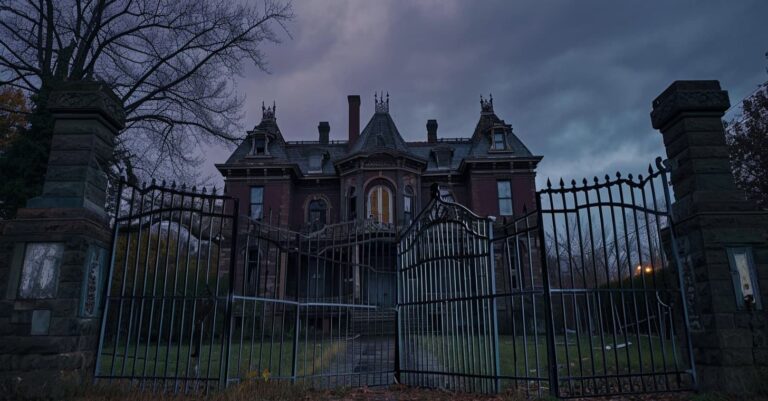

The Home Ending Explained: Okay so “The Home” starts off feeling like your standard creepy-nursing-home movie, and then somewhere in the third act it just goes completely feral. If you finished this and immediately went “wait, WHAT just happened,” you’re not alone this one’s got a lot going on. Let’s break down what’s actually going on at Green Meadows, who’s really behind everything, and what that ending means for Max.
What makes this one worth unpacking is how much of it is built on misdirection. This isn’t a movie where the twist comes out of nowhere; it’s one where the “answer” you’re handed halfway through feels totally complete, right up until it isn’t. So we’re going section by section: Max’s backstory, what’s actually happening in the building, the fake-out reveal, the real reveal, and what it all adds up to by the time the credits roll.
TL;DR, Quick Key Takeways
- Max gets stuck doing community service as the live-in super at Green Meadows retirement home, and staff tell him to stay off the fourth floor. Obviously he doesn’t listen.
- Big twist: the aggressive fourth-floor resident who attacks Max is actually his foster brother, whose suicide years ago was faked.
- The real horror: Green Meadows is run by a cult that harvests eye fluid from foster kids to keep themselves young, and Max’s own foster parents have been supplying the victims.
- Max’s brother turns on the cult in the final act, feeding Max the harvested fluid so he can fight back and the ending is bloody, chaotic, and doesn’t wrap up neatly.
*Heads up: We’re diving straight into major plot points and twists below. If you haven’t watched the movie yet and want to go in fresh, bookmark this page and come back once the credits roll!
Who Max Is Before Any Of This Starts
Max isn’t just some random dude who wanders into a haunted building. His whole backstory is quietly setting up everything that happens later. He grew up a foster kid alongside an older foster brother, and that brother died by suicide about ten years back a loss Max clearly never actually dealt with. It’s all over the way he carries himself. The graffiti, the anger, the general “I’m one bad day away from either snapping or vanishing” energy.
By the time we meet him, he’s just been arrested for vandalism, which is the whole reason he ends up at Green Meadows in the first place. His foster dad works out a deal so Max avoids a record: instead of jail, he does community service as the live-in super at a retirement home. It’s sold to him as a boring punishment, a second chance, nothing more. Spoiler: it is definitely more.
Here’s the thing that matters way more than it seems like it should: his foster parents are the ones who placed him there. Not a coincidence. Not random. The movie slowly builds toward the reveal that basically every foster kid who’s passed through that household has ended up funneled toward this exact building.
And that “dead” brother thing? The movie never lets you forget it, because it’s not just backstory it’s the whole plot. You spend the first half assuming it’s just character texture, a sad detail that explains why Max is the way he is. Then it turns into the actual mystery you’re trying to solve.
Even something as small as how Max’s foster mom talks to him feels a little off from the jump hesitations, half-answers, a vibe like she knows more than she’s letting on about where he’s headed. Nothing about it screams “sinister” on a first watch. It just plays like normal awkward family stuff. Which, again, is exactly the point.
Settling Into Green Meadows
Right away, staff lay down the one rule that matters: stay off the fourth floor. It’s delivered super casually, like standard policy for the fragile-resident wing. That casualness is doing a lot of heavy lifting, because it makes the whole thing feel boring and procedural instead of ominous. Narrator voice: it was not boring or procedural.
Max settles into the job checking hallways, fixing stuff, keeping tabs on wandering residents and the movie genuinely lets him get comfortable there. That comfort matters. The more normal this place feels early on, the harder it hits later when you find out what it actually is.
Weird stuff starts creeping in almost immediately, though none of it screams “supernatural cult” yet. Residents wander into his room at odd hours. There’s unexplained bleeding that nobody on staff seems remotely alarmed by. At this point it just reads like standard elder-neglect horror, an underfunded facility with some genuinely disturbing cracks in it.
Max also starts clocking how tightly controlled the staff are. Nobody over-explains anything. Questions get deflected with this weirdly practiced politeness, like everyone’s reciting lines they’ve said a hundred times to a hundred nosy new hires. It’s the kind of detail you barely register in the moment but that reads as blatant once you know the truth.
The fourth-floor rule becomes the thing Max can’t stop circling back to. Every weird incident in the building somehow traces back to that floor: a confused comment from a resident, a staff member’s face when it comes up, even the layout of the building seeming to steer attention away from it.
What’s Actually Behind The Fourth-Floor Door
When Max finally goes up there, it’s rough. The residents are in horrific shape, lethargic, deteriorated way past what normal aging looks like, clearly suffering from something being done to them rather than just happening to them naturally. This is the moment the movie stops teasing and shows you exactly how dark it’s willing to go.
One of them attacks him violently, and Max gets dragged back downstairs with a much scarier version of that earlier warning: never go up there again. And this time it’s not bureaucratic. It’s people who are visibly shaken that he made it up there at all.
The state of those residents raises the obvious question driving the rest of the movie: what’s happening to them, and why is everyone hiding it this hard? The film doesn’t answer that yet. It just lets that horror sit with you while the story pulls back to Max’s daily life and his growing paranoia about the building.
There’s also a contrast being set up here that matters a ton later: everyone below the fourth floor seems basically normal, even pleasant, while whatever’s happening up top is a whole different thing. That split becomes crucial once you get the full picture. Green Meadows isn’t evil in some cartoonish, everyone’s-a-monster way. It’s organized like a hierarchy, and most of the building is just camouflage for what’s happening at the very top of it.
That attack scene is also worth sitting with for a second, because on the first watch it plays like a jump scare with a boring explanation: dangerous, confused old patient, nothing more. It’s only once you find out who that resident actually is that the whole scene turns into something way more devastating.
Norma, The One Real Friendship In That Building
In the middle of all this dread, Max actually bonds with Norma, one of the residents. She’s kind to him in small, specific ways that stand out hard against how cold and controlled everyone else in the building is. For a guy as guarded and grief-stuck as Max, that friendship becomes basically the one stable thing he’s got at Green Meadows.
Norma’s doing double duty here story-wise. On one level, she’s comfortable with someone who treats him like a person instead of an employee. On another level, her whole presence is the movie quietly setting up its biggest emotional gut-punch: that even the people who feel safest in this building are tangled up in whatever’s really going on.
There are small moments where Norma seems to be trying to warn Max away from something without ever spelling it out. First time through, it reads like an elderly woman who might not be totally lucid, and the movie lets you write it off exactly like that. It’s only in hindsight that those moments reveal themselves as someone with real knowledge risking something to protect him.
Her death hits hard. She falls off the property and gets impaled on a fence below reads, in the moment, like a horrible accident, the kind of thing that happens at a facility with fragile elderly residents.
It’s only later you learn the truth: she wasn’t a bystander who fell victim to bad luck. She was murdered, on purpose, because her guilt over what was happening to Max made her a liability to everyone else running the place. That recontextualizes the entire friendship not just as a bright spot in a dark story, but a quiet act of resistance that cost her everything.
The Pattern Of Fake-Outs The Movie Runs On You
Before “The Home” gives you the real answer, it spends a long stretch letting you believe some pretty convincing wrong ones. That fourth-floor attack early on? At the time, it plays exactly like what it looks like a confused, dangerous elderly patient having a violent episode. Nothing about the scene tips you off that it’s actually something far more personal to Max.
Same goes for Norma’s death. At the moment, it reads as a genuine tragedy an elderly woman falling to her death, the kind of grim accident that happens at a facility with fragile residents. You’re meant to grieve it as exactly that. The movie doesn’t wink at you or plant an obvious “this was staged” flag anywhere in how it’s shot or scored.
Even the overall vibe of Green Meadows is a misdirect. For most of the runtime, it plays like a story about institutional neglect in an underfunded, poorly managed elder-care facility with some disturbing cracks in it. That’s a complete, believable read on its own. It’s just not the actual one.
What makes this work is that none of these false answers feel like filler or padding. Each one is treated with the same weight as the real reveal eventually gets, which is exactly why the twist lands as hard as it does. You’re not just surprised you’re forced to realize you’d already accepted a full, wrong explanation as the truth.
Looking back at it once you know how it ends, almost every major moment in the first two acts is doing double duty: playing straight as one story while quietly setting up a completely different one. That’s a deliberate structural choice, not a sloppy one, even if it makes the movie feel disorienting on a first watch.
The Big Twist: Max’s Brother Is Alive
Here’s the gut-punch: that aggressive, deteriorated fourth-floor resident who attacked Max earlier? That’s his foster brother. The same one whose suicide, years back, was completely staged. He never died. He’s been alive and trapped inside Green Meadows’ system this entire time Max thought he was gone.
Max pieces this together starting back at his foster parents’ house. He strikes up a friendship with two younger foster kids at the house, who end up showing him a hidden room covered in ritualistic symbols. The whole vibe is instantly off, there is absolutely nothing normal or domestic about this setup. It’s the first hard proof that his own foster family is tied to something way bigger and darker than a house with some weird decor.
In that same scene, his foster mom accidentally lets slip that she’s known Norma this whole time. That one slip changes everything. It’s the moment this stops being “something weird is happening at this building” and becomes “my own family has been part of this the entire time.” The conspiracy stops being external and gets personal, fast.
Realizing his brother’s alive forces Max to rethink literally everything he believed about his own life. That decade of grief the anger, the art, the wound that never healed was built on a lie. His brother wasn’t lost to suicide. He was taken, kept alive, and used. One reveal, and Max’s entire emotional foundation gets rewritten.
It also completely changes how you see that earlier fourth-floor attack. What played, in the moment, like some random violent outburst from a confused patient was actually Max’s own brother, reduced to exactly that by whatever’s been done to him. The horror of that scene only fully lands once you know what you were actually watching.
The Real Truth About Green Meadows
Here’s the answer the whole movie’s been building toward: Green Meadows isn’t just a poorly run nursing home with some institutional abuse problems. It’s the base of operations for a cult made up of staff and elderly residents who harvest eye fluid from foster kids to extend their own lives. Max’s foster parents have been supplying that cult with victims for as long as they’ve been fostering kids which is the actual reason Max ended up placed there at all.
This flips the whole building’s hierarchy on its head. The residents who seemed harmless and pleasant on the lower floors aren’t separate from what’s happening upstairs; they’re the ones benefiting from it. Every bit of kindness Max got from anyone at Green Meadows besides Norma turns out to be coming from people actively cashing in on the exploitation of kids exactly like him.
Norma’s the messiest part of this reveal. She was in the cult for years, so she’s not innocent by any stretch. She took part in harvesting foster kids just like everyone else in that building. But her attachment to Max, who reminded her of a son she’d lost, pushed her toward something none of her fellow cult members were willing to do: try to warn a victim away, even at real risk to herself.
That risk is exactly what got her killed. The second it became clear to the rest of the cult that she’d gone soft on Max, they murdered her and staged it as an accidental fall the same fall the movie showed you earlier, before you knew what it actually meant. It’s a brutal bit of dramatic irony: you already grieved her once, thinking it was a tragic accident, before finding out it was an execution.
Once Max is captured, the plan for him is laid out plainly: he’s getting moved to the fourth floor permanently, harvested exactly like every foster kid before him. It’s the fate that’s been waiting for him since the day he got placed with that foster family, just dressed up the whole time as bad luck instead of the plan all along.
How The Ending Actually Plays Out
Max’s brother is the one who breaks the cycle. Instead of letting the cult harvest Max, he takes matters into his own hands, draining the eye fluid from the remaining fourth-floor victims, and from himself, and feeding all of it straight to Max in one desperate move. It’s a sacrifice built entirely on the bond between them, the one relationship in this whole story that survives the truth completely intact.
That surge of stolen life force is what fuels the movie’s genuinely brutal final stretch. Max, suddenly loaded with strength that was never meant to be his, turns on the cult members who spent the entire film hunting him. What follows is fast and vicious, basically the release valve for all the dread the movie spent two acts building up instead of paying off with jump scares.
It’s not a clean, heroic beatdown either. It’s messy, desperate, staged more like survival than triumph. Max isn’t winning from a position of strength; he’s burning through borrowed time, running on power stolen from people who never should’ve had it taken from them in the first place. That’s what keeps the ending from turning into a simple revenge fantasy. It’s closer to one last, desperate grab at getting something back.
By the time it’s over, Max and the other drained victims have taken their stolen life force back from the now-dead cult, and they escape Green Meadows together. It’s a violent, cathartic exit, not a quiet one. There’s no tidy final shot of Max strolling away unscathed into a normal life. What’s left is a group of people who survived something they never should’ve been put through, dragging all of it out the door with them.
The movie deliberately doesn’t spell out what happens to Max after. Is he a survivor? A vigilante? Something more morally tangled given what he just did? It’s left open on purpose. The whole story’s been messing with easy categories of victim and villain the entire runtime it’s not about to hand you a clean answer in its final minute.
What The Ending Actually Means For Max
Strip away the gore and the twist mechanics and this movie’s really about grief that turns out to be exploitation in disguise. Max spends the entire runtime mourning a brother who was actually alive and suffering taken from him not by tragedy, but by design. That reframes his whole arc, the anger, the vandalism, the guardedness, as the residue of a lie he never even had the chance to question.
The ending also makes him reckon with how deep his own family’s involvement goes. His foster parents aren’t just distant or neglectful in some way that could explain a troubled kid acting out. They’re actively part of the exact system that consumed his brother and nearly consumed him too. That’s a way heavier thing to walk out of that building carrying than simple grief ever was.
Norma’s the one thread of real moral complexity in an otherwise brutal story. She proves that even inside a system built entirely on exploiting people, complicity isn’t total; someone can be guilty and still capable of one real, costly act of conscience. Her death is the clearest reminder in the whole movie that kindness here comes with a price almost nobody else is willing to pay.
The violence in that final act is really the emotional payoff for everything Max has lost by the time he learns the truth. It’s not just about surviving. It’s about Max finally getting to act on a decade of grief that turns out to have been aimed at the wrong thing the entire time. The brutality isn’t just shock value, it’s the most direct way the movie expresses what it’s actually about.
By the time Max walks out of Green Meadows, he’s basically been rebuilt from the ground up. He went in defined by a loss he never understood. He comes out having gotten a brother back in the most painful way imaginable, and having lost any illusion that his own family was ever safe. That’s the real ending here, not just who makes it out of the cult alive, but who Max has to become to walk away from everything he just learned.
The Bottom Line
At the end of the day, “The Home” is a movie about a lie so big it hollowed out the entire life Max thought he was living. Everything that felt like backstory, the dead brother, the distant foster parents, the sense that he never quite belonged anywhere turns out to be the actual plot, hiding in plain sight the whole time.
That’s really why the twist lands as hard as it does. It’s not shocking for the sake of shock. It’s the movie taking the one thing Max thought he understood about himself, his grief and revealing it was never what he thought it was. By the time he walks out of Green Meadows, he’s not the same guy who walked in, and the movie doesn’t pretend that’s a clean, happy transformation.
So yeah. messy ending, open questions, a final act that’s more about catharsis than resolution. But that’s kind of the whole point. “The Home” isn’t interested in tying a bow on any of this. It wants you to sit with how much Max lost just to learn the truth.
Most Googled Questions: Answered
- Is “The Home” based on a true story?
- Nope. It’s a completely original horror script.
- Who’s the real villain in The Home?
- The cult running Green Meadows the staff and elderly residents harvesting eye fluid from foster kids not any single “monster” character.
- Did Max’s brother survive the ending?
- He gives up the last of his strength, plus the harvested fluid from the other fourth-floor victims, to save Max and fuel that final act. What happens to him after is left deliberately open.
- What happened to Norma?
- She was in the cult for years but felt genuine guilt about what was happening to Max. That guilt and her subtle attempts to warn him is what got her killed and staged as an accident.
- Why does the movie keep the fourth floor hidden for so long?
- It’s where the cult’s active victims are held, including Max’s brother. Keeping it off-limits and letting Max (and you) believe a string of more mundane explanations first is how the movie stalls its real reveal.
- What’s the actual meaning behind the ending?
- It reframes Max’s grief over his brother’s “death” as grief over exploitation he never knew was happening so his fight in the final act is as much about reclaiming a stolen truth as it is about survival.
About the Author.
Hi, I’m Vansh, the founder of Vibe On Cue. I track the absolute best ways to experience cinema, from the biggest Hollywood Blockbusters and upcoming release dates to the finest details of PVOD & Streaming and pristine Blu-ray & 4K physical media. And when the credits roll, I break down the narrative with deep-dive Ending explained guides. If you live for the full life cycle of film, stick around and explore the site!!!