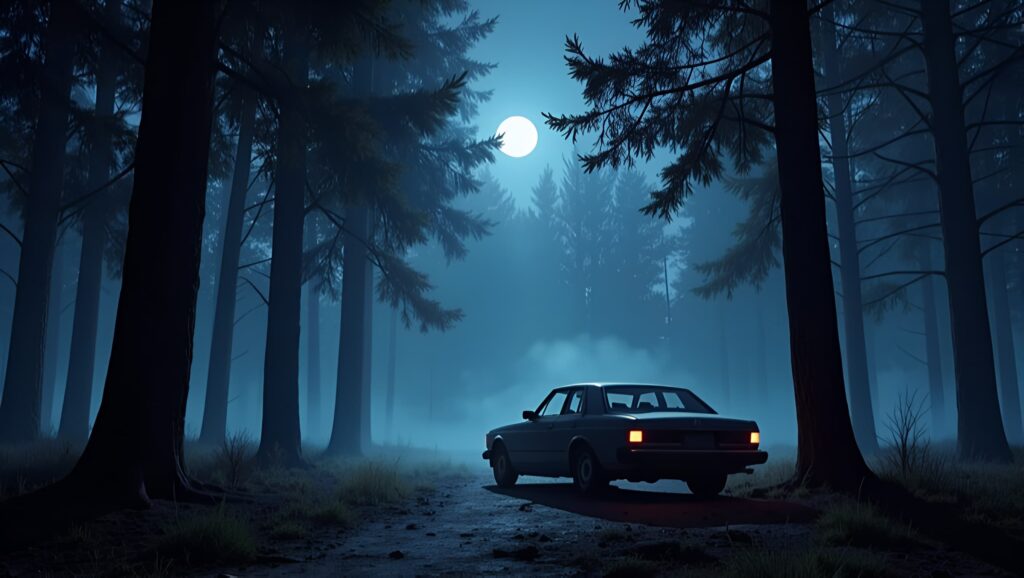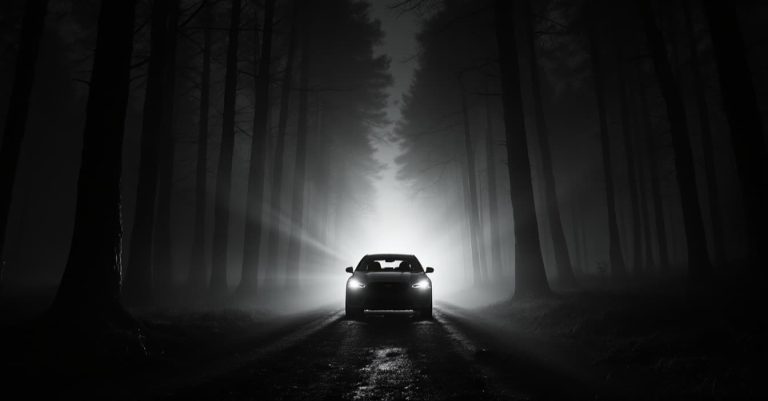

Passenger 2026 Ending Explained: know that feeling when you’re driving down a dark, empty road at night and your brain just… starts inventing shapes in the darkness? André Øvredal built an entire movie around that exact feeling, and honestly, it works. If you just walked out of “Passenger” wondering what actually happened in that final stretch of highway, you’re in the right place. Let’s break it down.
Heads up, Spoilers Alert: Look, I’m about to break down every single major twist, death, and detail of the ending. If you haven’t seen the movie yet, turn back now. Don’t ruin the fun for yourself, and definitely don’t blame me later. You’ve been warned!
So What Is Passenger Actually About?
Before we get into the ending, a quick refresher, because the setup matters for understanding why things play out the way they do. Tyler (Jacob Scipio) and Maddie (Lou Llobell) are a young couple who ditch their old lives in favor of the “van life” dream: no jobs, no lease, just the open road. Six weeks into the trip, they witness the aftermath of a horrific crash involving two friends, Daniel and Lucas. Daniel is already dead. Lucas is barely holding it together. And neither of them realizes it yet, but they didn’t just witness a tragedy. They picked up a passenger.
Not literally, at first. But soon enough, three claw marks start showing up on their van, the fruit inside starts rotting way too fast, and Maddie starts noticing a figure that shouldn’t be there. That figure is the entity the film names simply as “the Passenger,” played by Joseph Lopez, and it’s tied to an old piece of religious folklore involving St. Christopher, the patron saint of travelers. As the legend goes, this demon once disguised itself as a monk and walked alongside the saint himself, until it recoiled from a roadside cross and gave itself away.
That backstory becomes crucial once Tyler and Maddie realize they can’t outrun this thing. They can only out-maneuver it, and maybe, if they’re lucky, end it.
Worth noting too: Maddie doesn’t just stumble onto this information by accident. She actually pieces a lot of it together herself, first through a dashcam clip from Lucas’s crashed car that shows a figure sitting beside him before he died, and later through research once she realizes other travelers have vanished under the same circumstances, always preceded by those same three claw marks. That groundwork matters, because it turns Maddie into the character actively solving the mystery rather than just reacting to it, which pays off big time once we get to the ending.
Who Are Daniel and Lucas, and Why Does the Movie Open With Them?
Before we even meet Tyler and Maddie properly, “Passenger” opens on two guys you’ll never see again after the first act: Daniel and Lucas. They’re driving late at night, cracking jokes, doing the exact thing every horror-savvy viewer knows not to do, which is stop on a dark road for no good reason. Lucas needs a bathroom break. Daniel waits in the car. And when Lucas comes back, Daniel is gone, the horn is blaring, and the doors are hanging open with three claw marks slashed into the trunk.
It’s a classic cold open, sure, but it’s doing real narrative work. Daniel’s death, and Lucas’s subsequent crash later on when Tyler and Maddie find him, establishes the Passenger’s core rules before the main characters even understand what they’re dealing with: it targets people who stop, it marks its territory with those three scratches, and it doesn’t let go once it’s attached itself to someone. By the time Tyler and Maddie stumble onto Lucas’s wreck, they’ve unknowingly inherited a problem that already killed two people before them.
Who Is Diana, and Why Does Her Death Matter?
Diana, played by Melissa Leo, is the film’s Cassandra figure, the seasoned traveler who’s seen this kind of trouble before and tries to warn the younger couple before it’s too late. She gives them the rules that govern the Passenger’s behavior and eventually the location of a hidden church dedicated to St. Christopher, one that isn’t on any conventional map.
Here’s the thing about Diana, though: helping Tyler and Maddie costs her everything. The Passenger kills her almost immediately after she points them toward salvation. It’s a rough scene, and it sets the tone for the back half of the movie, nobody who tries to do the right thing here gets rewarded for it. Except, as it turns out, Diana’s sacrifice isn’t wasted. The coordinates she hands over become the entire reason Tyler and Maddie have anywhere left to run to.
What’s the Deal With the Roman Holiday Scene?
Quick detour, because you can’t talk about this movie without bringing up its best sequence. Midway through the film, Tyler sets up a projector so the two of them can watch “Roman Holiday” together, a sweet, low-key attempt at normalcy in the middle of all this chaos. It doesn’t stay sweet for long. The Passenger shows up behind the screen, and Maddie ends up using the still-running projector light in a desperate attempt to actually see the thing chasing them.
It’s the kind of sequence that critics singled out specifically. Roger Ebert’s review called out the film’s set-piece work as its strongest asset, and this scene is the clearest example why. It’s inventive, it’s genuinely tense, and it uses an ordinary object, a projector, as both a source of comfort and a survival tool. That’s smarter filmmaking than lot of modern horror bothers with, and it’s a big reason the movie’s reputation has held up even amid a fairly mixed overall critical reception.
The Rules of the Passenger, Explained
One thing that separates a good supernatural horror movie from a forgettable one is whether its monster actually plays by rules, and “Passenger” clearly wants you paying attention to its own internal logic. Diana lays out the playbook fairly early, and it’s worth spelling out plainly, because it’s the framework the entire back half of the film operates on:
- Don’t drive at night unless you absolutely have to. The Passenger’s attacks escalate once the sun goes down, and nearly every major set piece in the film happens after dark.
- Never stop on an empty road. Daniel and Lucas break this rule in the opening minutes, and it costs Daniel his life almost immediately.
- Follow the hobo road symbols. These old traveler markings, historically used to flag danger or safety along a route, become Tyler and Maddie’s actual GPS once their satellite navigation stops being reliable.
None of these rules are just flavor text. They’re the reason Tyler and Maddie survive as long as they do, and the moments where the couple breaks one, like getting caught driving after dark without realizing it, directly trigger some of the film’s worst scares. If you’re rewatching “Passenger,” track how closely the plot mechanics follow this rulebook. It holds up better than you’d expect from a studio horror movie.
What Is “Burning Van,” and Why Does It Matter?
Early in the film, Tyler and Maddie stop at a gathering of fellow van-lifers that the movie somewhat cheekily calls “Burning Van,” a clear riff on Burning Man culture. Roger Ebert’s review flagged this as one of the places where Maddie’s growing disillusionment with the van-life lifestyle really starts to surface, since it’s here that she becomes visibly less enamored with sleeping in parking lots and showering at 24-hour gyms while everyone around her still seems to be buying the fantasy.
That gathering isn’t just a pit stop for comic relief, either. It’s where Maddie first spots an insignia that resembles the claw marks left on the earlier victims’ cars, giving her the first real thread to start pulling on. In other words, the one moment in the film that pokes fun at van-life culture is also the moment that kicks off Maddie’s entire investigation into what’s actually hunting them.
The Final Stretch: What Happens on the Way to the Church?
Once Diana is gone, the film shifts into a pure survival chase. Tyler and Maddie use hobo road symbols, an old system of markings historically used by travelers to flag danger or safety, to navigate toward the church while the Passenger throws everything it has at them. At one point it crushes Tyler’s leg underneath the van while he’s trying to change a flat tire. At another, it grabs Maddie and drags her off entirely, forcing Tyler to go find her in the aftermath of what looks like another accident scene.
The Passenger even tries impersonating Tyler at one point, banking on Maddie’s exhaustion and fear to trick her into trusting the wrong figure. She isn’t fooled the headlights from the real van give away the deception just in time. It’s a smart beat because it reinforces something the whole movie has been building toward: this entity doesn’t just attack physically, it preys on doubt and isolation. Every rule Diana gave them exists because the Passenger thrives in the gaps where people stop trusting each other.
How Does Passenger End?
Here’s the moment you’re actually here for. In the climax, Tyler gets pulled from the van by the Passenger. Maddie, alone behind the wheel now, doesn’t freeze. She keeps driving, and in the film’s most decisive beat, she rams the van straight into a statue outside the church, impaling the Passenger on it and killing it in the process.
That detail matters more than it might seem at first glance. Throughout the film, the Passenger is shown to be a physical, vulnerable thing despite how supernatural it seems, and its death confirms that. This isn’t a curse that simply fades away or retreats into folklore. It gets destroyed, and it gets destroyed because Maddie makes an active choice under pressure rather than just surviving passively.
Tyler is reunited with Maddie shortly after, and emergency vehicles arrive at the church, which is now on fire. Given everything that leads up to it, that’s a genuinely relieving beat. Tyler survives the ordeal. Maddie survives the ordeal. And in the film’s closing gesture, Maddie puts her engagement ring back on, a small but pointed callback to Tyler’s proposal earlier in the story, before any of this horror started.
Wait, Does Tyler Actually Die?
If you’ve seen chatter online suggesting Tyler sacrifices himself and dies in the final scene, or that the ending leaves things unresolved with the Passenger simply “moving on” to a new victim, that’s not what the reviewed, sourced version of the film’s plot supports. According to the film’s own plot record and multiple critic reviews from its theatrical release, Tyler survives being pulled from the van, and the Passenger meets a definitive end when Maddie impales it on the statue. There’s no epilogue scene of Maddie encountering fresh claw marks on a stranger’s car weeks later. That kind of “the horror never really ends” beat makes for a compelling pitch, sure, but it’s simply not the ending Øvredal delivered.
Why the confusion? Ending Explained content around new horror releases moves fast, and not every source doing the explaining actually watched the same cut of reality the rest of us did. When you’re fact-checking a twisty ending like this one, it pays to cross-reference against actual reviews from outlets that covered the theatrical release, not just recap sites racing to publish first.
What Does the Ending Actually Mean?
So if Tyler and Maddie both make it out, and the demon is dead, what’s actually the takeaway here? A few things stuck with me.
The Relationship Angle
Start with the relationship angle. Roger Ebert’s review pointed out that the film’s real hook lies in its set-piece sequences rather than its central romance, and yeah, fair; Tyler and Maddie aren’t the most complex couple you’ll see in a horror movie this year. But stick with their arc and it does land somewhere meaningful by the end. They started this journey chasing an aesthetic, the whole “escape the grind, live free in a van” fantasy that’s all over social media right now, and you can watch Maddie souring on that fantasy well before the Passenger ever enters the picture, back at the Burning Van gathering where the cracks in the lifestyle start showing. The Passenger just grabs that existing disillusionment and weaponizes it. By the time the credits roll, what’s left isn’t the dream of van life. It’s just the two of them, having survived something together that neither could have survived alone, and honestly, that’s a more honest ending than watching them drive off into another sunrise still chasing the same fantasy.
The St. Christopher Connection
Then there’s the St. Christopher thing, which does a lot of quiet work you might not clock on a first watch. Remember Tyler’s necklace, the one Maddie teases him about in favor of her GPS? That’s not just a cute character beat. The whole mythology hinges on a saint associated with protecting travelers, and a demon that specifically corrupted that protection centuries ago. Tyler holding onto that piece of faith, even casually, is exactly why the church ends up being the couple’s actual salvation instead of just a convenient plot destination.
Deliberate Restraint
And one more thing worth flagging: IndieWire’s review made a good point about how the film doesn’t overload itself with mythology. Øvredal keeps information about the Passenger deliberately sparse. You get just enough folklore to understand the rules of engagement, and the rest is left to atmosphere, headlights, and dread. Honestly, that restraint might be the smartest choice in the whole script: a fully-explained demon is rarely as scary as one you only half understand.
How Does the Performance Work Fit Into All This?
Here’s something that gets a little lost in the ending discourse: the ending only lands because of what Lou Llobell and Jacob Scipio build up to it. Maddie starts the film as the more grounded of the two, teasing Tyler for putting his faith in an old necklace instead of a GPS, and gradually becomes the one who has to make the single most decisive move in the entire movie. Tyler, meanwhile, spends most of the back half physically compromised, dragged, crushed, and impersonated, which strips away a lot of the typical “hero saves the day” horror-movie playbook.
That inversion matters. By the time Maddie is the one behind the wheel making the killing decision, ramming the van into that statue, it doesn’t feel like a random plot mechanic. It feels like the film has been quietly building her into that role the entire time, starting with her skepticism back in the Brooklyn apartment and ending with her making the one choice that actually gets both of them out alive.
How Does This Fit Into André Øvredal’s Other Horror Movies?
If you’re coming to “Passenger” as a fan of Øvredal’s earlier work, like “The Autopsy of Jane Doe” or “The Last Voyage of the Demeter,” the ending should feel familiar in spirit even if the setting couldn’t be more different. Here’s his whole thing: trap a small group of characters somewhere they can’t easily leave, a morgue, a cursed ship, and now an endless highway, and let the dread build through atmosphere instead of gore. In Review Online’s take on the film pointed out that his prior movies have struggled to fully clear a certain critical or cultural bar, and honestly, “Passenger” doesn’t totally break that pattern when it comes to mythology or story depth.
But here’s what it does do well: it hands Øvredal his most kinetic setting yet. A morgue and a ship are still just settings. A moving highway feels closer to a character in its own right, and you can feel that shift in how the ending plays out. Unlike a haunted ship, where you can eventually just get off, the open road gives Tyler and Maddie nowhere fixed to escape to, only one specific destination they have to reach before the Passenger catches up. That’s probably why this ending feels more earned than a simple “they escaped the haunted place” wrap-up would have.
Is the Ending Satisfying?
That depends on what you’re looking for. If you wanted a nihilistic “nothing was ever going to save them” gut-punch, this isn’t that movie. What you get instead is a fairly classic horror structure: characters face escalating stakes, lose an ally along the way, and come out the other side scarred but alive. In Review Online’s take on the film noted that Øvredal doesn’t manage to craft a particularly unforgettable story here, but does deliver a well-paced, thrillingly scary ride and that assessment tracks with how the ending plays. It’s not groundbreaking. It is, however, a competent, earned conclusion to the specific kind of movie “Passenger” set out to be.
Critically, the film landed a mixed reception overall, sitting at 47% on Rotten Tomatoes from 79 critics and a 52 on Metacritic, with audiences grading it a B- on CinemaScore. None of that is a disaster, and none of it is a triumph either. It’s the kind of reception that tends to follow a horror movie with a handful of genuinely great scenes surrounded by a story that doesn’t push especially hard into new territory.
Could There Be a Sequel?
As of now, there’s no confirmed sequel or follow-up project attached to “Passenger.” Given the film’s mixed-but-not-bad critical reception and its box office performance, whether Paramount pursues a continuation will likely come down to how the film performs across its full theatrical run and beyond. The mythology around the Passenger and St. Christopher’s history does leave some doors open narratively, but nothing officially points to a second installment right now.
Final Conclusion
”Passenger” isn’t trying to reinvent supernatural horror, and it doesn’t need to. What it delivers is a tight, tense ride built around a genuinely unsettling antagonist and a couple of standout set pieces, including that unforgettable “Roman Holiday” projector scene. The ending gives you exactly what a movie like this should: real stakes, a real cost, and a real reason to feel like the characters earned their survival.
Would you have stopped at that crash site?
About the Author.
Hi, I’m Vansh, the founder of Vibe On Cue. I track the absolute best ways to experience cinema, from the biggest Hollywood Blockbusters and upcoming release dates to the finest details of PVOD & Streaming and pristine Blu-ray & 4K physical media. And when the credits roll, I break down the narrative with deep-dive Ending explained guides. If you live for the full life cycle of film, stick around and explore the site!!!