
Vicious Ending Explained: There’s a very specific kind of dread that has nothing to do with monsters. It’s the dread of someone showing up at your door with a favor you can’t say no to. Maybe it’s a relative who needs “just one thing.” Maybe it’s a coworker who “just needs five minutes” that becomes an hour. You already know, standing there with your hand on the doorknob, that saying yes is going to cost you something you can’t get back. Bryan Bertino’s Vicious takes that exact feeling and turns it into a hundred minutes of supernatural torment, and the ending is where all that dread finally gets an answer, even if it’s not the one you were hoping for.
If you’ve just finished the movie and you’re sitting there trying to piece together what actually happened to Polly, what the box wants, and what that final scene with Tara actually means, this breakdown is for you. We’re going deep on the plot, the characters, the visions, and the ending itself, plus a few angles on what it might all mean that go beyond the one quote from the cast that’s been floating around online.
Heads Up: We are jumping straight into the deep end of the plot twists now. If you hate spoilers, close your eyes and turn back. (Or, you know, go watch the movie and come right back)!
TL;DR, Quick Key Takeaways
Polly completes all three of the box’s demands: a cross necklace (something hated), her own severed finger (something needed), and a lock of her niece’s hair (something loved).
Even after all three sacrifices are accepted, the box still won’t let her go, the hourglass keeps running.
Realizing compliance alone isn’t enough, she forces the box onto Tara, her sister’s neighbor.
Returning home, Polly is attacked by the old woman who first gave her the box, and kills her in self-defense.
Polly reunites safely with her family, but the film closes on Tara, whose parents are now dead and whose fingers are missing too, suggesting the cycle has simply found its next victim.
Quick Recap: What Is Vicious About?
Polly is a woman in her thirties who’s stuck. Her job isn’t going anywhere, she’s behind on a return to school she keeps talking herself into and out of, and she’s renting a house from her own sister, Lainie, whose daughter Polly clearly adores. She’s not a bad person. She’s just someone who’s been coasting for a while, and the world is about to stop letting her.
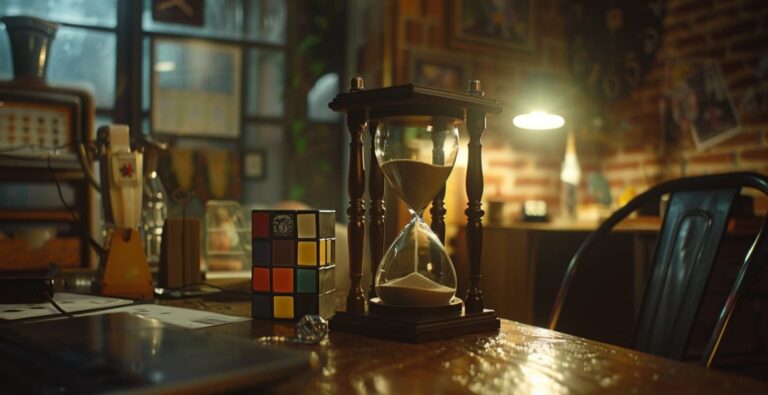
An elderly woman shows up at her door one afternoon. She’s missing two fingers. She’s calm in a way that immediately reads as wrong. And she hands Polly a small wooden box with an hourglass built into it, along with a set of rules that sound almost like a children’s riddle until you realize she’s completely serious: Polly has until the sand runs out to place three things inside the box. Something she needs. Something she hates. Something she loves. If she doesn’t, she dies that night.
What follows is less a monster movie and more a pressure chamber. Polly spends the rest of the film trying to figure out what those three categories even mean for her life, while the box (and whatever is attached to it) makes sure she suffers for every wrong guess. Apparitions show up in mirrors and hallways. People she trusts start behaving like strangers. Her own home turns into something closer to a haunted confession booth than a house.
What Does the Box Actually Want?
This is the part that trips a lot of viewers up, because the box isn’t looking for objects in any literal sense. It’s looking for sacrifice, and it’s specifically interested in the sacrifices that hurt the most because they’re tangled up in each other. The “something you need” isn’t a want, it’s closer to a dependency. The “something you hate” isn’t a simple annoyance, it’s something Polly has been avoiding facing about herself. And the “something you love” is exactly what it sounds like, which is the whole point: it’s not supposed to be easy.
The genius of the setup is that Polly can’t just pick three random items and call it a day. The box seems to know when she’s lying to it, or lying to herself, which amounts to the same thing here. Every failed attempt escalates the visions and the physical toll on her body, until the categories stop being abstract puzzle pieces and start being an inventory of everything she’s been avoiding about her own life. That’s really what the movie is doing under the horror trapping: forcing a woman who’s been quietly stalling out to take honest stock of herself, at knifepoint, with an hourglass counting down.
The Visions: How Much of This Is Real?
A fair chunk of Vicious takes place inside Polly’s head, or at least in a space where reality and hallucination blur together enough that you stop trying to draw a hard line between them. She sees versions of people who love her acting cruel. She experiences violence that seems to leave no mark once the scene is over. She’s confronted with versions of herself, and versions of her past, that feel less like ghosts and more like an audit.
The movie is smart about not over-explaining this. It never sits you down and says “this next scene is a hallucination, that one was real.” Instead it trusts you to feel the difference in tone, and more importantly, it doesn’t really want you to draw a clean line at all. The horror isn’t “is this real,” the horror is “it doesn’t matter, because it hurts either way, and it’s changing her either way.”
That’s a much more honest depiction of what psychological unraveling actually feels like from the inside than most horror movies bother with. When you’re in the middle of a genuine crisis, the line between “this is actually happening” and “this is what my mind is doing to me” stops being useful information. You’re just trying to survive the night.
Breaking Down the Ending
By the time Polly gets close to the deadline, she’s already tried and failed more than once. Her offerings escalate as the box rejects anything half-hearted, until she finally gives it a cross necklace pulled from her late father’s belongings, offered up as “something she hates” since she’s resented religion since losing him to cancer. For “something she needs,” she first cuts off her own pinky toe, but the box rejects it; only when she also cuts off her index finger, mirroring the old woman’s own missing fingers, does the box accept it. For “something she loves,” she offers a lock of her niece Aly’s hair.
Here’s the twist: completing all three sacrifices still isn’t enough. The hourglass keeps running even after the box accepts everything Polly gives it. That’s what makes her realize the only real way out is passing the box on to someone else, the same way it was passed to her.
Believing that’s her only option, Polly goes to Tara, her sister Lainie’s neighbor, and forces the box on her despite Tara’s objections. Returning home, Polly is attacked by the old woman who first delivered the box, and Polly kills her in self-defense during the struggle. It’s a brutal, unglamorous end for a character who spent the whole film radiating an eerie calm, and it makes clear that surviving one night with this box doesn’t mean anyone walks away clean.
Polly reunites with Lainie and Aly, both alive and safe, along with the neighbor she’d earlier feared was killed, in a moment that plays as genuine relief after everything she’s been through. But the film’s final scene shifts to Tara’s house. Her parents are now dead and several of her own fingers are missing, echoing exactly what happened to Polly and to the old woman before her. It’s left deliberately unclear whether Tara’s ordeal has any real end in sight.
Is Polly Actually Free at the End?
Not in any tidy sense, no. She survives, but not by beating the box outright. She completes every sacrifice it demands, and the box still doesn’t let her go, the hourglass just keeps running. Her real way out isn’t compliance, it’s passing the ordeal on to someone else entirely. That’s a much bleaker kind of survival than a clean victory over a monster. She’s alive and reunited with her family, but she’s also killed a woman, mutilated herself, and forced her own nightmare onto Tara to make it happen.
It’s worth comparing this to how the old woman appeared at the start of the film: calm, unhurried, clearly familiar with her role in all of this by the time she reaches Polly’s door. Given what Polly has now done to survive, and what the film shows happening to Tara in its closing scene, “freedom” was probably never really on the table as an option for anyone the box gets its hands on. What Polly’s earned instead is survival, at a cost that isn’t fully tallied by the time the credits roll.
Why Does Polly Give the Box to Tara?
This is arguably the most uncomfortable choice in the whole film, and it’s meant to be. Polly doesn’t stumble into this decision lightly, and Tara doesn’t accept it willingly, either. Polly goes to Tara, her sister Lainie’s neighbor, and pushes the box onto her over her objections, which strips away any comforting read of Polly as a purely sympathetic victim by this point in the story. It’s less a betrayal born out of malice and more a demonstration of how the entire system perpetuates itself: whatever this box actually is, it doesn’t disappear once someone completes its demands, it just needs a new target, and Polly becomes the one delivering it, exactly like the old woman did to her.
Notice, too, that Tara isn’t a stranger picked entirely at random. She’s someone in Polly’s own extended orbit, living next door to her sister, which sharpens the discomfort considerably. The film isn’t just saying that this burden gets passed to someone; it’s specifically choosing to pass it to someone close to Polly’s own family, which makes her choice feel less like an abstract rule of the universe and more like an active, if desperate, decision with real consequences attached to it.
What Happened to the Old Woman?
The elderly woman who delivers the box to Polly at the start is never given a full origin story, but she isn’t simply a one-scene messenger, either. She returns later in the film, visibly brutalized herself, and tells Polly the box won’t release its grip until Polly is dead. What follows is a genuinely violent confrontation, ending with Polly killing her in self-defense. It’s an uncomfortable death for a character who spent most of the film radiating an unnerving calm, and it complicates any easy reading of her as a simple villain; she’s as much a victim of the box’s demands as Polly is, just further along in the process.
Her missing fingers, visible from her very first scene, deserve a second look in hindsight. They read as physical proof that surviving the box leaves a permanent mark, whether literal or symbolic, and directly foreshadow what Polly herself is later forced to do to satisfy the box’s own demands. It’s a small detail, easy to miss on a first watch, but it quietly reinforces the idea that nobody comes out of this process unchanged, even years or decades after their own turn with the box.
The Themes Underneath the Horror
Vicious works on more than one level, and it’s worth walking through a few of them rather than flattening the whole film into a single message, because Bertino is clearly juggling several ideas at once.
Stagnation and forced growth. Polly spends the first act of the film in a kind of suspended animation: a job she’s checked out of, a return to school she keeps delaying, a house she’s renting instead of building anything permanent. The box doesn’t just threaten her life, it forces a reckoning with everything she’s been putting off. By the time she survives, she’s been through something that functions almost like an incredibly violent version of hitting rock bottom and being forced to actually look at your life. It’s not subtle, but horror rarely is, and that’s part of its appeal.
Most people know what it feels like to keep circling the same unfinished decision for months, telling themselves there’s still time to sort it out later. Vicious takes that very familiar, low-grade anxiety and turns the clock into something you can literally watch draining away in an hourglass, which is precisely why the metaphor lands even for viewers who’ve never faced anything close to Polly’s supernatural circumstances.
Cycles that don’t break, they just relocate. This is where the box-passing structure does its heaviest lifting. The old woman had it, now Polly has it, now Tara has it. Nobody in this chain gets to simply opt out; they can only survive their turn and move the burden along. It’s not unlike watching debt, bad habits, or unresolved family patterns get inherited by whoever’s closest when nobody stops to actually deal with them instead of just surviving and passing them on.
If you’ve ever watched a difficult pattern repeat itself across a family, a friend group, or a workplace, where the specific person suffering changes but the underlying dynamic never actually resolves, this structure will feel uncomfortably familiar. The film isn’t interested in offering an escape hatch from that cycle. It’s interested in showing you how convincingly it perpetuates itself.
The unreliability of your own perception under pressure. Because so much of the film blurs hallucination and reality, it’s also quietly making a point about how distorted your judgment gets when you’re under enough stress and fear. Polly can’t always tell what’s actually happening around her, and neither can we. That’s not a cop-out on the film’s part, it’s the whole idea: extreme pressure warps perception, and the movie forces you to feel that warping alongside her instead of just being told about it.
Small, specific horror over sprawling mythology. Unlike a lot of modern horror that wants to build out an entire cinematic universe of lore, Vicious keeps its scope tight. One box, one house, one night, one woman. The horror doesn’t need a bigger explanation to work, and honestly, the film’s decision to withhold a fuller mythology is a big part of why the dread sticks around after the credits roll. Some fears get worse the less you understand about them.
Where Vicious Fits in the “Passed-Down Curse” Horror Lineage?
Horror has always had a soft spot for curses and objects that move from person to person instead of simply ending with one victim. Think of chain-letter horror premises, or films built around an object that keeps finding new hands to land in. What makes Vicious stand apart from a lot of those is how little it cares about explaining the rules of its own universe. Most “passed-along curse” horror wants to eventually give you a mythology: an origin, a set of governing laws, maybe a way to break the cycle for good. Bertino deliberately withholds almost all of that here.
You never learn where the box came from, who built it, or why it operates on the specific logic of need, hatred, and love. You don’t get a scholar character explaining the history of it in a dusty book, and there’s no ritual that could theoretically end the cycle for everyone at once. The film keeps its scope claustrophobically small: one house, one night, one woman, and then one more house, one more night, one more person.
That restraint is a genuine strength. The less a film explains about the “why,” the harder it becomes to talk yourself out of being unsettled by it, because there’s no comforting logic to hide behind. You’re just left with the fact that it happened to Polly, and now it’s happening to Tara, and the pattern shows no sign of running out of people.
It’s also worth noting how the film resists the temptation to make its box a straightforward metaphor for one single issue. A lot of modern horror leans hard into “this monster is really about grief” or “this haunting is really about addiction,” and wraps the whole film around that one idea. Vicious touches grief, self-neglect, control, and inherited dysfunction all at once without picking a single one to hammer home. That’s part of why it holds up to multiple readings instead of collapsing into one obvious lesson the moment the credits roll.
Character Breakdown
Polly. She starts the film adrift, and by the end she’s been forced into a version of decisiveness she never had before. Whether you read her survival as empowering or simply a temporary reprieve, her arc is the emotional spine of the entire movie, and Dakota Fanning carries almost the entire runtime largely by herself, which is no small task in a film this psychologically dense. What makes Polly work as a lead is that she’s never written as unusually weak or unusually strong going in; she’s ordinary in a way that makes the ordeal feel like it could land on anyone.
That’s arguably more unsettling than if she’d been given some specific flaw that “explains” why the box picked her. The film resists that kind of narrative justice. Bad things happening to Polly aren’t a punishment for anything she did; they’re closer to a random, brutal test that happens to catch her mid-stagnation, which is exactly why her small, hard-won moments of clarity by the end land as genuinely earned rather than convenient.
Tara. Introduced late as Lainie’s neighbor, Tara becomes the film’s final gut-punch. The closing scene reveals her parents dead and several of her own fingers missing, mirroring exactly what happened to the old woman and to Polly, and confirming she’s now trapped in her own version of the same nightmare.
What the Ending Means for a Potential Sequel?
The film leaves its door open on purpose. According to ScreenRant, Bertino has described this as one of his more optimistic endings despite how bleak it plays on screen, which tells you something about how he’s thinking about the mechanics of this story going forward. There’s no confirmed sequel as of now, but the structure practically writes its own follow-up: a new bearer of the box in Tara, and the same impossible math waiting for her that Polly just survived. Whether or not that follow-up ever gets made, the ambiguity works on its own terms as a closing note.
If a follow-up does happen, the most interesting version wouldn’t necessarily center on Polly at all. Tara’s story, picked up right where this film leaves off, might actually be the more compelling direction, since she’d be starting from a place of trauma rather than the low-grade stagnation Polly began with. Watching how someone who’s already lost so much handles a second round with the box could push the premise somewhere genuinely new instead of simply repeating Polly’s journey with a different name attached.
Should You Rewatch It With This in Mind?
If you’ve already seen Vicious once and you’re now armed with a clearer sense of the ending, it’s worth revisiting the film’s opening act specifically. Polly’s early interactions, the calls she’s ignoring, the way she talks about her sister and niece, the small details about her stalled-out life, read very differently once you know what she’s about to be forced to confront. A lot of horror movies reward a second viewing because you catch a jump scare you missed. This one rewards a second viewing because you start noticing exactly how much of Polly’s ordinary life was already quietly falling apart before the box ever showed up.
Pay close attention as well to Polly’s confrontation with Tara near the end. On a first watch, the desperation in that scene mostly reads as Polly’s panic. Knowing what happens to Tara by the film’s final shot, that same scene carries a much heavier weight the second time around, worth sitting with before the credits roll on your rewatch.
If you’re interested, you can check out our Obsession ending explained!
Wrapping It Up
Vicious isn’t interested in giving you a tidy monster to root against or a clean moral to walk away with. It’s a film about what happens when an ordinary, stalled-out life gets forced into a genuine reckoning, and it refuses to let that reckoning end with a simple win. Polly survives, but survival here comes bundled with an uncomfortable cost: she becomes the next link in a chain she didn’t choose to be part of.
That’s a harder note to sit with than a straightforward jump-scare ending, and it’s exactly why the film has stuck with so many viewers well past the credits. Whether you read the ending as bleak, quietly hopeful, or some uneasy mix of both, Vicious earns its ambiguity rather than stumbling into it, and that’s what makes it worth the rewatch.
FAQ: Most Googled Questions; Answered!
Does Polly die at the End of Vicious?
No, Polly survives, though completing all three sacrifices isn’t enough on its own, she only escapes by passing the box on to someone else.
What happens to Tara in Vicious?
Polly forces the box onto Tara, her sister’s neighbor, after Tara refuses; the final scene reveals Tara’s parents dead and several of her own fingers missing.
What do the three things in the box actually represent?
A cross necklace for something hated, her own severed finger for something needed, and a lock of her niece’s hair for something loved, each accepted only once Polly stops holding back.
Is the ending of Vicious happy or sad?
It’s mixed: Polly survives and reunites with her family, but only after killing the old woman and forcing her own ordeal onto Tara.
Is there a sequel to Vicious?
No sequel is confirmed yet, but the ending’s open structure, especially Tara’s fate, leaves plenty of room for one.
Who is the old woman in Vicious?
She’s the one who delivers the box to Polly, and she later attacks Polly, who kills her in self-defense during the struggle.
Why doesn’t Polly just refuse to take part or destroy the box?
Completing the box’s demands turns out not to be enough on its own; the only real way out the film shows is passing it on to someone else.
What does the ending of Vicious set up for Tara?
The final scene shows Tara’s parents dead and her own fingers missing, suggesting she’s now trapped in the same cycle Polly just escaped.
About the Author.
Hi, I’m Vansh, the founder of Vibe On Cue. I track the absolute best ways to experience cinema, from the biggest Hollywood Blockbusters and upcoming release dates to the finest details of PVOD & Streaming and pristine Blu-ray & 4K physical media. And when the credits roll, I break down the narrative with deep-dive Ending explained guides. If you live for the full life cycle of film, stick around and explore the site!!!