
When Australian directors Danny and Michael Philippou unleashed Talk to Me via A24 in 2023, they didn’t just deliver a box-office sleeper hit; they fundamentally re-engineered the modern possession subgenre for a new generation of filmgoers. Born from their chaotic, boundary-pushing roots as high-energy YouTube creators under the moniker RackaRacka, the filmmaking duo deliberately bypassed generic Hollywood horror clichés and cheap parlor tricks to craft something intensely visceral, modern, and profoundly bleak.
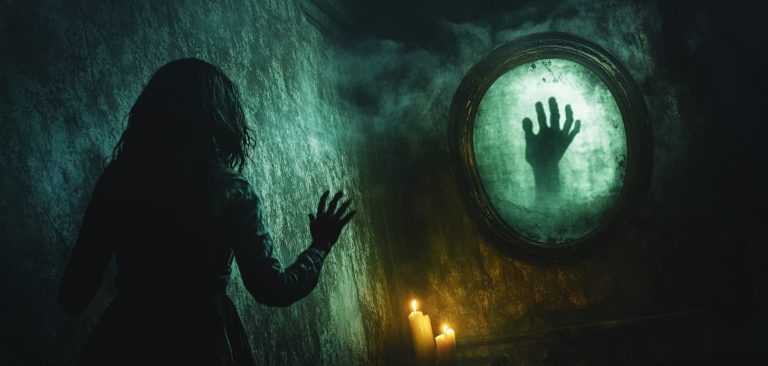
At the absolute center of the film’s terror is a viral party trend, a disturbing parlor game involving a disembodied hand, that serves as a thinly veiled, uncompromising metaphor for adolescent substance abuse, thrill-seeking youth culture, and extreme emotional escapism. But beneath the kinetic editing, shocking bursts of violence, and bone-chilling practical makeup effects lies a deeply psychological look at how unaddressed trauma and isolating grief make a human being prime prey for opportunistic spiritual predators.
The film’s final sequence is widely regarded by critics and audiences alike as one of the most brilliant, tragic, and unyielding horror finales of the 21st century, sparking endless debates across the internet. It point-blank refuses to offer a clean, comforting resolution or a traditional redemptive arc, ending instead on a note of pure, pitch-black cosmic irony that mirrors the cyclic nature of self-destruction. In this comprehensive Talk to Me Ending Explained, we will strip down and deconstruct the cruel mechanics of the mysterious embalmed hand, trace the systematic psychological dismantling of the film’s vulnerable protagonist, Mia (Sophie Wilde), and thoroughly break down the terrifyingly predatory rules that govern the film’s multi-layered spiritual ecosystem.
Heads up: Massive, unfiltered spoilers ahead for the entire movie. If you haven’t experienced the absolute, anxiety-inducing chaos of this movie yet, do yourself a favor and watch it before reading any further. You’ve been warned!
The Embalmed Hand: A Predatory Object Feeding on Vulnerability
While Talk to Me leaves the deep, ancient historical origins of its centerpiece object shrouded in terrifying mystery, the fragmented lore dropped throughout the narrative establishes a clear, sinister operational baseline. The ceramic-encased hand is rumored to have been severed from either a powerful medium or a satanist, who possessed the unique ability to bridge the impossible gap between the living and the dead, and its dark occult properties remain fully active and potent long after its original owner’s violent demise. Crucially, the hand does not operate like a passive, inanimate magical artifact bound by rigid, fair rules; it behaves like an active, conscious apex predator disguised as a modern, viral party game designed to entice reckless teenagers. It requires an active invitation to strike, making the victims entirely complicit in their own gradual undoing.
The hand explicitly alters its internal interaction with individuals based entirely on their underlying psychological state and emotional stability. For the stable, well-adjusted, and mentally secure teenagers who partake in the ritual at high school parties, the brief possession acts as a temporary, surface-level adrenaline rush, a thrilling, hyper-stimulated brush with the macabre that leaves behind no lasting spiritual or psychological scars. However, for individuals carrying deep-seated grief, unaddressed guilt, or isolating everyday loneliness, the hand acts as a permanent, volatile gateway through which malicious entities can anchor themselves to the physical realm. Mia, who is still deeply mourning the ambiguous death of her mother and completely estranged from her emotionally distant father, represents the absolute perfect target for this invasive spiritual infestation.
Mia’s Fractured Psyche: The Ideal Host Before the Ritual Begins
Long before Mia ever grasps the cold, ceramic-covered hand, her internal psychological state is already deeply fractured, leaving her spiritually compromised and vulnerable from the opening frame of the movie. Her mother’s sudden, unexpected death from an apparent accidental prescription overdose has left her trapped in an agonizing, unresolved loop of profound grief, chronic confusion, and subconscious guilt. Incapable of communicating with her father, Max, who secretly hides the definitive truth of the suicide note from her in a misguided attempt at protection, Mia completely detaches from her biological home life. Instead, she attempts to emotionally implant herself into the domestic household of her best friend, Jade, and Jade’s younger brother, Riley, seeking the structured warmth and unified family dynamic she desperately craves but cannot articulate.
This desperate state of emotional displacement and intense longing creates a massive psychological blind spot that the wandering spirits immediately recognize and ruthlessly exploit. The embalmed hand does not rely on brute supernatural force to break into Mia’s life; rather, it seduces her by offering an intoxicating, immediate sense of connection and profound understanding that she cannot find among the living. The malicious entities behind the veil whisper exactly what a grieving, isolated child wants to hear, mirroring familiar maternal affection to completely bypass her rational defenses. Mia’s intense, starving craving for emotional validation becomes the primary internal engine of her own destruction, causing her to mistake predatory spiritual manipulation for a comforting, healing connection to the afterlife.
The Rules of Engagement: Thrill-Seeking and the Metaphor of Addiction
The Philippou brothers deliberately structure the specific occult mechanics of the hand to mirror the real-world behavioral cycles of substance abuse, peer pressure, and modern party culture. To initiate the supernatural high, a user must light a single candle to open the door, bind themselves securely to a chair to prevent physical harm, grasp the hand firmly, and utter the phrase, “Talk to me,” followed immediately by, “I let you in.” This two-step verbal and physical contract explicitly surrenders personal agency, allowing a random, wandering lost soul from the dark to take complete, instantaneous control of the user’s motor functions, vocal cords, and consciousness.
The golden, unbreakable rule of the game is strict and unforgiving: the occupying spirit must never be allowed to inhabit the host’s physical body for more than 90 seconds. If that temporal threshold is crossed, the entities will form a permanent, stubborn attachment to the host, refusing to leave the vessel and slowly rotting it from the inside out. The teenagers treat this boundary with reckless, superficial casualness, recording the contorted faces, shattered voices, and blacked-out eyes of their possessed friends for social media clout and instant validation. Mia quickly becomes severely dependent on the experience, finding that the intense, reality-shattering rush of total possession temporarily numbs the crushing, everyday weight of her severe depression.
Riley’s Possession: The Externalization of Inward Trauma
The narrative reaches its catastrophic, irreversible tipping point when Jade’s younger brother, Riley (Joe Bird), is pressured into taking a turn with the hand during a quiet bedroom gathering. Driven entirely by her own escalating addiction to the spiritual realm, Mia overrides Jade’s explicit protests and allows the dangerous ritual to proceed for the young boy. When Riley lets a spirit in, the entity shockingly claims to be Mia’s deceased mother, Rhea. Overwhelmed by an immediate, desperate need for emotional closure, Mia actively prevents the others from breaking the physical connection, allowing the session to wildly and carelessly blow past the mandatory 90-second safety limit.
The resulting sequence is a masterpiece of visceral, unfiltered horror that changes the entire trajectory of the film. The entity takes total, violent control of Riley’s young body, mechanically slamming his face against the adjacent walls and table corners in a frantic, gruesome attempt to destroy the human vessel from within. Symbolically, Riley’s horrific, self-inflicted injuries represent the way unprocessed generational trauma and suppressed familial grief turn violently inward when left unaddressed. By allowing her personal, selfish grief to dictate her actions, Mia unwittingly unleashes absolute chaos upon the only family that genuinely supported her, turning Riley’s broken body into a literal, external canvas of the spiritual assault occurring within her own fracturing mind.
Dissolving the Boundaries: The Blurred Line Between Worlds
Following the horrific tragedy with Riley in the bedroom, Mia’s cognitive ability to distinguish between objective physical reality and manipulative spiritual hallucination completely dissolves. The Philippou brothers utilize a masterfully oppressive, claustrophobic sound design, layering highly distorted whispers, wet, rattling breathing sounds, and sudden, abrupt drops into dead silence to cinematic effect, signaling Mia’s escalating detachment from the physical world. The malicious spirits no longer require the physical presence of the embalmed hand to manifest in her day-to-day reality; they begin appearing uninvited in her bedroom, leaking into her mirrors, and guiding her actions through terrifyingly vivid hallucinations.
The absolute brilliance of Talk to Me lies in how it seamlessly merges severe, clinical psychological distress with active, supernatural interference. When Mia sees a horrific, bloody vision of her father being brutally attacked in his home, or when she is visited by a comforting, soft-spoken apparition of her mother in the dark, the audience is forced to constantly question what is real and what is a trick. By manipulating her into believing her father poisoned her mother and that hospital workers are tormenting Riley’s spirit beyond the veil, the malevolent entities completely shatter whatever is left of Mia’s fragile sanity.
The False Mercy Climax: Weaponizing Love into Violence
The film’s climax is driven by one of the darkest, most unsettling thematic concepts in modern horror cinema: malicious spirits do not need to physically overpower the living with supernatural force; they merely need to mislead them into executing their own demise through their own choices. Inside the sterile walls of the hospital, the spirits present Mia with a devastating, completely fabricated vision of Riley being eternally tortured and dismembered in a hellish afterlife. They convince her that the only way to save the innocent young boy from endless spiritual agony is to grant him a merciful death in the physical world.
This calculation completely and brilliantly weaponizes Mia’s intense, crippling guilt. Believing she is acting out of pure compassion, protecting a loved one, and correcting her original catastrophic mistake, Mia secretly kidnaps a horribly disfigured Riley from his hospital bed, places him in a wheelchair, and wheels him directly to the edge of a busy, fast-moving highway. Her intent is absolutely not rooted in malice, hatred, or cruelty; it is a completely corrupted, broken sense of responsibility. She genuinely believes she is performing an act of ultimate salvation, demonstrating how completely the collective host of the dead has rewritten her moral compass and reality.
The Roadside Impact: The Sudden Severing of the Vessel
Standing on the absolute edge of the dark, roaring freeway, Mia prepares to push Riley’s wheelchair directly into oncoming traffic to “free” his trapped soul. At the final millisecond, Jade suddenly appears out of the darkness, screaming for her brother and rushing toward the scene. In a frantic, chaotic, and heavily distorted blur of motion, a definitive, split-second choice is made. The screen cuts to total black with the sudden, jarring sound of a brutal, crushing physical impact. When the visual lights return to the screen, we see Mia lying completely broken, bloodied, and motionless on the cold asphalt of the highway.
There are no tearful goodbyes, no lingering close-ups, and no sweeping musical cues; the physical world simply discards her body in the same chaotic, unceremonious manner in which her mind had been unravelling throughout the entire film. Mia didn’t push Riley; in a final, fleeting moment of lucidity or perhaps through a final piece of spiritual misdirection, she stepped directly into the path of the speeding vehicle herself, instantly and violently severing her consciousness from her physical form.
The Spiritual Ecosystem: The Cruel Truth of the Hand
As Mia stumbles away from the highway, entirely uninjured and completely unbothered by the passing drivers who now ignore her shouts, she walks back into the quiet halls of the hospital. There, she witnesses a fully recovered, healed, and smiling Riley embracing his mother and sister in his room. When she attempts to speak to them or touch them, they cannot hear or see her. As the hospital corridors go pitch-black one light at a time, she stares at her own hands before being swallowed by a vast, suffocating abyss.
This sequence reveals the ultimate, terrifying purpose of the embalmed hand: it does not function as a simple telephone or communication line to the afterlife, but as an aggressive recruitment tool for an ancient, predatory spiritual ecosystem. The hand actively targets the emotionally fragile and broken, using their internal pain as currency to recruit brand-new souls into its ranks. The terrifying entities that possessed Mia and Riley throughout the film weren’t random ghosts; they were the previous, historical victims of the hand, trapped in a timeless void, forced to lie and manipulate the living to drag more fresh consciousnesses into the dark. Mia has transitioned from a vulnerable target into the hand’s newest, permanent prisoner.
The Closing Loop: How Mia Becomes the Summoned Spirit?
The final scene of Talk to Me completes a perfect, devastatingly symmetrical narrative circle. Mia sees a small, flickering match flame in the far distance and walks slowly toward it out of the void. She suddenly finds herself sitting at a table in a dimly lit room, looking out at a group of young, unfamiliar men speaking Spanish. One of the men lights a candle, places a disembodied, ceramic-encased hand on the table, looks directly into Mia’s hollow eyes, and says the fateful words: “Talk to me.”
With terrifying clarity, the tragic, cyclic irony of Mia’s fate is fully realized by the audience. The cycle has completely inverted: Mia is no longer the thrill-seeking youth holding the artifact to escape her life; she is now the grotesque apparition waiting behind it to be used. She has become the exact object of entertainment she once used to temporarily escape her own reality, destined to be summoned by strangers, completely incapable of free communication, and entirely dependent on the morbid curiosity of the living to exist even for 90 seconds.
The Philippou brothers deliver a pitch-black, uncompromising commentary on the heavy price of emotional fragility and unresolved trauma. Talk to Me concludes with the chilling reality that in this universe, death provides absolutely no closure, peace, or escape. Mia wanted nothing more than to be seen, heard, and deeply understood by the living world. Now, she is trapped for all eternity, silently begging for a connection from a living world that will only ever view her as a terrifying, temporary party trick.
About the Author.
Hi, I’m Vansh, the founder of Vibe On Cue. I track the absolute best ways to experience cinema, from the biggest Hollywood Blockbusters and upcoming release dates to the finest details of PVOD & Streaming and pristine Blu-ray & 4K physical media. And when the credits roll, I break down the narrative with deep-dive Ending explained guides. If you live for the full life cycle of film, stick around and explore the site!!!