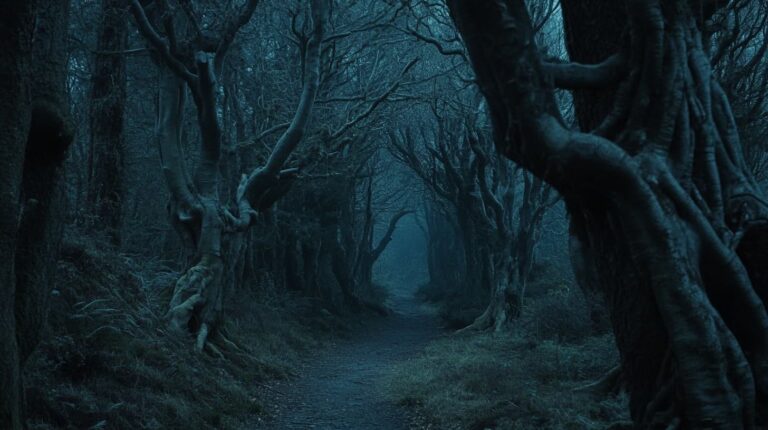

Nightborn Ending Explained: There’s a particular kind of horror that doesn’t need a single jump scare to work, and Hanna Bergholm has now built two films around it. Her debut, Hatching, cracked open a mother-daughter relationship through something growing inside an egg. Nightborn pushes the idea further, out into the Finnish woods, and asks a question most horror films are too polite to sit with for long: what happens when a mother looks at her own newborn and feels nothing but dread?
By the time the credits roll, you’re left holding an ending that refuses to hand you a clean verdict on its own main character. Is Saga a woman pushed into monstrous choices by isolation, exhaustion, and nobody believing her? Or has she simply returned, slowly and then all at once, to whatever she always was underneath? Bergholm never picks a side, and that refusal is exactly why so many people are still talking about how this one wraps up.
So let’s actually walk through it. What is wrong with Kuura, if anything is “wrong” with him at all? Why does everyone around Saga keep explaining away things that clearly shouldn’t be explained away? And what is really going on in that final scene, where Saga watches her son walk toward the trees and chooses, for now, not to follow? Here’s the full breakdown, piece by piece.
Heads Up: We are jumping straight into the deep end of the plot twists now. If you hate spoilers, close your eyes and turn back. (Or, you know, go watch the movie and come right back)!
TL;DR: Nightborn’s Ending, Quickly
- Saga and Jon’s newborn, Kuura, turns out to be part-troll, carrying a bloodline that runs through Saga’s own family
- As Kuura’s true nature becomes impossible to ignore, so does Saga’s, and the marriage starts fracturing over what to do about it
- Jon tries to take Kuura and leave; Kuura responds by summoning the forest itself, and a branch kills Jon during the struggle
- Saga and Kuura eat Jon’s remains together, including his heart, marking Saga’s full acceptance of her true nature
- In the final scene, Saga lets Kuura run free into the woods, where troll-like beings are waiting to welcome him home
- Kuura looks back and smiles at her, but Saga doesn’t follow, at least not yet, leaving her own fate deliberately open
So What Exactly Is Wrong With This Baby?
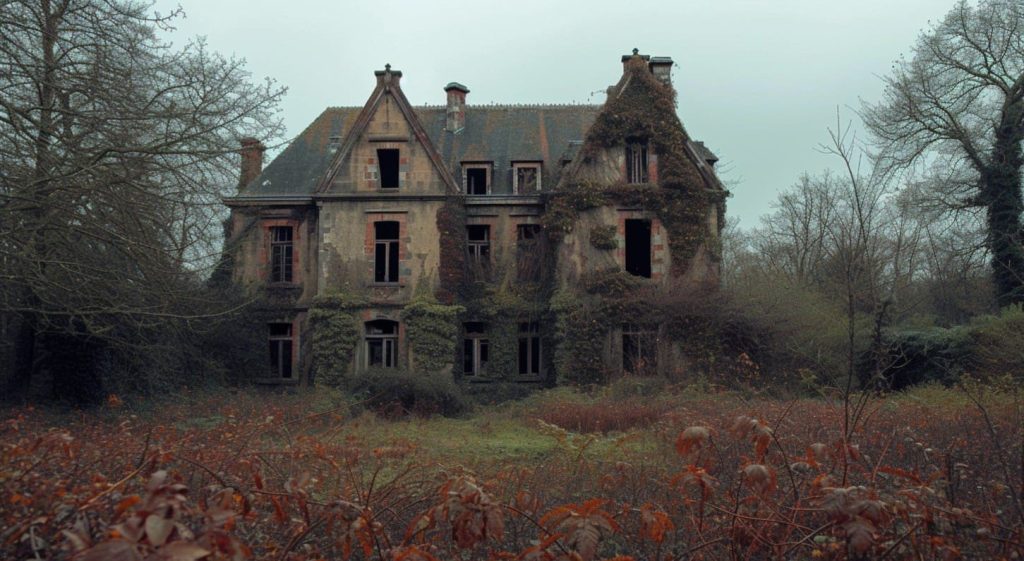
Nightborn spends its opening stretch doing something a lot of horror films skip entirely: it lets a marriage look genuinely happy before it starts pulling it apart. Saga and Jon move into her late grandmother’s house deep in the Finnish forest, a place that’s fallen into disrepair, and Jon spends the early scenes lovingly fixing it up. There’s real warmth here. They talk about having three kids. Saga’s already mentally decorated the nursery.
Then the baby arrives, and that warmth curdles fast. From the second he’s placed in her arms, Saga can’t shake the sense that something’s off. Excess body hair. A visible discomfort with sunlight. The fact that he seems to chew rather than nurse.
Hospital staff wave it all away as the within-normal-range oddities and gently suggest therapy, given how difficult the delivery was. Saga says no. Twice.
Here’s the thing worth sitting with before any folklore enters the picture: Saga starts referring to her own son as “it.” She flinches when he reaches for her. At one point she genuinely wonders whether her baby is capable of loving her back, or whether he even wants to. Is that Saga losing her grip on reality, or is it the first honest reaction anyone in this story has to what Kuura actually is? The film lets both readings sit side by side for a long time, and it’s patient about which one it eventually confirms.
The naming ceremony is where the cracks really start to show. Saga blurts out the name Kuura, meaning frost, without ever discussing it with Jon, and can’t explain afterward why she said it. It’s a small beat, but the film keeps returning to these moments where Saga acts on instincts she can’t put into words, quietly building the idea that something in her, not just in her son, is stirring awake.
That same ceremony also gives us the film’s first real look at how a room full of well-meaning people processes a baby who won’t perform infancy the way they expect. Kuura cries through most of it, and Saga is convinced every guest is silently judging them both, him for being difficult, her for failing to calm him. What finally settles him isn’t anything Saga does. It’s a gust of wind and a low, whooshing sound that seems to come from nowhere.
Anyone who’s tried to soothe a screaming infant in front of relatives with opinions will recognize that specific flavor of embarrassment, even before the film reveals there was a very good, very unnatural reason the wind worked and Saga’s arms didn’t.
It’s worth noticing how carefully Bergholm stages this scene, because it isn’t really about the baby at all. It’s about Saga watching herself get quietly re-cast, in real time, from a new mother deserving of patience into someone whose competence is now up for debate. Nobody says anything cruel out loud. Nobody has to. The looks exchanged between guests, the too-quick reassurances, the way conversation shifts subjects the second Kuura goes quiet, all of it tells Saga exactly where she now stands in her own community, and it’s a demotion she never agreed to.
That’s the emotional groundwork the rest of the film builds on: long before anyone suspects trolls are involved, Saga has already learned that admitting something feels wrong will cost her more credibility than staying silent ever would.
Why Does No One Believe Saga?
What sets Nightborn apart from a straightforward creature feature is how thoroughly it commits to Jon as the reasonable one, at least on paper. He isn’t written as cruel or dismissive. He notices his wife struggling and genuinely tries to help. He takes their son to a doctor specifically because he’s worried about Saga’s state of mind, and when the doctor confirms Kuura is perfectly healthy, Jon treats it as good news. For him, it is.
That gap between what Jon needs to believe and what Saga has already quietly accepted becomes the engine of the entire film. After discovering that Kuura rejects milk but licked blood from a cut on her hand without hesitation, Saga starts secretly feeding him cow’s blood, hiding it from Jon out of a mix of shame and self-preservation. Would you tell your husband the truth, after already being told once that your concerns are a symptom rather than a signal?
This is the part of Nightborn that lingers longest once the credits stop rolling. Saga isn’t disbelieved because she’s wrong. She’s disbelieved because what’s actually happening is too unbelievable, and everyone around her, her husband, her mother, her sister, defaults to whatever version of events lets them keep their worldview intact.
When Saga’s mother visits and Kuura injures her ear, she doesn’t turn against her grandson. She tells Saga that Saga herself was just as difficult a baby. It’s meant as comfort. It plays like a quiet piece of foreshadowing nobody in the room recognizes yet.
Saga’s sister is even less gentle. After overriding Saga’s explicit request to keep Kuura away from her daughter, and after Kuura ends up biting the girl’s finger, she blames Saga for the whole incident rather than her own choice to ignore the warning. It’s a small subplot, but it does a lot of quiet work: it shows how fast a mother’s caution gets reframed as overreaction, right up until the moment it’s proven correct, at which point the blame somehow still lands back on her.
Wait, Trolls? Here’s Where the Folklore Comes In!
The film doesn’t dump its mythology on you all at once. It assembles it the way real family secrets usually surface, in fragments that only make sense once you’ve already lived through enough of them. The key piece arrives when Kuura’s hand burns on contact with an iron rod, and Saga suddenly remembers her grandmother once lined the property with iron cable, supposedly to keep something out.
According to local legend, as Jon’s mother explains it, children who go unbaptized can be taken by trolls, and certain families quietly carry troll blood for generations without ever fully understanding why. It sounds like a bedtime story right up until it’s the only explanation left standing.
Bergholm resists the urge to make her trolls into anything resembling the bridge-dwelling creatures from children’s books. There’s no ambush, no lurking. They’re framed as something closer to an old, natural order, entities woven directly into the forest, older than the house that’s been built inside their territory. Why does that distinction matter? Because it reframes everything that follows. Kuura isn’t cursed. He isn’t possessed. He’s simply what he was always going to be, born into a bloodline that predates his parents’ marriage by generations.
It also completely recasts Saga’s grandmother, a woman the family quietly wrote off during her lifetime as unstable and overly obsessed with old superstitions. What if she wasn’t eccentric at all? What if the iron fence wasn’t a symptom of an unraveling mind but a deliberate barrier, built by someone who knew exactly what lived on the other side of it, and who spent her final years protecting a family that assumed she was the one who needed protecting?
That reversal, the “difficult” older woman turning out to be the only clear-eyed person in the house, gives the mythology real emotional weight instead of just functioning as a twist. The knowledge was there all along. Nobody was equipped to take it seriously until it was standing in their kitchen, chewing on raw meat.
Is Saga Turning Into Something Else, Too?
Here’s the film’s most quietly radical choice: it refuses to let Saga remain a horrified bystander in her own story. As Kuura’s nature becomes undeniable, Saga starts changing right alongside him. Her nails darken. She hisses instead of speaking when she’s under stress. She feels physical pain whenever she’s separated from her son, a detail that plays less like supernatural bonding and more like something in her own body finally recognizing itself in his.
Jon, understandably, reads all of this as his wife’s mental health collapsing beyond what therapy could fix. And he isn’t entirely wrong, in the sense that what Saga is going through would look, from the outside, indistinguishable from a breakdown. But the film’s real trick is that it’s also, simultaneously, true.
Saga was a strange, difficult child herself, drawn to the woods against every warning her family gave her, in ways everyone chalked up to a phase. Her grandmother’s caution was never really about keeping Saga away from the forest. It was about keeping Saga from remembering what she came from in the first place.
Once Saga stops fighting that recognition, her entire relationship with Kuura shifts. Instead of forcing him toward normalcy, table manners, regular food, a standard sleep schedule, she meets him on his own terms: getting down on the floor with him, mimicking the sounds he makes, feeding him what he actually wants instead of what a parenting book insists he should have.
It’s the first time in the entire film either parent successfully calms him, and the movie plays it completely straight, no irony, no cutaway to horror. She stopped trying to fix a child who was never broken to begin with.
That might be the sharpest idea Nightborn is working with, and it stretches well beyond the folklore. Every parent eventually hits a moment where the child in front of them doesn’t match the one they’d imagined. Is real connection only possible once you stop grieving the imagined version and start actually seeing the one who’s real? Bergholm just takes that ordinary parenting reckoning and pushes it about as far as it can physically go.
What Actually Happens the Night the House Falls Apart?
Jon’s breaking point arrives with a kind of grim logic. He’s spent the whole film reaching for rational explanations, and every single one has failed him. When he finally confronts what Kuura’s been chewing on, and what Saga’s been hiding, there’s no rational explanation left to grab onto. His response is to try removing his son from the situation entirely: he announces he’ll file for divorce, take full custody, and physically attempts to carry Kuura out of the house.
The struggle between Saga and Jon isn’t just a fight over parenting. It’s two irreconcilable worldviews colliding, his belief that the world runs on explainable rules, hers that some things exist outside that framework and always have. Kuura, caught in the middle of his parents tearing at each other, is the one who ends it.
What follows is the film’s most audacious sequence. Roots and branches erupt through the floor and walls, and the sapling that’s been quietly, stubbornly growing beneath the house the entire runtime finally breaks free of the structure that was never going to contain it. Remember that sapling Jon tossed out while fixing up the house? It stubbornly survived, forcing its way right back up through floorboards that were never designed to hold it back. Kuura had been drawn to it since infancy, long before anyone understood why.
When the house finally comes apart, that’s the detail carrying the weight of everything the film has been quietly building. One of the erupting branches kills Jon almost instantly. It isn’t staged as triumphant. It’s abrupt, and the film lets that abruptness sit rather than rushing past it.
What comes next, Saga joining her son in consuming Jon’s remains, including his heart, is the moment most likely to stop people mid-scroll when they’re trying to describe this film to a friend. But it isn’t there purely to shock. It’s the story’s final confirmation that Saga has stopped performing humanity for anyone’s benefit. She isn’t punishing Jon. At this point, she isn’t even really thinking of him as her husband anymore. She’s simply no longer pretending to be something she was never fully able to be.
Okay, But What Does That Final Scene Actually Mean?
The closing minutes are where Nightborn earns its reputation as an ending people will keep arguing about. Saga pushes the doors open, releasing Kuura into the woods, and this is the exact moment the director drops the veil. The shadowed entities we’ve only sensed up until now materialize completely, reaching out to welcome him back to where he actually belongs.
There’s a beat of real tension here that has nothing to do with horror mechanics. Saga watches her son run toward them, and something flickers across her face that looks a lot like a mother’s fear of losing a child, right before Kuura turns back and smiles at her. He isn’t leaving her behind. He’s inviting her to catch up. And then the film ends with Saga choosing to stay right where she is, at least for now, watching instead of following.
You have to wonder why the director didn’t just let her step straight into the forest. It would’ve been the cleaner ending, a tidy symbolic surrender to her true nature. Instead, Bergholm leaves her on the threshold, neither fully human nor fully committed to what’s waiting in the woods. Is that hesitation, fear, or simply Saga taking one final moment to choose this on her own terms rather than being pulled toward it?
The film doesn’t answer that, and honestly, a clean resolution would’ve undercut everything it spent two hours building. Saga spent this entire story being disbelieved, dismissed, and told her own instincts were a symptom instead of a truth. Handing her a tidy finish would have betrayed all of that.
There’s also the practical thread the film leaves completely untouched: Jon is dead, in a house in the middle of the forest, and eventually someone is going to come looking for him. Nightborn doesn’t bother resolving that, and it doesn’t need to. This was never really a story about whether Saga gets away with anything. It’s about whether she finally gets to exist as herself, after spending the entire runtime being told she couldn’t trust her own read on her own child.
Notice, too, what the film chooses to show us in that last stretch versus what it leaves off-screen. We don’t get a scene of Saga making peace with what she’s done, no tearful confession, no moment of horror at her own hands. We just get the quiet after: an open door, a boy walking toward something ancient and welcoming, and a woman standing very still, watching. That restraint is deliberate.
Bergholm has spent the entire film building toward a moment where words would only get in the way, and the final image works precisely because nobody tries to explain it. Is Saga at peace? Terrified? Something closer to relieved than either? The film trusts you to sit with the ambiguity rather than resolving it for you, which is a braver choice than it might first appear, especially for an ending this strange.
So What Is Nightborn Really About?
Strip away the trolls and the iron burns, and Nightborn is dramatizing something a lot of quieter, non-genre dramas have tried and rarely landed with this much force: how thoroughly a woman’s instincts about her own body and her own child can get talked over by everyone around her, including people who genuinely mean well. Nobody in Saga’s life is a villain. She’s gaslit by ordinary kindness, a nurse’s reassurance, a husband’s optimism, a mother’s nostalgia for her own difficult childhood. The horror isn’t that nobody cared. It’s that caring never once translated into actually listening.
There’s a second, quieter thread running underneath that one, about inheritance, about the things families pass down without ever naming them out loud. Saga’s grandmother fenced the property with iron and never explained why. Saga herself was an unusual, forest-drawn child whose behavior got smoothed over as a phase instead of examined honestly.
What the film seems to be arguing is that the things a family chooses not to talk about don’t just vanish. They wait, patiently, for the next generation to walk straight into them, unprepared, which is a story shape most families would recognize in some form, even without a single troll involved.
If you’re interested, you can check out our Hereditary Ending Explained!
Wrapping it Up!
Nightborn isn’t interested in giving you a monster to root against, and that’s precisely what makes it stick around in your head longer than it probably has any right to. Saga’s transformation is disturbing by design, but the film keeps circling back to a much harder question underneath the folk horror: what does it actually cost a person to keep insisting she’s fine, that everything’s normal, long after her own body and instincts have told her otherwise?
Jon’s tragedy is that he never stops needing the world to make sense on his terms. Saga’s arc, monstrous as its final beats are, comes from doing the opposite. She stops needing things to add up, and starts simply meeting what’s actually standing in front of her.
By the time the credits roll, the scariest thing in this story was never really the child in the woods. It was every reasonable, well-meaning person around Saga insisting, with total sincerity, that she couldn’t trust what she already knew to be true. Whether you read the ending as a tragedy, a release, or something in between probably says less about the movie and more about how you’d answer that question yourself.
FAQs About Nightborn’s Ending (Most Googled)!
Is Nightborn based on a True Story?
No, it’s entirely fictional, built on Finnish folklore about trolls rather than real events.
What does the name Kuura mean?
Kuura is Finnish for frost, and Saga names her son this on instinct, without ever discussing it with Jon.
Does Jon actually die in Nightborn?
Yes. When Jon tries to take Kuura from the house, Kuura summons the forest, and a branch kills Jon during the struggle.
Is Saga a Troll too?
The film strongly implies she carries the same bloodline, one she’d suppressed since childhood without realizing it.
Does Saga follow Kuura into the forest at the End?
Not immediately. She stays behind to watch him reunite with the other trolls, and her own next move is left open.
Why does iron hurt Kuura?
The film’s folklore ties trolls to a vulnerability to iron, which is also why Saga’s grandmother had fenced the property with iron cable.
About the Author.
Hi, I’m Vansh, the founder of Vibe On Cue. I track the absolute best ways to experience cinema, from the biggest Hollywood Blockbusters and upcoming release dates to the finest details of PVOD & Streaming and pristine Blu-ray & 4K physical media. And when the credits roll, I break down the narrative with deep-dive Ending explained guides. If you live for the full life cycle of film, stick around and explore the site!!!