
Evil Dead Burn Ending Explained: Okay, so… the eyes thing. That’s probably why you’re here. But before we get to that final unsettling shot, let’s back up, because Evil Dead Burn spends two hours building to it and most of the setup is a lot sneakier than it looks on a first watch.
Halfway through this movie, it quietly stops being about a haunted book and starts being about a family that’s been lying to itself for years and just ran out of room to keep doing it. That’s the part that actually sticks with you afterward, not the gore, not the dagger, but the creeping realization that everyone in that house had something to hide long before the Deadites showed up and made hiding impossible.
If you walked away with more questions about Alice than about the demons chasing her, good that’s exactly the reaction the movie’s built for. Here’s what actually happens in that house, why her marriage matters just as much as the Necronomicon does, what that last shot of her eyes is really doing, and what’s going on in both post-credits scenes, including one that has nothing to do with Deadites at all.
Heads Up: We are jumping straight into the deep end of the plot twists now. If you hate spoilers, close your eyes and turn back. (Or, you know, go watch the movie and come right back)!
TL; DR: Quick Key Takeaways
- Alice’s husband Will was already dead and already a Deadite before the family gathering even starts, though nobody in his family knows it yet.
- The infection spreads from Edgar (Will’s father) at the funeral, then moves through the house: the family dog, Thya, Susan, Polly, and finally Joseph.
- Susan’s warning that the Deadites “just want back something my father stole” points to the Kandarian Dagger, the one weapon that can actually stop them.
- Alice kills Joseph with the dagger, sets the house on fire to take down the rest of the family, then finishes a reanimated Will at a nearby construction site stabbing him with the dagger after he rises from a pit of tar.
- The final shot shows Alice’s eyes briefly flashing the Deadite color, leaving it open whether she’s infected, traumatized, or both.
- The first post-credits scene follows a legless, possessed Grandma Polly crawling away from the house.
- The second is the bigger gut-punch: a funeral home urn reveals that Ellie Bixler, the Deadite mother from Evil Dead Rise, is somehow back, and she kills the crematorium manager’s young daughter in the mirror right in front of us.
This Family Was Already Broken Before Anything Supernatural Happened
Most Evil Dead films start with people who like each other getting torn apart by something evil. Burn flips that. The Price family is already fractured coldly, quietly, the way families get when nobody wants to be the one who says the ugly thing out loud long before anyone reads a page out of the Necronomicon.
Alice arrives at her in-laws’ secluded home grieving her husband, Will, who died in a car accident. What the family doesn’t know, and what Alice is only beginning to process, is that Will’s death wasn’t a random tragedy. He was killed by a Deadite. That detail matters more than it first seems: it means the infection was already loose in this family’s orbit before Alice ever walked through the front door. She’s not bringing the horror with her. She’s walking into a house that was contaminated the moment Will died.
Susan, Will’s mother, greets Alice with a kind of clinical distance that reads less like grief and more like control. Edgar, Will’s father, is quieter but no warmer. This isn’t a family torn up by loss, it’s a family managing loss the way it manages everything else: by keeping it contained, unspoken, and orderly. That instinct to keep things contained is exactly what lets the real threat spread as far as it does.
Compare that to Joseph and Thya, the one couple in the house who actually seem to like each other. Their relationship is the closest thing the film has to warmth, and it’s not a coincidence that the Deadites go after Thya almost immediately. She’s an outsider who hasn’t learned the family’s rules yet, and the film uses her as an early, brutal signal that this house doesn’t reward honesty or affection, it punishes it. Everyone who survives even a little while into the second act is someone who’s already fluent in keeping quiet.
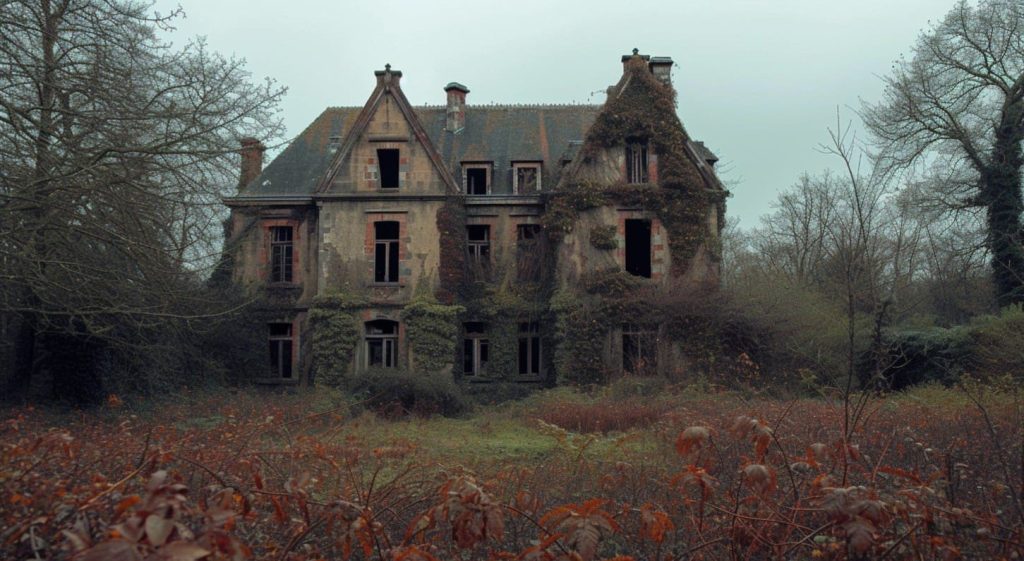
Even the setting reinforces this. The Price home is secluded, gated off from anyone who might notice what’s happening inside it which, again, isn’t just a horror-movie convenience. It’s the physical version of what this family has been doing emotionally for years: putting distance between themselves and anyone who might ask an inconvenient question.
How the Possession Actually Moves Through the House?
The chain of possession in Burn is deliberately domestic. It doesn’t come crashing through a window, it moves the way a secret moves through a family, person to person, quietly enough that by the time anyone notices, it’s already too late to stop.
It starts with Edgar. The funeral, the one moment where this family is forced to sit with real grief instead of managing it, becomes the opening the Deadites need. Edgar is infested there, and once he’s turned, he doesn’t waste time. He mortally wounds the family dog, then turns on Thya, Joseph’s girlfriend, who’s arguably the only person in the house who isn’t a Price and doesn’t yet understand what she’s walked into.
From there, Edgar leaves himself open to be taken over completely, and the possession keeps moving laterally through the family rather than jumping straight to the most obvious target. Polly, Will’s grandmother, is next and this is where the film gets genuinely uncomfortable, because Polly doesn’t stay a monster in the background. She and the possessed Edgar actively work together to break down Susan’s resistance, needling at her until she gives in.
Susan’s turn isn’t a jump-scare moment. It’s closer to peer pressure with claws, the horror-movie version of “everyone else already agreed, why are you making this difficult.”
By the time Joseph is possessed off-screen, almost as an afterthought the film has made its point: this isn’t a haunted house picking people off one by one. It’s a family’s dysfunction being weaponized, each member used to pull the next one down.
There’s also a structural choice worth noticing here. Most Evil Dead entries treat possession as something that happens to a person and then the story reacts to it. Burn treats it as something that gets passed, almost socially Edgar recruits Polly and Edgar to work together to wear Susan down, and by the time it reaches Joseph it barely needs to be shown at all because the audience already understands the mechanism. The film trusts you to know how this family breaks each other down, because it’s already shown you twice.
That’s also why the dog’s death lands harder than it probably should on paper. It’s the first casualty, and it’s innocent in a way nothing else in this house really is no grudges, no history, no complicity. It sets the tone before the human deaths start piling up: whatever this is, it’s not going to be selective about who deserves it.
What Alice Never Said Out Loud About Her Marriage?
Here’s the part of Burn that doesn’t get resolved by a dagger. Alice’s marriage to Will was abusive, and the film doesn’t announce it with a big speech; it shows it in small, physical details, like a burn scar on her stomach that nobody in the family ever asked about. That’s not an accident. It’s the entire theme of the movie in one image: an injury that was hiding in plain sight because everyone around her had agreed, silently, not to look.
It’s worth sitting with how familiar that dynamic feels outside of a horror movie. Plenty of people have been in or near a relationship where the warning signs were visible to everyone except the family closest to it not because they were hidden particularly well, but because looking too closely would have meant admitting something nobody wanted to deal with. Susan and Edgar aren’t monsters for missing it. They’re something more recognizable: people who chose comfort over honesty, right up until the house was literally on fire and there was nowhere left to look away.
Will popping back up at the end doesn’t feel like a normal horror movie climax. It’s way more personal. He’s not just another Deadite Alice has to fight to survive the night. He’s the exact thing she’s spent the whole runtime trying to process and the film hands her a version of him that’s finally honest about what he is, monstrous on the outside instead of just underneath it.
It also recontextualizes every earlier scene where Alice seemed flat, guarded, or unreadable around Will’s family. She’s not grieving in a way they can recognize because she isn’t only grieving him she’s also relieved, in a way she can’t say out loud to people who worship his memory. That’s an uncomfortable thing for a horror movie to sit with, and to its credit, Burn doesn’t rush past it just to get to the next set piece.
If you’re interested, you check out our Evil Dead Burn digital release guide!
What the Deadites Were Actually After?
Buried in the chaos is a line that reframes everything: after she’s turned, Susan tells the family the Deadites “just want back something my father stole.” That’s the Kandarian Dagger, an ancient weapon tied to the franchise’s long fight against the Necronomicon’s evil and it’s been sitting in this house the entire time, inheriting the way families quietly inherit things nobody talks about.
It’s a clever bit of misdirection, because for most of the film, the dagger feels like a side plot next to Alice’s personal unraveling. But by the third act, it becomes the literal mechanism of her release. The weapon that could theoretically banish the Deadites for good ends up mattering less as a franchise artifact and more as the tool Alice uses to finally, physically end the thing that hurt her.
The dagger was stolen by Susan’s father, who sat in this family for a generation, and it’s Alice, the one person in the house who married into this family rather than being born into it, who ends up wielding it against them. Alice is the outsider holding the exact weapon needed to clean up her in-laws’ mess. The movie is basically screaming that you can’t fix a toxic family from the inside, it takes someone new to tear it all down.
It’s also worth noticing what the dagger isn’t used for. This isn’t a story where the family finally bands together, dagger in hand, to fight off the evil as a unit, the kind of climax this franchise has leaned on before. Nobody hands it to Alice with a speech. She has to find it, understand what it does, and use it entirely on her own, which tracks with everything else the film has already told you about how alone she’s actually been in this family, long before tonight.
What Actually Happens Between Alice and Will at the End?
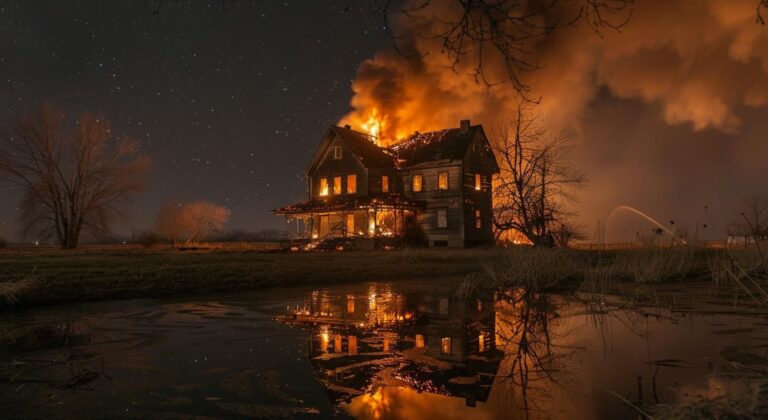
By the time the house has consumed almost everyone in it, the fight stops being about survival and becomes something closer to a reckoning. Alice takes out Joseph with the Kandarian Dagger, then turns the rest of the house into a last stand; she takes down possessed Susan with a rotary-blade hedge trimmer and sets the entire house on fire before escaping the flames. This is where the movie’s title makes perfect sense. Alice doesn’t just make it out alive, she literally torches her in-laws’ house as she leaves.
That’s not where it ends, though. A reanimated Will, the husband whose death started this whole night, now returned as exactly what he always was underneath the charm, chases her out of the fire and all the way to a nearby construction site. He throws her into a pit of tar, and what follows isn’t a quick kill. She grabs a jackhammer to fight him off, and when even that isn’t enough to put him down, she finally finishes it with the Kandarian Dagger.
The movie makes the meaning of this final fight super obvious. Monster or not, Will still talks down to Alice just like he did before he died. At the very end, he tries one last manipulation tactic by looking human again and declaring his love. Alice completely ignores it, tells him it’s not enough, and delivers the final blow. That simple response is the true heart of the story. She isn’t just slaying a demon; she’s finally cutting ties with her abusive husband once and for all.
When paramedics finally reach her, one of them asks who did this to her. “My ex-husband,” she says. It’s a small, dry, devastating detail, the kind of answer that sounds almost mundane next to everything we just watched, and that’s exactly why it lands. For one night, Alice got to say the plain, true thing about her marriage out loud, and nobody was there to talk her out of it.
It’s worth pausing on why the film gives Alice that human flicker of Will at all, instead of just letting her fight a monster and calling it done. If Will stayed a Deadite through the whole confrontation, this would just be a survival scene tense, but ultimately generic. By pulling him back to something recognizably himself right before the end, the film forces Alice, and the audience, to confront the fact that this was never really about demons.
The thing she needed to survive was already inside her marriage long before anything supernatural got involved. The Deadite was just the version of him that finally matched what she’d always known was underneath.
That reframes the earlier funeral scene too. The Prices spent that entire sequence performing grief for a man they thought they understood. Alice is the only one in the room who actually knew him, and by the end of the film, she’s the only one who gets to decide how his story really ends.
So Why Do Her Eyes Change Color at the Very End?
Then comes the ambiguity everyone’s arguing about online right now. As paramedics arrive and Alice starts to come down from the night, her eyes flash briefly with that unmistakable Deadite color. The film doesn’t explain it, and that’s clearly deliberate; it’s the kind of ending that’s practically engineered to start a group chat argument.
There are two honest readings here, and Burn seems to want both sitting in the room at once. One is literal: Alice picked up some trace of the infection somewhere in that house, and the nightmare isn’t actually over. The other is more thematic: it’s not the demon at all, it’s what surviving something like this does to a person. Violence, especially violence this personal, doesn’t just end when the threat is dead. It leaves something behind that looks a little like what it came from.
Either reading works, which is probably the point. Whether Alice is now carrying something supernatural or just carrying what she survived, the film is arguing the same thing: this kind of night doesn’t have a clean exit.
The First Post-Credits Scene: What Happens to Grandma Polly
Midway through the credits, the film checks back in on Polly. Earlier, in one of the more unsettling beats of the back half, she cut herself free from a stairlift to escape, losing a hand and a prosthetic leg in the process. The scene shows the fully possessed version of her dragging herself down the middle of a road in broad daylight, trailing viscera behind her.
It’s a small, grim postscript rather than a cliffhanger and it doesn’t stop at Polly crawling. A driver pulls over to help her, and Polly plays victim just long enough to get close before scratching the woman’s leg and passing the infection on. It matters because Polly is the only Deadite who actually makes it out of the house, and by the end of the scene, she’s not alone anymore. That makes her escape the film’s one loose thread, and horror franchises rarely leave loose threads by accident.
There’s also something quietly upsetting about the way the scene is shot in broad daylight, on an ordinary road, rather than tucked away in shadow. It’s the same trick the rest of the film has been using all along: horror that happens in plain sight, in daylight, in a normal-looking setting, is somehow worse than horror that hides. Polly dragging herself down a sunlit street isn’t scary because it’s hidden. It’s scary because nobody’s there to stop it, and nobody would necessarily even recognize what they were looking at if they were.
The Second Post-Credits Scene Connects This Movie to Evil Dead Rise
The second scene is the one people are still arguing about, and for good reason. It jumps back to the crematorium seen earlier in the film, where the manager is showing her young daughter around while she waits for her mother to pick her up. Rows of unclaimed urns line the shelves the manager explains, almost offhandedly, that not every family comes back for their loved one’s ashes. Left alone for a moment, the girl starts reading names off the urns, including one that means nothing to her but means everything to longtime fans: Ellie Bixler.
If that name doesn’t immediately land, Ellie was the mother turned primary Deadite in 2023’s Evil Dead Rise, one of the most memorable villains the franchise has produced in years. The lights flicker, the girl looks into a nearby mirror instead of seeing her own reflection, and Deadite Ellie is staring back. Moments later she’s dead, and Ellie delivers the line genre fans will be repeating for a while: “Mommy’s back.”
It’s a genuinely audacious reveal, and it works on two levels at once. Thematically, it’s a gut-punch that lands right alongside everything Burn has already been saying about how domestic violence and trauma don’t stay contained to one house or one generation; it echoes back into an entirely different family from an entirely different film. Structurally, it’s also the first time this franchise has brought back a Deadite character rather than just referencing old lore, which raises a real question: how is Ellie still around to be summoned, when her body was destroyed at the end of Rise? The film doesn’t explain that, and it’s honestly fine with leaving you unsettled about it rather than answering it.
Either way, this is a much bigger swing than a quiet in-joke. It’s the clearest signal yet that Ellie isn’t done, and that whatever comes next in this franchise is going to have to reckon with her.
What This Movie Is Really About Underneath the Gore?
Strip away the Deadites and Burn is a movie about inheritance not property or money, but the things families pass down without ever meaning to. Denial gets inherited. Silence gets inherited. Even violence gets inherited, handed from Will to Alice, from Edgar’s generation to Susan’s, from whoever originally stole the dagger down to the family that’s still paying for it decades later.
The film also has real things to say about grief as a vulnerability rather than just an emotional beat. The Deadites don’t attack this family at a random moment; they attack during the funeral, at the exact point when the Prices are forced to be honest about loss for the first time in years. That’s not a coincidence in how the story’s built; it’s the thesis. This is a family that survives by not feeling things, and the one moment they’re forced to feel something is the moment they’re most exposed.
That idea shows up again in how the film treats Susan specifically. She’s the family member who resists the longest, right up until Alice finally tells her the truth about the burn scar and it’s only after that honesty that Susan breaks and turns. There’s something quietly brutal about the timing: the one moment Alice finally trusts someone in this family enough to say it out loud is the moment that family stops being able to protect her at all.
And then there’s Alice herself, who spends the entire film being underestimated by people who assume grief has made her fragile. It hasn’t. It made her exact. Every choice she makes in the final act finishing off Joseph, waiting for Will to look human again before she ends him, surviving a house that swallowed everyone else in it reads less like luck and more like someone who’s spent a long time being quietly, carefully done with being hurt.
Why It’s Called “Burn”
This one’s easy to answer literally, and the film clearly wants you to notice it: Alice sets the entire family house on fire on her way out, burning her in-laws’ home to the ground before the final showdown with Will even happens. That’s not a metaphor, it’s the actual climax of the movie.
But the title earns its double meaning too. There’s the literal burn scar on Alice’s stomach, hidden under her clothes for most of the runtime. You can feel the tension building from the very start. They’ve been secretly falling apart for a long time, and everything finally erupts all at once. And there’s the ending itself, which doesn’t offer anything close to relief. Alice doesn’t walk away clean. She walks away from an actual inferno carrying whatever’s left over once something has really, truly burned all the way down.
That’s a meaningfully different idea than most of the franchise’s earlier “burn it all and survive” endings. This one seems far more interested in what’s left in the ash.
Think about how many of the previous entries end with fire literally, physically wiping the slate clean the cabin, the evil, the whole mess, gone in one big cathartic blaze. Burn deliberately withholds that. There’s no equivalent purge here, no moment where the fire does the emotional work for the characters. Alice has to do it herself, by hand, and the title ends up describing her rather than the house. She’s the one who’s been burning, quietly, this entire time the film just waited until the end to let you see it.
Where This Leaves the Franchise?
Longtime fans will notice this entry deliberately keeps its distance from Ash Williams and the more self-aware, quippy tone that’s defined a lot of the series’ history. Burn plays its horror straight, and the humor that does exist is mostly incidental rather than the point a byproduct of just how absurd demonic possession looks up close, not a wink to the audience. That’s a deliberate choice given what this particular story is about. A film built around a woman confronting the reality of an abusive marriage doesn’t have much room for comic relief, and to its credit, it mostly doesn’t try to force any in.
At the same time, the film clearly wants to stay tethered to the wider mythology and the Ellie Bixler reveal makes that explicit rather than implied. This isn’t just shared lore anymore; it’s a direct continuation, pulling a specific Deadite out of a specific earlier film and putting her back in play. Susan’s line about her father stealing the dagger still gestures at an older, unexplained history too, but Ellie’s return is the bigger tell: Burn isn’t trying to be a clean, self-contained one-off. It’s actively building toward something.
So where does that actually leave things? Polly’s still out there, still possessed, still moving. Ellie is confirmed to be active again, with no explanation for how. And it’s not just speculation anymore; a sequel titled Evil Dead Wrath is already confirmed, and the Ellie reveal is the scene doing the actual work of setting it up. Alice, meanwhile, whatever’s going on with her eyes walks off into a version of “safety” that the movie clearly doesn’t trust either. None of that reads like a franchise closing a door. It reads like one that already knows exactly which doors it’s opening next.
If you’re interested, you can check out our Exit 8, Midsommar and Hereditary Ending Explained!
So Was Alice Ever Really Safe?
Not in the way a happy ending would want her to be, no and that’s what makes Evil Dead Burn land differently than most entries in this franchise. It’s not really asking whether Alice can survive one bad night. It’s asking whether someone can ever fully put down what they’ve survived, even after the thing that hurt them is dead on the floor in front of them.
That’s why the ending doesn’t bother giving you a clean answer about her eyes. The film’s real argument was never about demons at all, it was about a woman who spent years being quietly unseen inside her own marriage, finally being impossible to ignore. Whatever she’s carrying out of that house, supernatural or not, she’s the one who decides what happens next. For the first time in the whole story, that’s actually the point.
FAQ: Most Googled Questions, Answered!
Does Alice survive Evil Dead Burn?
Yes. She’s the only member of the Price family gathering left alive by the time paramedics arrive, though her flashing eyes leave her long-term fate uncertain.
What happened to Will before the movie starts?
He was killed in what looked like a car accident, but the film reveals he was actually killed by a Deadite before the story begins.
What is the Kandarian Dagger in Evil Dead Burn?
It’s an ancient weapon tied to the franchise’s fight against the Necronomicon’s evil, stolen years earlier by Susan’s father and hidden in the family home ever since.
Who is the only Deadite to escape the House?
Grandma Polly, who is shown alive and possessed, crawling away from the house in the first post-credits scene.
Who exactly is Christopher Leroy at the very end of the credits?
That’s actually a red herring; the name on that urn doesn’t tie to any known character. The urn that matters is the one next to it, belonging to Ellie Bixler, the Deadite from Evil Dead Rise.
Does Evil Dead Burn connect to the rest of the Franchise?
Yes, directly. It’s a stated follow-up to Evil Dead Rise, sharing the Kandarian Dagger and Necronomicon mythology while bringing back Rise’s Deadite Ellie in its final scene.
Did Alice catch the Deadite infection before the movie Ends?
It’s left deliberately ambiguous, her eyes briefly show the Deadite color, but the film never confirms whether it’s supernatural or the result of trauma.
About the Author.
Hi, I’m Vansh, the founder of Vibe On Cue. I track the absolute best ways to experience cinema, from the biggest Hollywood Blockbusters and upcoming release dates to the finest details of PVOD & Streaming and pristine Blu-ray & 4K physical media. And when the credits roll, I break down the narrative with deep-dive Ending explained guides. If you live for the full life cycle of film, stick around and explore the site!!!