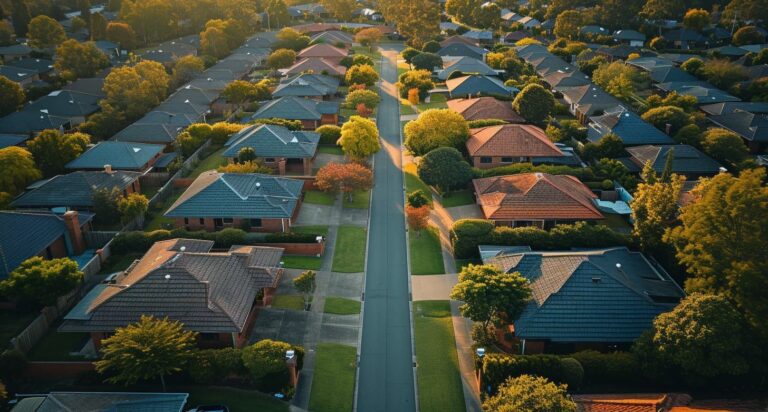

The End Of Oak Street Ending Explained: Hmmm ok, so you just watched The End of Oak Street, and there’s a very good chance you’re currently frozen in your seat, staring at the credits, trying to figure out how a movie that started with a guy lying about his pizza delivery job ended with dinosaurs, time travel, and two versions of the same teenage girl standing at a backyard barbecue. Totally normal reaction. Let’s talk about it.
If you’re the kind of person who watches a movie and immediately needs to know exactly what happened, rather than just vibing with the “aw, they’re all together again” ending and moving on with your life, this one is going to nag at you a little. Because on the surface, The End of Oak Street wraps up with a big, warm, Spielbergian hug of a finale. Everybody’s smiling. There’s a barbecue. The dog is fine. But if you actually pay attention to what’s happening in that last scene, the movie is quietly telling you something much stranger and honestly, kind of unsettling underneath all that sunshine.
Here’s the thing that trips people up the most: Greg dies. Like, really dies, in front of his entire family, in one of the more brutal “wait, they actually did that?” moments in a PG-13 movie this year. And yet Greg is also very much alive and grilling burgers at the end. Both of those things are true, and the movie expects you to just sort of keep up. So that’s what we’re doing here, walking through exactly how Oak Street’s family gets torn apart, glued back together, and left with a happy ending that’s quietly built on a pretty enormous asterisk.
Heads Up: We are jumping straight into the deep end of the plot twists now. If you hate spoilers, close your eyes and turn back. (Or, you know, go watch the movie and come right back)!
TL;DR: If you’re Short on Time!
- A cosmic anomaly rips the Platt family’s 1982 suburban street out of the present and drops it into the Mesozoic era, dinosaurs and all.
- The family spends the movie fighting to survive, find each other, and locate one of the mysterious light portals that might send them home.
- Greg is killed by an Allosaurus roughly two-thirds of the way through the film. This is not a fake-out. He’s gone.
- The surviving family jumps through a second portal and lands back in 1982 but about twenty minutes before Oak Street originally disappeared.
- Denise uses her knowledge of what’s about to happen to redirect Greg (via a very well-timed pizza order) so this earlier version of him never gets swept into the prehistoric timeline.
- That means the Greg at the end of the movie isn’t a resurrected version of the Greg who died. He’s a completely different, un-scarred, un-dead version of Greg who has no memory of any of it.
- The film’s final shot reveals two versions of Jeannette existing at once, which confirms the timeline wasn’t erased or overwritten; it just kept running, twice.
- Starbuck the dog survives. You can breathe now.
Wait, Who’s Who Around Here?
Quick housekeeping before we dive into the story: let’s get everyone’s names straight now, because by the end of this movie there are apparently two of some people running around, and you do not want to be doing that math for the first time during the final scene. Consider this your scorecard.
- Denise Platt (Anne Hathaway):Aspiring novelist, unhappy wife, eventual reluctant action hero of Oak Street.
- Greg Platt (Ewan McGregor): Denise’s husband, secretly unemployed, secretly delivering pizzas, not-so-secretly about to have a very bad day.
- Audrey Platt (Maisy Stella): The Platts’ teenage daughter, and the one who actually figures out the wormhole theory before anyone else does.
- Brian Platt (Christian Convery): The Platts’ younger son, whose missing dog basically kicks off the entire back half of the movie.
- Jeannette Christiansen (Jordan Alexa Davis): Brian’s neighborhood crush, who loses her parents early on and ends up folded into the Platt family.
- Mel Jacobs (P.J. Byrne): The Platts’ cranky neighbor, who deals with the dinosaur situation about as well as you’d expect a guy with a revolver and a bad attitude to.
- Mrs. Valcourt (Emily Kuroda): The neighborhood librarian, who goes from identifying extinct plants to full-on shotgun-wielding folk hero.
- Mrs. Huddleston (Anne Gee Byrd): A kindly elderly neighbor caught up in the chaos along with everyone else on the street.
- Kaden Tucker (Hudson Meek): A neighborhood kid who’s made it his personal mission to make Brian’s life miserable, dinosaur apocalypse or not.
- Starbuck: The Platt family’s dog, played by two very good boys named Buzz and Brisket, who deserves his own paragraph later in this article and is absolutely going to get one.
So What’s Actually Going On in Flowervale?
Before you get to dinosaurs, you get a marriage falling apart, and honestly, that’s the more interesting slow burn of the two. It’s July 1982, and Denise is quietly planning to leave Greg. Greg, meanwhile, is hiding the fact that he lost his job months ago and has been secretly working pizza delivery just to keep up appearances. Nobody in this house is being honest with anybody, which, thematically, is going to matter a lot more than you’d expect from a movie that’s about to introduce a T-Rex.
Then the weirdness starts creeping in, and it’s genuinely fun how the movie stacks it. First it’s a plant in the neighbor’s yard that Mrs. Valcourt identifies as something that’s supposed to have gone extinct hundreds of millions of years ago. Then there’s an enormous, unexplainable pile of animal droppings sitting in Mel’s yard, which, sure, that tracks.
Then the radio starts talking about unusual solar flare activity. You know how in every disaster movie there’s a montage of “small weird things” before the big weird thing? This is that, and it’s doing exactly what it’s supposed to: making you go “wait, something is very wrong here” right along with the characters.
It’s worth pausing here for a second, because this stretch of the movie is doing more work than it gets credit for. You’re watching a marriage quietly implode in the foreground while, in the background, the actual plot is casually rearranging the laws of physics and the movie trusts you to notice both. That’s very much the Amblin-in-the-’80s-suburbs playbook people keep comparing this to, where the domestic stuff and the impossible stuff are treated as equally real problems the family has to deal with. It works, mostly because Denise and Greg feel like an actual couple who stopped talking to each other years ago, not just plot devices waiting to be interrupted by a T-Rex.
Then, during a storm, a blinding white light swallows the entire street, the power goes out, and when everyone steps outside, Oak Street isn’t in Michigan anymore. It’s surrounded by prehistoric jungle. Dinosaurs start showing up almost immediately, and not the cute kind.
Okay, So How Does This Time Travel Thing Even Work?
Short answer: the movie doesn’t fully explain it, and honestly, that’s on purpose. Audrey is the one who puts the pieces together first; she theorizes that the flashes of light are actually wormholes, and that whatever tore through the sky didn’t just send Oak Street backward in time, it also opened a two-way door that’s letting dinosaurs wander in.
Here’s the part that’s easy to miss if you’re distracted by the chaos: this isn’t a “the whole world changed” scenario. It’s specifically Oak Street, an actual, physical chunk of the neighborhood that got carved out and dropped into the Mesozoic. The rest of the world keeps existing normally. So the Platts aren’t trying to fix history or stop an apocalypse. They’re trying to find one of these unstable light portals and physically jump through it before something with teeth finds them first.
Does the movie ever explain what caused the anomaly in the first place? Not really, and it doesn’t seem interested in trying. There’s some vague solar-flare chatter, some background implication about it being something bigger than the Platts can understand, and that’s it. If you’re the type who needs a hard-science explanation for time travel, this movie is going to frustrate you a little. It’s less interested in the how and a lot more interested in what a family does when they’re suddenly fighting for their lives together.
What Actually Happens to Greg? (Deep Breath.)
Alright, this is the part everyone’s still talking about, so let’s just walk through it directly.
After the kids go missing looking for Starbuck, and after Jeannette joins the group having just lost her own parents, the family reunites and starts making its way toward a portal they’d spotted earlier. That’s when an Allosaurus catches up to them. Greg, in a genuinely wild swing of character development for a guy who spent the first act of this movie lying about a pizza job, puts himself directly between the dinosaur and his family.
He hits it with a hammer. It seems to work for about four seconds. Then it very much does not work, and the Allosaurus takes him apart in front of Denise and the kids. It is not a quick, tasteful, cutaway-to-black kind of death. The movie wants you to sit in it.
And here’s why that matters so much for understanding everything that comes after: Greg’s death is not ambiguous, and it’s not undone later. The man who spent the movie hiding his unemployment, lying to his wife, and slowly rebuilding his family’s trust dies as a direct result of finally, fully showing up for them. If you’re wondering whether there’s some twist where he secretly survives that attack, there isn’t. That Greg is gone. Full stop. Everything that happens afterward is built around that fact, not around walking it back.
What makes it hit even harder is how little room the movie gives anyone to actually process it. There’s no slow-motion grief montage, no quiet moment where the family sits down and cries together. Denise barely gets a second to react before she has to physically pull Audrey and Brian away from what’s left of their father and keep moving, because the fire is already spreading and there are more dinosaurs closing in. It’s a genuinely rough storytelling choice: grief gets shoved aside by pure survival instinct and somehow that makes the loss land harder, not softer, because you can see exactly how much Denise is swallowing just to keep her kids alive.
How Does Everyone Get Off Oak Street?
With Greg dead and the group down to Denise, Audrey, Brian, and Jeannette, things get worse before they get better, because of course they do. They spot another portal flickering above Mrs. Valcourt’s house, which means the group has to actually get inside and up to the roof, fighting off a genuinely upsetting oversized snake and a pack of crocodile-like reptiles along the way.
Mrs. Valcourt, who by this point has fully transformed from “friendly neighborhood librarian” into “the person you want next to you in a dinosaur apocalypse,” buys the family time with a shotgun before she doesn’t make it either. It’s the kind of small-character sacrifice that these movies love to do right before the big finale, and it works.
Once they’re on the roof, the portal isn’t just sitting there waiting patiently. It’s flashing, appearing and disappearing on a rhythm, which means everyone has to time their jump exactly right or get left behind. Jeannette goes first and makes it clean. Brian doesn’t time it right, misses the window, and falls and this is the moment where Starbuck, who’s been missing for most of the movie, comes flying back into frame to fight off the dinosaur that’s about to get him. It’s a genuinely great “oh thank god” moment, and if you got a little choked up here, you’re not alone.
This whole rooftop stretch is where the movie leans hardest into its creature-feature side, and it’s easy to see why people keep bringing up other prehistoric survival movies while describing it. But where a lot of dinosaur movies treat the human characters as obstacles standing between the audience and the next big set piece, this one keeps circling back to the fact that this is a family that was falling apart an hour ago and is now the only thing keeping each other alive. The stakes never stop being personal, even when there’s a pterosaur involved.
Eventually the remaining group makes it back up and jumps through together. And this is where the movie stops being a survival thriller and quietly becomes a time-travel puzzle.
Wait, How Is Greg Even Alive?
Here’s the twist that’s been living rent-free in everyone’s head since this movie came out: the family doesn’t land back in the present. They land back on the same night, roughly twenty minutes before Oak Street originally got swallowed up.
Denise, now armed with full knowledge of exactly what’s about to happen, doesn’t waste a second of that head start. She gets to a payphone and starts warning neighbors. She sends Jeannette running to reach her own parents before it’s too late for them, too. And most importantly, she remembers the one secret Greg had been hiding throughout the movie that he’s actually out delivering pizzas and uses it against the timeline itself. She places an order, knowing it’ll route this earlier version of Greg away from Oak Street entirely, keeping him outside the anomaly’s reach when the light returns.
So here’s the question you should actually be asking: is that Greg resurrected, or is that just a different Greg who never went through any of it? It’s the second one. The Greg you watched die is still dead. What Denise saves is an earlier version of him, plucked out of harm’s way before he ever became “the Greg who fought the Allosaurus.” He doesn’t remember losing a leg. He doesn’t remember watching his family disappear into a wormhole. He doesn’t remember dying, because from his perspective, none of that ever happened to him.
That’s genuinely the unsettling little gut-punch buried inside this movie’s happy ending. Denise gets her husband back, sure but not the one who went through the version of events we, the audience, actually watched. She gets an earlier draft of him, saved just in time. It’s sweet. It’s also, if you sit with it for more than about ten seconds, deeply strange.
So What’s Up With the Two Jeannettes?
This is the detail that tips you off that the movie isn’t quietly pretending the original timeline got erased because if it did, none of this would be possible.
Remember, Jeannette also went through the disaster with the Platts, then jumped back through the portal with them to that same earlier point in the night. Once she’s back, she runs to warn her own parents before the anomaly hits. And it works. She saves them. But here’s the catch: the version of Jeannette who lived through the entire ordeal, lost her parents, and bonded with the Platts is still standing right there too. Saving her parents doesn’t retroactively erase the version of her who already lived through losing them. Both now exist. At the same time.
That’s the real “wait, what” moment tucked into the film’s final scene: two Jeannettes, at the same barbecue, because changing what happens to someone doesn’t undo what already happened to the other version of them. It’s the same logic that saves Greg Denise doesn’t erase the timeline where he died, she just makes sure this version of him is never in it.
Which raises the question the movie very pointedly does not answer out loud: what happened to the other Denise, Audrey, and Brian the ones who were standing on Oak Street with everyone else right when the anomaly hit a second time? Since Greg got rerouted away by that pizza order, he wouldn’t have been there when it happened again, meaning there’s a version of this family that got pulled into the prehistoric timeline without him this time.
The film never shows us this. It’s not spelled out. But the internal logic it sets up with the two Jeannettes strongly implies it’s sitting out there, unresolved, which is either the most quietly dark thing in a fun dinosaur movie all year or a plot thread the sequel is very obviously going to pick up.
Director David Robert Mitchell has been pretty open about leaving this stuff intentionally loose. In an interview with CinemaBlend, he described the ending as living in “time loop” territory without wanting to pin down exactly how it all fits together, saying he’d rather people piece it apart themselves calling that part “more fun for me.” So if you left the theater with more questions than answers about what happens to the family members left behind, that’s not you missing something.
Does Starbuck Survive? (Yes. Deep Breath Again.)
Look, we all know this is the question that actually matters most, so let’s just get it out of the way clearly: Starbuck lives. He’s genuinely one of the film’s heroes, missing for a huge chunk of the runtime and presumed dead more than once, but he comes back at exactly the right moment to save Brian from becoming dinosaur lunch, and he makes the jump home with everyone else. He’s alive, he’s fine, and he’s at the barbecue at the end looking extremely pleased with himself, as he should be.
And honestly, that outcome wasn’t a given behind the scenes either. In the same CinemaBlend interview, David Robert Mitchell and producer J.J. Abrams both confirmed a darker fate for Starbuck was genuinely on the table at some point during development, before they ultimately landed on keeping him alive and turning him into one of the movie’s actual heroes instead of just another source of dread.
Given how much of the film’s back half runs on Brian’s panic over losing him, it tracks that this was a deliberate call rather than a default happy ending and it’s the right one. Nobody needed that particular gut-punch on top of everything else this movie already puts you through.
What Is This Movie Actually About?
Underneath the dinosaurs and the wormhole mechanics, The End of Oak Street is doing something pretty simple: it’s a movie about a family that’s been quietly lying to each other, getting dropped into a situation extreme enough to force all of that honesty out into the open. Greg’s secret job, Denise’s secret plans to leave, even Jeannette’s family drama the film keeps circling back to the idea that the things you hide from the people you love have a way of catching up to you, sometimes literally in the form of a dinosaur.
It also has a lot of fun with the idea of second chances not being clean. Denise doesn’t get to undo Greg’s death, she gets to make sure a different version of him never has to go through what caused it. That’s a much more interesting, and honestly more bittersweet, idea than a simple “everything gets fixed” ending. The movie is dressed up as a big, silly, Spielberg-flavored creature feature the score even has a track literally titled “Once and for Allosaurus,” which tells you everything about the tone it’s going for but there’s a genuinely melancholy idea sitting underneath all the chaos: you can save the people you love, but you can’t always save the version of them who actually earned it.
There’s also something worth chewing on in the fact that it’s specifically the family’s secrets that end up mattering most once the dinosaurs show up. Greg’s hidden job is what saves him. Denise’s willingness to finally be honest about wanting to leave is what starts repairing things between them in the first place.
Even Jeannette’s arc is about a kid getting folded into a family that isn’t technically hers because the family she had got taken from her. For a movie that spends so much time letting a T-Rex chase people around a cul-de-sac, it’s surprisingly consistent about treating honesty, not survival instinct, as the thing that actually saves everyone in the end.
If you’re interested, you can check out our The End of Oak Street digital release guide here!
The Ending, Wrapped Up
So where does that leave the Platts? Two years later, Oak Street has become a fenced-off military research zone, scientists are still trying to understand the wormholes, and Denise has turned the whole ordeal into a bestselling book, appropriately also titled The End of Oak Street. On the surface, it’s exactly the kind of tidy, everybody’s-okay ending this genre usually goes for the family’s back together, the neighbors surviving, the dog happily begging for hot dog scraps at a barbecue.
But once you actually trace the mechanics of how that ending got built, it’s a lot messier and more interesting than it first looks. Greg really did die, and stays dead. The Greg smiling in that final scene is a version of him who skipped the entire ordeal. Jeannette exists twice over. And somewhere, unaddressed, there’s an entire second version of this family that may have gone through the exact same nightmare all over again, minus the one person who knew how to get them out.
That’s a lot to smuggle into a movie that also features two dinosaurs having a moment on someone’s front lawn. Whether you read that ending as a genuinely happy one or a quietly haunted one kind of depends on how much you want to think about it after the credits roll and given how much people are still talking about it, plenty of viewers have landed on both.
FAQ: Most Googled Ones!
Is Greg killed off in The End of Oak Street?
Yes, he’s killed by an Allosaurus partway through the film, and that death is never undone.
So how is Greg alive at the End?
Denise redirects an earlier version of Greg away from Oak Street before the anomaly happens a second time, meaning the Greg at the end never went through the ordeal at all.
Why are there two Jeannettes at the End?
Saving her parents in the earlier timeline doesn’t erase the version of Jeannette who already lived through losing them, so both now exist.
Does Starbuck the dog survive in The End of Oak Street?
Yes. Starbuck survives the entire movie and makes it home with the rest of the family.
What time does Oak Street originally disappear?
The anomaly first hits at 11:05 PM, which is the exact moment Denise has to beat once she and the others make it back to that same night.
About the Author.
Hi, I’m Vansh, the founder of Vibe On Cue. I track the absolute best ways to experience cinema, from the biggest Hollywood Blockbusters and upcoming release dates to the finest details of PVOD & Streaming and pristine Blu-ray & 4K physical media. And when the credits roll, I break down the narrative with deep-dive Ending explained guides. If you live for the full life cycle of film, stick around and explore the site!