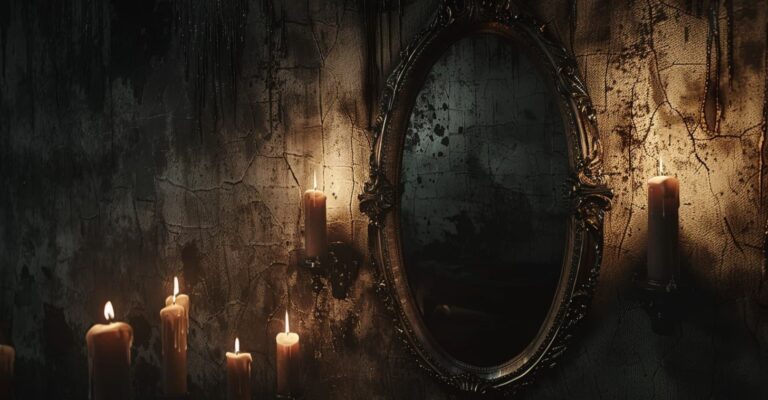

Sukma Ending Explained: There’s a particular kind of dread that comes from a horror movie that refuses to tell you who the villain is until it’s far too late to do anything about it. Most haunted-house films let you know within the first act who to fear: a ghost, a demon, a curse baked into the walls. Sukma doesn’t play that game. It hands you a mirror, a kindly old housekeeper, a charming new husband, and a mother trying to rebuild her broken family, and it lets you assume you know exactly how the pieces fit. Then, somewhere around the midpoint, it starts quietly pulling the floor out from under you, one relationship at a time.
By the time the credits roll and especially by the time that post-credits stinger hits Sukma has revealed itself to be less a ghost story and more a story about identity theft on a cosmic scale. It’s about people who have been wearing other people’s faces for so long that the line between “who they are” and “whose body they’re borrowing” has completely dissolved. And it’s about a mother who spends the entire film trying to protect her son from a monster in the mirror, only to realize the monster was never behind the glass. He was pouring her morning coffee.
If you just finished watching Sukma and you’re sitting there trying to work out exactly who was who, when the swap actually happened, and what that final scene between Arini, Iyan, and a suspiciously familiar-looking Hendra actually means you’re not alone. This is a film that rewards a second look, and there’s a lot buried in its quieter scenes that only makes sense once you know the twist. Let’s walk through it properly.
Heads Up: We are jumping straight into the deep end of the plot twists now. If you hate spoilers, close your eyes and turn back. (Or, you know, go watch the movie and come right back)!
Quick Recap Before We Get Into It
Arini divorces Hendra after his behavior grows increasingly erratic, and she remarries Pram, moving into a new house with her son Iyan.
The house’s longtime caretaker, Bu Sri, seems harmless, even maternal but she’s hiding a decades-old secret tied to an antique mirror.
The mirror turns out to be a body-swapping device used by two ancient souls, Sukma and Wira Negara, who have been jumping into younger bodies for generations to escape death.
Sukma is currently using Bu Sri as her host. And Wira? He’s fully hijacked Pram, so Arini’s own husband has been the bad guy this entire time.
After a ritual goes wrong and Sukma is killed, Wira doesn’t die with her. He simply finds a new body to occupy, and the final scene reveals exactly whose.
Now let’s get into the how and the why, because the mechanics here matter, Sukma is a film built on rules, and once you understand them, the ending stops feeling random and starts feeling inevitable.
When Your New Relationship is Basically One Big Red Flag
Sukma doesn’t open in the new house at all. It opens in the past, in a home that already belongs to this mirror’s history: an old woman drags a young woman inside, a man falls to his death with a dagger through his chest, and the old woman screams into a mirror as if she’s calling something home. It’s a jarring cold open, and on a first watch it plays like an unrelated flash-forward or a vague nightmare.
On a second watch, once you know the ending, it’s actually the film quietly showing you its entire thesis in under a minute: someone dies, someone else survives by feeding the mirror, and the cycle resets.
From there, we land in Arini and Hendra’s collapsing marriage. Hendra is convinced he’s seeing intruders in the house that vanish the moment anyone else looks and Arini, exhausted and frightened, tries to get him to take medication for what she believes is schizophrenia. He refuses, insisting he isn’t sick. It’s a genuinely sad opening stretch, because the film plays it completely straight as a story about a family unraveling under the weight of an illness one partner won’t acknowledge.
That’s what makes the eventual reveal land as hard as it does Hendra wasn’t losing his grip on reality. He was one of the only people in this story who could actually see reality for what it was. The “intruder” he kept seeing wasn’t a hallucination. It was Wira, already circling.
Two years have passed. Arini has moved on with Pram, and the film shifts into what looks, for a while, like a much gentler story: a blended family cautiously finding its footing in a new home. Things actually start off looking pretty great. Iyan is out making friends on the block without missing a beat, and Pram is playing the perfect new husband. He looks Arini in the eye and swears he’s going to raise her boy exactly like his own blood. It’s warm. It’s disarming.
And that’s exactly the point Sukma wants you to be comfortable with Pram before it starts quietly undermining every reason you had to trust him.
The Mirror That Was Never Supposed to Come Upstairs
The house itself has history nobody’s mentioned yet. Bu Sri, the caretaker, has been tending to it for thirty-five years long enough that she’s practically part of the architecture. When Iyan plays hide-and-seek with a neighborhood friend, he stumbles into a locked room, finds a hidden floor panel beneath it, and falls straight through into a basement nobody in the family knew existed. Down there is the mirror. The moment Iyan’s reflection turns on him and screams, he blacks out, and the film’s real engine starts running.
What’s smart about this sequence is how the horror escalates through Iyan’s body rather than through jump-scare set pieces. He sleepwalks. He levitates. He bangs his head against furniture in a trance. These aren’t random spooky flourishes, they’re the film establishing, early and repeatedly, that the mirror doesn’t just haunt a space, it reaches into people. That detail becomes essential later, once you understand what the mirror is actually for.
Pram makes the decision that changes everything: he brings the mirror upstairs into Arini’s sewing room, intending it as a kind of gift, unaware or is he? that he’s inviting the exact thing that’s been quietly running his own life back into daily proximity with his new family. From here, the haunting stops being contained to one basement and starts bleeding into the whole house. Arini starts seeing a young woman’s reflection where her own should be. She hears voices. Arini starts to notice that this isn’t your standard ghost story where the house is just cursed. The entity inside is very clearly fixated on her.
Hendra’s Return and the Question of Who’s Really Dangerous
Just as the mirror starts asserting itself, Hendra reenters the picture, desperate to reconnect with Iyan. Arini’s instinct is to keep him away understandable, given his history, and given that their last real interaction ended in him hurting her. But Sukma is doing something quietly clever with Hendra’s arc: every time he shows up, something about the mirror reacts. He stares into it. He burns his hand simply looking at a photo of Arini and Pram’s wedding. Turns out, he’s the guy who finally figures out the mirror’s secret. He realizes the weird text on the glass, “Masuk Raga Nerawi,” is completely scrambled up and when you rearrange the letters, you get Wira Negara.
That’s the moment the film quietly tells you Hendra was never the threat. He’s been circling the truth the entire movie, dismissed as unstable by everyone around him, including the audience. It’s a genuinely effective bit of misdirection, because horror movies train us to expect the erratic ex-husband to be the danger lurking at the edges of a new family’s happiness. Sukma uses that expectation against you.
As things escalate, Arini’s detective instincts kick in, but she focuses on the wrong person. Well, she technically zeroes in on the right target, but her logic for getting there is completely off. She starts digging into Bu Sri, and through a woman named Tyas, whose sister Sari died under suspicious circumstances in this same house years earlier, Arini learns that Bu Sri was somehow present the last time this cycle claimed a victim.
When Arini sneaks into Bu Sri’s home and finds a torn incantation page a match for a page missing from Tyas’s book about the mirror’s history the pieces start assembling into something much bigger than one bad housekeeper.
What Bu Sri Actually Is?
The reveal, when it comes, is delivered almost gently, which makes it land harder. Bu Sri sits Arini down and tells her Sari’s story about the young woman who died in this house years ago because, as Bu Sri puts it, she “didn’t listen.” Sari was beautiful, but beauty alone wasn’t the qualifier. There’s a colder logic to who the mirror wants: not just youth, not just beauty, but a very specific alignment of both that makes someone a viable vessel.
It’s an unsettling detail, because it reframes every compliment and every lingering glance the mirror’s “spirits” have given Arini throughout the film as something closer to evaluation than admiration.
Bu Sri also reveals the ritual itself, a body-and-soul transfer performed during a lunar eclipse. And then Arini realizes, in the same conversation, that Bu Sri already knows about the stolen incantation page. She isn’t hiding from Arini’s discovery. She’s been waiting for Arini to catch up.
This is where the film’s central relationship trap snaps shut. Arini runs, tells Pram they need to leave immediately because Bu Sri is dangerous and Pram’s response isn’t alarm, or protection, or even disbelief. He opens the door for Bu Sri and kisses her. From across the room, hidden, Iyan watches his stepfather embrace the woman his mother just called a killer.
Sukma and Wira Negara: The Two Souls Wearing Everyone’s Faces
Here’s the mechanism at the center of the whole film, and it’s worth laying out clearly, because it’s easy to lose track of who’s “really” who once the reveal starts moving fast.
Centuries ago the film never pins an exact timeline, and honestly it doesn’t need two people named Sukma and Wira Negara to find a spellbook promising eternal life. They didn’t think much of it until age caught up with them, the way it eventually catches up with everyone. When a young couple came to view the house they were living in, Sukma and Wira saw their opportunity and used the ritual to swap souls into younger, more desirable bodies.
That young couple’s names were Sasongo and Sri which is why “Bu Sri,” the sweet elderly caretaker Arini and Pram trusted from day one, has actually been housing Sukma’s soul this entire time, aged now into an old body all over again as the decades wore the borrowed vessel down.
Wira’s more recent vessel is the one that reframes the entire back half of the movie: Pram. Arini’s husband, the man she remarried to rebuild a stable life for her son, has been Wira Negara the whole time. Every warm gesture, every promise to love Iyan as his own, every moment of stability Pram offered Arini it was Wira, wearing a young man’s face, waiting for the next eclipse.
It’s worth sitting with how devastating this structurally is for Arini as a character. She left one marriage because her husband seemed dangerously unwell, only to remarry a man who was, in the most literal sense possible, wearing a mask the entire time. Sukma isn’t subtle about the thematic irony there, but it doesn’t need to be that the horror does the work on its own.
The Ritual and the Fight to Save Arini
Once Sukma senses the eclipse approaching, the film moves into its most kinetic stretch. Wira, in Pram’s body, hunts for Iyan through the house, the boy hiding on top of a cupboard, terrified, having just watched his mother get taken. In a moment of desperation, Iyan does the one thing that finally breaks the cycle of nobody believing Hendra: he calls him.
And Hendra comes. Whatever damage his credibility took over the course of the film, he doesn’t hesitate; he reads through the mirror’s book, understands what he’s walking into, and tells Iyan to hide until either he or Arini makes it back. Then he steps through the glass.
Inside, Arini is bound as part of the ritual: Sukma drinks her blood, and Arini is forced to drink Sukma’s in return for the transfer beginning in earnest. Hendra watches from the shadows before Iyan’s voice pulls him into action, and he fights Wira directly, buying Iyan the opening to use a slingshot against Sukma at the exact moment the soul-shift is underway. It’s a small, almost childish weapon deployed at the biggest possible stakes, and it works; the interruption is enough to throw the ritual off its rhythm.
Hendra gets Arini free and tells her and Iyan to run. Sukma catches up to Iyan first, and in the film’s most quietly devastating beat, Arini offers herself in her son’s place asking Sukma to take her life instead. Hendra intervenes before that trade can be made, holding Sukma down long enough for Arini and Iyan to escape, but Sukma manages to stab him before Arini pulls him back through the mirror into the real world, where the family for a moment appears to be whole again.
Why the “Happy Ending” Was Never Going to Hold?
The scene right after the ritual is deliberately, almost suspiciously tender. Arini, Iyan, and a rescued Hendra are together in the house, and Iyan allows himself to hope the three of them might actually live as a family again. It’s the kind of beat a lesser horror movie would end on trauma survived, family reunited, credits roll.
Sukma isn’t interested in that ending, and it tells you so almost immediately. Tyas arrives with a photo of Sari’s old fiancé, and the face in that photo is Pram’s. Not Wira’s original body. Pram’s. It’s a quiet gut-punch of a detail, because it means Wira didn’t just possess Pram recently for this story’s events; he’s been cycling through bodies and relationships for far longer than anyone in this family realized, leaving a trail of women exactly like Sari behind him.
Then Hendra walks in and introduces himself to Tyas as though they’ve never met. And Arini who has photographic evidence of Pram and Hendra sharing a very specific, private ritual of drinking tea together understands something the film never says out loud but doesn’t need to.
The Post-Credits Scene, Explained
Here’s the reveal the whole film has been building toward, delivered without fanfare in the post-credits stinger: we watch Pram’s body change into Hendra’s. Wira didn’t die when Sukma did. He simply left the failing vessel he’d been using and stepped into a new one, Hendra, the very man Arini pushed out of her life for supposedly being unstable.
That’s the cruelest part of Sukma’s ending. Arini spent the entire film trying to protect her family from a threat she assumed was external: a haunted mirror, a suspicious housekeeper, an unpredictable ex-husband. What she actually needed to protect them from was already inside the house, inside her marriage, inside the man raising her son. And now that threat has moved on to the one person left standing who actually believed her.
The look Arini gives Tyas in that final scene isn’t warmth. It’s someone silently asking for help, because she’s the only person left who knows the truth, and she’s watching her son fall in love all over again with a man who no longer exists behind that face.
What the Mirror Is Really About?
Take out all the supernatural stuff like the magical books and the eclipses, and the core of Sukma is shockingly real. It’s basically a deep dive into our extreme fear of getting old. The movie perfectly captures how much society worships youth and good looks, proving these characters didn’t just want to cheat death, they wanted to stay young and attractive while doing it. Sukma didn’t just want to live forever. She wanted to live forever as someone desirable, which is why the ritual specifically targets young, attractive women rather than simply the nearest available body.
It’s a chilling detail once you notice it, because it turns the horror from “death is scary” into something closer to “the fear of becoming undesirable is scary enough to justify murder.”
It’s hard not to think of the modern obsession with anti-aging when Sukma spells this out so directly the real world already has people spending fortunes and reshaping their entire lives around the pursuit of youth, chasing something that used to be the stuff of horror-movie spellbooks. Sukma just takes that impulse and makes it literal, letting a centuries-old soul do what plenty of very real people already try to do through less supernatural means.
The Real Horror Was Never the Mirror Itself
It’s worth stepping back and noticing what Sukma chooses not to do with its central object. The mirror never grows teeth. It doesn’t chase anyone down a hallway or manifest as some sprawling CGI entity in the third act. It just sits there, reflecting things that shouldn’t be reflected, and lets the horror around it do the work. That restraint is deliberate, and it’s part of why the eventual reveal about Pram hits as hard as it does. The film has spent its entire runtime training you to look for danger in the object, when the danger was always in the people standing next to it, smiling.
There’s a version of this story that leans much harder into the supernatural spectacle jump-scare stingers every time someone glances at their reflection, a demon face lunging out of the glass, that sort of thing. Sukma mostly resists that impulse. The scares that do land hardest are the quiet ones: Iyan levitating in his sleep, Arini hearing her own son scream from inside a mirror she knows he isn’t physically near, the moment Pram opens the door for Bu Sri without a flicker of hesitation.
These are wrongness-based scares rather than jolt-based ones, and they linger longer because of it.
Arini’s Arc: A Mother Who Trusted the Wrong Instincts Twice
There’s a quietly tragic shape to Arini’s journey once you trace it start to finish. She begins the film making what looks, from the outside, like the responsible choice of leaving a marriage where her husband refuses treatment for what she believes is a serious mental health condition, prioritizing stability for her son. Nobody watching that opening stretch would call her decision unreasonable. She’s protecting Iyan the only way she knows how.
And yet the film slowly reveals that her judgment, however sound it seemed, was aimed at exactly the wrong threat. Hendra wasn’t unraveling; he was one of the only people telling the truth. Pram, meanwhile, sailed through every one of Arini’s instincts undetected, because Wira Negara had centuries of practice at being exactly what a vulnerable, hopeful single mother wanted to see. That’s arguably the most unsettling idea buried in Sukma: it isn’t a story about failing to notice red flags. It’s a story about a predator sophisticated enough to look, feel, and behave like the safest possible choice available.
By the time Arini figures out the truth, she’s already lost the ability to act on it the way she could have earlier. She can’t simply leave Pram the way she left Hendra, because by the film’s final scene, the danger has migrated into the one person she trusted enough to call back into her life to save them. Her arc doesn’t end in triumph. It ends in a kind of exhausted vigilance: she knows the truth, she has no one who will believe her, and she has to keep living inside it anyway, for Iyan’s sake.
Hendra’s Redemption and What It Costs Him?
Hendra’s arc runs almost inverse to Arini’s. He starts the film discredited, mistrusted, and treated by every character around him including, for a long stretch, the audience as the story’s least stable presence. Every early scene with him is engineered to make you side with Arini’s decision to keep him at a distance. He throws things at an intruder no one else can see. He grabs Arini. He shows up late with Iyan during a storm and gets defensive when confronted about it.
It’s only in retrospect that his behavior reads differently. It turns out he wasn’t going crazy after all. He was just the one guy in the entire movie whose eyes were open enough to actually see past Wira’s disguise. When you rewatch the movie, his fight against taking those pills hits totally different. He wasn’t living in denial about a mental illness. He knew his brain was perfectly fine, he just realized a literal monster was living in his house and secretly swapping out his family.
His decision to step through the mirror to save Arini and Iyan is the film’s clearest act of genuine heroism, and it’s built entirely on the fact that a child trusted him when no adult would. Iyan calling Hendra, rather than anyone else, is the hinge the entire climax turns on a quiet vote of confidence from the one family member who never had a reason to doubt him in the first place.
And his reward for that heroism is arguably the cruelest outcome in the entire film: he survives the ritual only to become Wira’s next vessel moments later, meaning the one person who fought hardest to protect this family becomes the very thing his family now needs protecting from.
The Cycle Sukma Sets Up for Whatever Comes Next?
Endings like this one aren’t really endings so much as pauses. Wira has already proven, across what the film implies is centuries of soul-jumping, that losing one vessel is never a permanent setback; it’s simply an inconvenience that ends the moment a new eclipse and a new willing (or unwilling) host present themselves. Sukma’s death doesn’t undo that pattern. If anything, it simplifies it, since Wira no longer has to share the ritual, the mirror, or the mythology with a partner who might slow him down or get sentimental about a victim.
What makes the final image so effective is how ordinary it looks. There’s no dramatic transformation sequence, no monstrous unveiling, just a husband and a father, standing in a home, being someone else entirely while everyone around him goes on loving the version of him they think they know. Arini’s the only one carrying the weight of that knowledge, and the film ends without giving her or the audience any clear path forward.
That ambiguity is the point. Sukma isn’t interested in resolving its horror. It’s interesting in showing you how comfortably that horror can sit at your dinner table without anyone else noticing.
If you’re interested, you can check out our Obsession Ending Explained!
Wrapped Up!
Arini ends this story standing in her own living room, surrounded by the family she fought so hard to hold together, knowing something the rest of them don’t. She can’t say it out loud, because no one would believe her, and even if they did, there’s nowhere left to run. The house was never really the threat. The people inside it were, and by the time she understood that, the people she needed to fear were already the people she loved most.
That’s the shape of horror Sukma is actually interested in, not a monster you can shut out with a locked door, but one that gets invited in willingly, dressed as someone worth trusting. Wira never had to force his way into this family. He just had to be exactly what a hopeful mother was looking for, and wait. Sukma’s death doesn’t end that pattern; it just clears the way for him to run it again, quieter and cleaner than before.
Frequently Asked Questions
Is Bu Sri the same person as Sukma?
Not originally, Bu Sri’s body once belonged to a young woman named Sri, but her soul has been replaced by Sukma’s since the original swap generations ago.
Did Hendra know he was seeing the truth the whole movie?
Not consciously, his visions were dismissed as mental illness by everyone around him, but they were actually glimpses of the mirror’s supernatural activity that only he could perceive.
What happens to Wira at the End?
He survives Sukma’s death by transferring his soul into Hendra’s body during the post-credits scene, continuing the cycle with a new host.
Why did the mirror specifically target young, beautiful women?
The ritual isn’t just about staying alive, it’s about staying young and desirable, so Sukma consistently chose vessels who met both criteria rather than simply the most convenient one.
Is there a sequel likely given how the film Ends?
The ending leaves Wira alive inside Hendra with Arini the only one who knows the truth, setting up a clear path for a continuation.
About the Author.
Hi, I’m Vansh, the founder of Vibe On Cue. I track the absolute best ways to experience cinema, from the biggest Hollywood Blockbusters and upcoming release dates to the finest details of PVOD & Streaming and pristine Blu-ray & 4K physical media. And when the credits roll, I break down the narrative with deep-dive Ending explained guides. If you live for the full life cycle of film, stick around and explore the site!!!