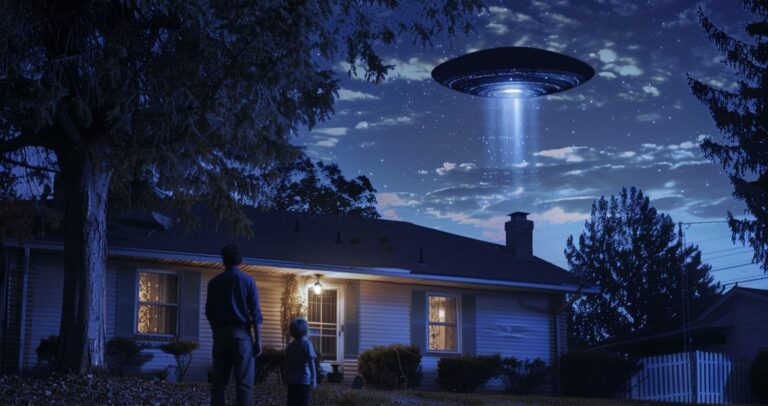

Disclosure Day Digital Release Date: You missed Disclosure Day in theaters, or maybe you saw it once and just need to watch that third act again on your own couch with the remote in hand and the pause button ready. Either way, good news: Steven Spielberg’s alien conspiracy thriller is landing on digital platforms way sooner than most summer blockbusters, and we’ve got every detail on when, where, and how much it’s going to cost you.
Let’s Start:
Quick Answer: When Is Disclosure Day Coming Out Digitally?
Disclosure Day hits digital and VOD platforms on July 21, 2026, just about five weeks after it first opened in theaters on June 12, according to ComingSoon.net, with the date also confirmed on Wikipedia. If you’re on the West Coast and impatient, Amazon actually had it listed as available starting July 20 at 9 PM PDT, per ScreenRant, which basically just means it’s rolling out the night before for early birds in Pacific time. Everywhere else in the country, you’re looking at a clean July 21 drop.
That’s a noticeably quick turnaround for a Spielberg movie with this kind of budget, and we’ll get into why that matters in a bit.
Where Can You Watch Disclosure Day Digitally?
Once it drops, Disclosure Day will be available to rent or buy across all the usual suspects:
- Apple TV
- Amazon Prime Video
- Fandango at Home
- YouTube Movies & TV
- Google Play Movies
- Vudu
Basically, wherever you already do your digital movie shopping, it’ll be there. No exclusive deal locking it behind one single app, which honestly makes life easier for everyone.
How Much Will It Cost to Rent or Buy?
New PVOD titles like this one typically land in a pretty predictable price range. Expect to pay somewhere between $19.99 and $24.99 if you want to rent it for a 48-hour window, or $24.99 to $29.99 if you’d rather buy it outright and keep it in your digital library forever. Premium new releases like this tend to sit at the higher end of that range for the first few weeks before prices start to soften.
If you’ve got a group movie night planned, splitting a $25 rental five ways is still cheaper than five theater tickets, popcorn included. Just saying.
Wait, Why Is It Coming Out Digitally So Fast?
Here’s where it gets interesting. Big summer tentpoles from major studios don’t usually rush to digital. Universal, like most studios, generally sticks to a theatrical exclusivity window that runs anywhere from 45 to 90 days depending on how the movie performs at the box office. Massive hits get to enjoy theaters longer because studios want to squeeze every dollar out of ticket sales before offering the cheaper at-home option. Underperformers, on the other hand, get bumped to digital much sooner so the studio can start recouping costs another way.
Disclosure Day landed somewhere in the “solid, but not spectacular” zone. The film pulled in $44 million domestically on opening weekend and closed out its box office run with a worldwide total north of $230 million. On paper that sounds like a win, but here’s the math that studios actually care about: with a production budget of $115 million and marketing spend estimated around $80 million, Disclosure Day needed to clear roughly $290-300 million worldwide just to break even. It came up short of that threshold, which is very likely why Universal opted for the quicker-than-usual digital release. Getting it into living rooms sooner gives the studio a second shot at closing that profitability gap.
None of that is a knock on the movie itself, by the way. Plenty of respected films underperform theatrically and then quietly become a hit once people can watch from home without committing to a babysitter and $18 popcorn.
* If you are interested you can check our recent digital releases like Obsession, Backrooms.
A Quick Recap of the Theatrical Run
Before we get further into the digital side of things, it’s worth rewinding a bit to see how Disclosure Day actually performed once it hit theaters, since that box office run is directly tied to why the digital date landed where it did.
The film opened nationwide on June 12, 2026, going up against a pretty stacked release calendar that same weekend. Early tracking from Boxoffice Pro back in late May had projected a domestic opening somewhere in the $40-50 million range, and Deadline followed up in mid-June with a worldwide opening projection of around $65 million. The actual numbers ended up landing close to those early estimates. Thursday preview screenings alone brought in $6.5 million, and the film then made $19.1 million on Friday including those previews. By the end of the weekend, Disclosure Day had debuted at the No. 1 spot with $44 million domestically from just over 3,800 screens, plus another $49 million internationally, for a worldwide opening weekend total of $93 million.
One detail that stood out from that opening weekend: 60% of moviegoers were 35 or older, and nearly half of the domestic gross came from premium large-format screens like IMAX. That’s a pretty telling sign of who this movie was actually connecting with, and it lines up with the film’s more grounded, adult-skewing tone compared to something like a Marvel release.
By the time its theatrical run wound down, Disclosure Day had grossed $111.9 million domestically and $118.4 million internationally, landing at a worldwide total of $230.3 million. Respectable, sure, but as we mentioned above, not quite enough to clear the break-even line once marketing costs got factored in.
Interestingly, Spielberg has talked openly about how much of the film’s marketing intentionally held back. According to the director, the entire third act was kept out of trailers and promotional material, which explains why so much of the online conversation after release centered on “wait, I didn’t see THAT coming” reactions. That’s also probably part of why the ending has become such a hot topic of debate, since so few people went in with any real idea of where the story was headed.
Box Office Numbers at a Glance
If you want the theatrical run in one quick scan instead of paragraphs, here’s the breakdown:
- Opening weekend (domestic): $44 million from 3,824 screens
- Opening weekend (worldwide): $93 million
- Thursday previews: $6.5 million
- Total domestic gross: $111.9 million
- Total international gross: $118.4 million
- Total worldwide gross: $230.3 million
- Production budget: $115 million
- Estimated marketing spend: $80 million
- Break-even target: Roughly $290-300 million worldwide
Those figures come via ScreenRant’s breakdown of the film’s box office performance and budget math. Disclosure Day made money, technically, but it landed short of what Universal actually needed to call it a clean profit once marketing costs got added on top of production. And that massive budget deficit is exactly why the movie got fast-tracked to digital platforms instead of chilling in theaters for the usual two to three months.
What Is Disclosure Day Actually About?
For anyone who skipped it entirely or just needs a refresher before diving back in, here’s the setup. The film follows Margaret Fairchild, a meteorologist played by Emily Blunt, whose life gets turned upside down after she becomes possessed by an alien entity. As a result, she suddenly gains the ability to speak every language on Earth and, more unsettlingly, the ability to know the deepest, most guarded secrets of complete strangers just by being near them.
From there, Margaret partners up with Daniel, a cybersecurity expert, to dig into what turns out to be a decades-long alien cover-up that reaches further than either of them expected. It’s classic Spielberg territory in some ways, blending the sense of wonder from his earlier alien movies with a more paranoid, modern-day conspiracy angle.
Who’s In It?
Emily Blunt leads the cast as Margaret, and she’s joined by a genuinely stacked supporting lineup:
- Josh O’Connor
- Eve Hewson
- Colin Firth
- Wyatt Russell
- Colman Domingo
The movie is based on a story Spielberg mapped out himself, with his long-time collaborator David Koepp stepping in to write the actual screenplay. Koepp, for context, has worked with Spielberg before, and reportedly went through more than 40 drafts to get this particular script where Spielberg wanted it. That’s the kind of detail that tells you this wasn’t a rushed cash-grab of a project, even if the box office numbers ended up a little underwhelming relative to the budget.
John Williams also returned to score the film, and interestingly, Spielberg has talked about Williams taking a more restrained approach this time around. Instead of leading the film with big sweeping themes the way he did on Close Encounters of the Third Kind, Williams reportedly aimed for something that sits underneath the film and nudges it forward more subtly. If you’re a Williams completionist, that alone might be worth a listen once the soundtrack is fully out.
How Did Critics and Audiences Actually Feel About It?
Here’s some good news if you were on the fence about whether this one’s worth your rental money: Disclosure Day actually landed pretty well with critics. It’s sitting at a Certified Fresh 80% on Rotten Tomatoes’ Tomatometer, with a lot of that praise directed specifically at Blunt’s performance and Spielberg’s ability to handle a modern, cynical, conspiracy-soaked premise with genuine empathy instead of pure cynicism.
Audiences were a touch more mixed, landing closer to 70% on the Popcornmeter. Some viewers walked away feeling like the ending didn’t fully deliver on the “disclosure” the title promises, with a few going as far as saying “nothing was disclosed.” Others found that ambiguity intentional and interesting, leaving plenty of room for online debate about what actually happened and whether a sequel is being teased.
Either way you land on the ending, it’s clearly a movie people are still talking about a month after release, which is usually a decent sign for how it’ll perform once it hits digital shelves.
Is Disclosure Day Coming to a Streaming Subscription Service Too?
If you’re not into paying $20-something for a rental and would rather just wait for it to show up on a service you already pay for, patience is going to be required. Universal titles typically make their way to Peacock a few months after their digital/VOD debut, usually somewhere in the 90-day range from theatrical release. Estimated Timeline: October 9th 2026 (updated).
If you don’t want to wait that long, the digital rental or purchase route on July 21 is really your best bet for watching it soon.
Should You Actually Watch It at Home?
If big-budget sci-fi with a genuine sense of scale and a Spielberg-Williams collaboration behind it is your thing, this one’s worth the rental. It’s not going to replace Close Encounters or E.T. in anyone’s personal Spielberg rankings, but it’s a well-made, well-acted piece of summer entertainment that clearly had a lot of craft put into it, even if the box office math didn’t fully work out for Universal.
The ending is going to be the thing people argue about, so if you’re the type who likes diving into fan theories and “wait, what actually happened” discussions after the credits roll, this is exactly the kind of movie that’ll give you plenty to chew on.
How Does It Stack Up Against Spielberg’s Other Alien Movies?
It’s impossible to talk about a Spielberg alien movie without people immediately comparing it to Close Encounters of the Third Kind and E.T. the Extra-Terrestrial, and Disclosure Day is no exception. Spielberg himself has pointed to Close Encounters and even his Indiana Jones work as a benchmark for how Williams approached the score, though he’s been clear that Disclosure Day’s music sits under the film rather than leading it, which is a different feel than the sweeping, theme-driven sound of his earlier alien work.
Tonally, this one leans more into modern conspiracy-thriller territory than pure wonder-and-awe sci-fi. Critics have noted that it meets the current, more cynical cultural moment with empathy rather than doom and gloom, which is a pretty on-brand move for Spielberg even decades into his career. It’s not chasing nostalgia for nostalgia’s sake, it’s using that same sense of scale to say something a little more relevant to right now.
Quick FAQ
- Is Disclosure Day worth renting or should I wait for Peacock?
- If you don’t mind paying for a rental, July 21 gets you in early. If you’d rather wait for a subscription service, expect a few more months before it lands on Peacock.
- Does the digital release include bonus features?
- Digital purchases sometimes come bundled with behind-the-scenes extras, though specifics can vary by platform, so check the listing on whichever app you use before buying.
- Is there a Disclosure Day sequel in the works?
- Nothing official has been confirmed, but the ending has generated enough online discussion that a follow-up wouldn’t be surprising if Universal decides the conversation is worth continuing.
- What’s the Runtime?
- Disclosure Day clocks in at 145 minutes, so set aside a solid chunk of your evening.
Should You Buy, Rent, or Wait to Stream?
This really comes down to how badly you want to see it and how much you care about owning it long-term.
- Rent it if: You just want to watch it once, form your own opinion on that debated ending, and move on. At $19.99-$24.99 for 48 hours, renting is the cheapest way to get in on day one without committing to anything permanent.
- Buy it if: You’re a Spielberg completionist, you loved the John Williams score enough to want it in your back pocket forever, or you know you’ll want to rewatch it once the inevitable “wait, what did that ending actually mean” conversations start heating up online.
- Wait for Peacock if: You’re not in a rush and don’t mind waiting a couple of months. Given Universal’s usual pattern, a mid-to-late September Peacock arrival is a reasonable guess, though nothing’s confirmed yet. Just know you’ll be sitting out the initial wave of ending discourse if you hold off that long.
For most people who are even mildly curious, renting on July 21 is the sweet spot. You get in early, you’re not overpaying to own something you might only watch once, and you’ll be able to actually take part in the conversation everyone’s having about that ending instead of catching up on it three months late.
Final Sum-Up
Here’s the whole thing in one quick list so you don’t have to scroll back up:
- Digital release date: July 21, 2026 (with an early West Coast drop the night of July 20)
- Expect to find it rolling out across Apple TV, Prime Video, Fandango at Home, YouTube, Google Play, and Vudu.
- Price: Roughly $19.99-$24.99 to rent, $24.99-$29.99 to buy
- Streaming subscription (Peacock): No confirmed date yet, likely a few months out
- Worth it? Yes, especially if you’re into Spielberg’s alien-movie era and don’t mind an ending that leaves some questions on the table
Once it’s out digitally, this is one you’ll probably want to watch with the lights off and your phone away, at least for that final stretch. Enjoy.
About the Author.
Hi, I’m Vansh, the founder of Vibe On Cue. I track the absolute best ways to experience cinema, from the biggest Hollywood Blockbusters and upcoming release dates to the finest details of PVOD & Streaming and pristine Blu-ray & 4K physical media. And when the credits roll, I break down the narrative with deep-dive Ending explained guides. If you live for the full life cycle of film, stick around and explore the site!!!